Health alerts on alcohol: Europe's brewing controversy
Health advocates and wine producers lock horns
Tuesday, September 5, 2023
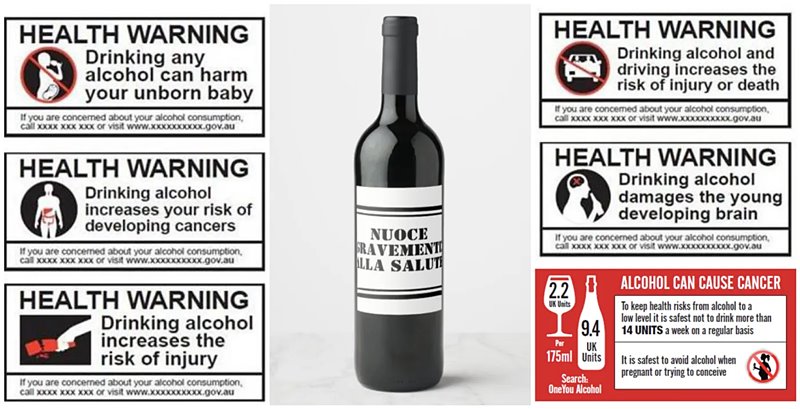
Amidst heightened debates and discussions that consumed the first quarter of this year, the controversy surrounding health warnings on alcoholic products has once again returned to the European forefront. This follows a strong intervention from the Centers for European Policy Network (CEP), pressing for more widespread labeling across Europe.
Andrea De Petris, the esteemed jurist and scientific director of the CEP in Rome, has voiced her support for the initiative taken by the Irish government. In her statement, she emphasized the multifaceted risks of alcohol consumption. "In light of the health, social, and economic risks of alcohol, the Irish initiative should be implemented across Europe," De Petris asserted. Furthermore, she shed light on the economic implications, adding that a uniform label would serve not only public health but also benefit the internal market dynamics of Europe.
There's a financial component in this debate, especially for alcohol enterprises targeting the Irish market. If they wish to maintain their export business to Ireland - a country which approved these labels with the European Commission's implicit endorsement - companies will be obligated to adhere to the health warning stipulations. Failing to do so could cost businesses a significant chunk of the estimated 8 billion euros generated annually from the Irish market.
Nathalja Nolen, director of the CEP in Paris, commented on the scientific consensus supporting this move. "According to now unanimous scientific research, alcohol consumption can cause significant damage to health. In this context, a uniform label for the entire EU would be the most sensible solution," she said.
However, not all European stakeholders agree with this stance. Francesco Lollobrigida, the Minister of Agriculture, Food Sovereignty, and Forestry, voiced his reservations. In response to the proposal put forth by CEP representatives, the minister argued that such labeling might be misconstrued. He stated that labeling alcoholic products with health warnings is not 'reasonable'. He added that, from the analyses conducted by CEP centers in Rome, Paris, and Freiburg, such a system risks being perceived as an "element of bias and discrimination". The minister expressed concerns over this potential stigma, especially when considering wine, a flagship export product for Italy.
Lollobrigida also highlighted judicial limitations. "This measure cannot be extended to the entire internal market of the EU because, as stated by the CEP, a judge may not express his opinion on this new model," he said. He remained firm in his conviction that the labels proposed by the Irish would not serve their intended purpose of accurate information dissemination. Lollobrigida concluded, pledging to defend against what he termed the "aggression of illogical labeling" and to promote the benefits of moderate wine consumption.
As the debate continues, the implications for both the health of European citizens and the alcoholic beverage industry remain uncertain. With strong arguments on both sides, a resolution that respects public health, scientific consensus, and economic interests will be keenly awaited.