Unveiling the secrets of brandy: a journey into the world of this exquisite spirit
2023-06-15

Throughout the ages, the captivating allure of brandy has enchanted enthusiasts with its distinct flavors and rich history. But what exactly is brandy, and how is it crafted? Delve into the realm of this renowned spirit as we uncover its hidden mysteries, leaving no curiosity unanswered.
The essence of brandy: understanding its characteristics and distinction
Renowned for its deep-rooted tradition and widespread popularity, brandy stands as a testament to the mastery of distillation. To comprehend the essence of brandy, it is crucial to recognize that it is a spirit obtained solely through the distillation of wine. Not an orujo, nor a grape pomace spirit, brandy emerges as the result of the meticulous distillation of wine.
But where does the term "brandy" originate? The word finds its roots in a Dutch chemist who resided in the city of Cognac, France, during the 16th century. Seeking to conserve storage space, this ingenious gentleman devised a method to reduce the volume of wine by subjecting it to fire. He named the outcome of this process "brandewijn," which translates to "burnt wine" in Dutch. This term was later transformed by the British into the familiar word we know today as "brandy."
Characteristics of brandy: an exploration of flavor and craftsmanship
Brandy, a beverage with a high alcohol content ranging between 36 and 45 degrees, represents a percentage of alcohol by volume (ABV) of 40-50%. Properly distilled from various types of wine, be it red or white, brandy boasts a unique identity distinct from other spirits. It is essential to differentiate brandy from other distilled beverages such as aguardiente, which encompasses the distillation of various fruits, cereals, vegetables, and even herbs.
With its fruity and semi-sweet flavor reminiscent of raisins, brandy captivates the senses. The aging process in oak barrels endows this spirit with an unmistakable amber hue, as well as an aroma and taste akin to toasted nuts or bread. Brandy exists in both unaged and aged varieties, ranging from 2 to 30 years, with aging denoted by distinct systems varying from one country to another.
The region of Cognac in France gives birth to a specific type of brandy known as Cognac, meticulously regulated and protected. However, brandy is crafted in numerous countries worldwide, including France, Spain, the United States, Italy, Chile, and Peru, with Germany, Brazil, India, and Russia standing as its primary consumers.
To savor the full range of nuances and aromas, brandy is best enjoyed in a balloon glass at a temperature of 10-15°C. Whether served neat or on the rocks, brandy also serves as a favored ingredient in various cocktails and culinary creations, enhancing dishes with its unique character.
The art of brandy-making: unraveling the elaboration process
To fully comprehend what brandy truly is, one must delve into the intricacies of its production. With a desire to encompass the diverse range of this wine distillate, we will provide a condensed overview of the generic brandy-making process.
Fermentation marks the initial step, involving the harvesting and pressing of grapes to obtain the base wine. This wine then undergoes the process of distillation. Heating the wine in an alembic separates the alcohol from other components. The vapor of alcohol is cooled, condensed, and collected as brandy, while unwanted elements are discarded. Distillation methods can be either discontinuous, ideal for aging purposes, or continuous, suitable for cocktail mixology.
Following distillation, brandy enters a phase of aging within oak barrels, where it acquires its characteristic flavor, aroma, and color through interaction with the wood. This aging period, which can span several years, determines the personality and desired profile of the brandy. Once the brandy has reached an optimal maturity, different barrels are blended to achieve the desired final blend. Mixing brandies of varying ages and vintages allows for the creation of specific flavor profiles. Finally, the brandy is bottled and sealed, ready to be savored by discerning palates.
Types of brandy: exploring french and spanish varieties
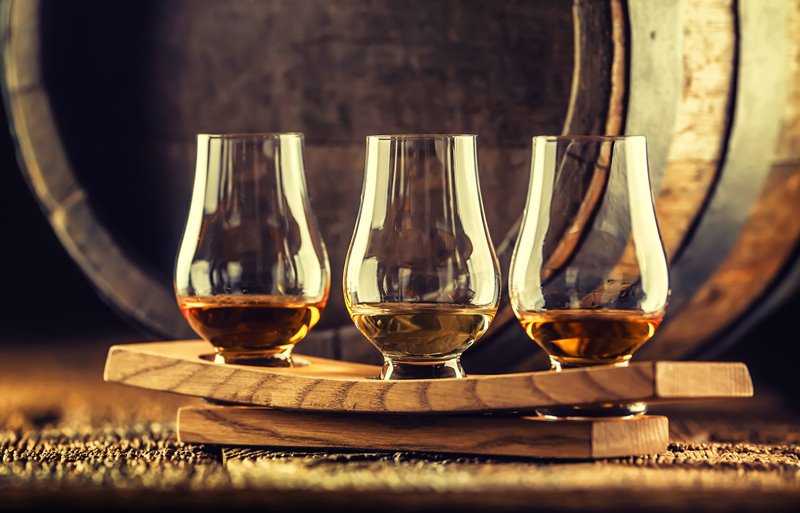
Further shedding light on the question of what brandy truly is, one must delve into its various classifications, including aging duration, distillation methods, and geographical origins. Here, we will focus on the criterion of origin, exploring French and Spanish brandies.
French brandies: the delights of Cognac and Armagnac
France boasts brandies crafted in several regions, each following distinct procedures. However, brandy originating from the Cognac region, located in southwestern France, bears the prestigious name of Cognac. Similarly, brandy hailing from the Armagnac region in southern France goes by the name of Armagnac. Both Cognac and Armagnac are protected appellations, subject to stringent regulations to ensure their unparalleled quality.
Spanish brandy: the elegance of Jerez and Penedés
Spanish brandy, crafted across the nation, finds its exceptional representations in the Geographical Indications Protected (IGP) areas of Jerez and Penedés. Both regions employ French and American oak barrels during the aging process, infusing their brandies with distinctive character.
Brandy de Jerez, renowned for its dynamic solera system, employs predominantly Airén Blanco and Palomino grapes. Its aging period spans from 6 months to 3 years, allowing for a spectrum of flavors to develop.
Brandy del Penedés, on the other hand, incorporates the varieties Parellada, Folle Blanche, and Ugni Blanc. Distinguished by its high acidity of 9-10 g/l and minimal concentration of SO2, it captivates with its unique expression.
At this stage, armed with knowledge and insight, you are equipped to unravel the enigma that is brandy. Embrace the irresistible allure of this exquisite spirit as it caresses your palate, a testament to centuries of craftsmanship and artistry.

Founded in 2007, Vinetur® is a registered trademark of VGSC S.L. with a long history in the wine industry.
VGSC, S.L. with VAT number B70255591 is a spanish company legally registered in the Commercial Register of the city of Santiago de Compostela, with registration number: Bulletin 181, Reference 356049 in Volume 13, Page 107, Section 6, Sheet 45028, Entry 2.
Email: [email protected]
Headquarters and offices located in Vilagarcia de Arousa, Spain.