Champagne shipments fell 3.4% in October, casting doubt on the market’s recovery
A 7.3% drop in France outweighed steadier exports, leaving year-to-date growth at 2% before the holiday selling season
Tuesday, November 17, 2026

Views › 704
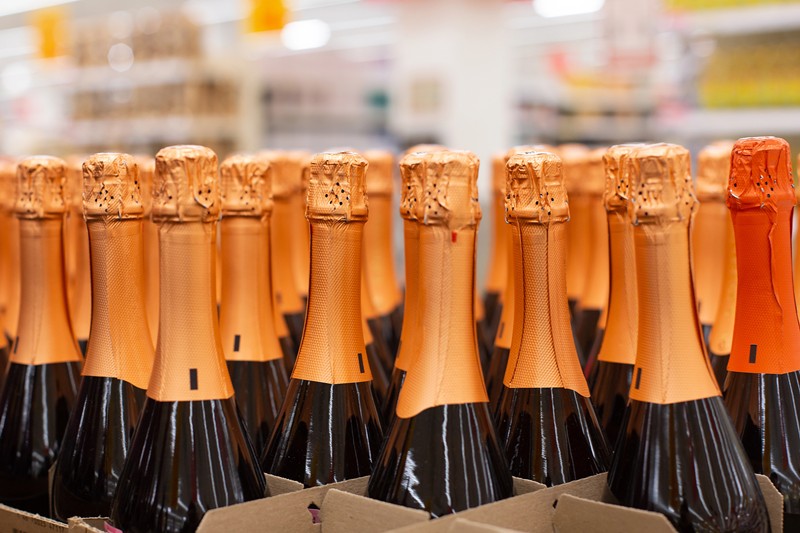
Champagne shipments lost momentum in October after two strong months, raising new questions about how durable the market’s recovery will be heading into the year-end holiday selling period.
According to Comité Champagne figures cited by WineCouture, shipments totaled 29.6 million bottles in October 2026, down 3.4% from October 2025. The decline cut the category’s cumulative growth for the first 10 months of the year to 2%, from 3.2% at the end of September. Between January and October 2026, total shipments reached 203.6 million bottles.
The setback came after a sharp rebound in late summer. August shipments had jumped 24.8%, followed by a 7.8% increase in September. October broke that run. The timing matters because October is not a minor month for Champagne shipments. It typically accounts for about 11.8% of annual volumes, making it an important period as producers and distributors position inventory for the holiday season.
The October weakness was most severe in France. Domestic shipments fell 7.3% from a year earlier to 11.1 million bottles. Exports were more resilient, but they also slipped, down 1% to 18.6 million bottles. Within export markets, shipments to the European Union rose 1.2% to 6.9 million bottles, while shipments to countries outside the EU fell 2.2% to 11.7 million.
Even with the October slowdown, international markets remained the main support for Champagne this year. From January through October, exports rose 5.6% to 128.4 million bottles, while the French market fell 3.5% to 75.3 million. Export markets therefore accounted for just over 63% of total shipments during the period, underscoring how dependent the category has become on demand outside France.
Both major export areas stayed positive over the first 10 months, although growth slowed from September. Shipments to the EU rose 6.7% to 39 million bottles, while shipments to non-EU markets increased 5.1% to 89.4 million. At the end of September, those gains had been stronger, at 8% for the EU and 6.3% for markets outside the bloc. The French market also worsened over that span, moving from a 2.5% decline at the end of September to a 3.5% drop after October.
The data also showed a clear split between the industry’s larger and smaller players. Champagne houses remained the main drivers of growth. Their shipments rose 4.1% in the first 10 months of 2026 to 155.4 million bottles. That gain was supported by exports, which climbed 6.8%, while their shipments in France fell 2.2%. Champagne houses account for more than three-quarters of total shipped volumes, which means their performance continues to shape the market as a whole.
Independent growers, by contrast, remained under pressure. Their shipments fell 4.4% from January through October to 32.1 million bottles. In France, their domestic shipments dropped 7.7%, a much steeper decline than for the category overall. Their exports rose 6.2%, but that was not enough to offset weakness at home. The gap between the large houses and independent growers remained wide, with an 8.5-point difference in growth rates over the first 10 months.
Cooperatives also stayed in negative territory. Their shipments fell 3.3% to 16.2 million bottles in the January-October period. October was especially difficult for that group, with monthly shipments down 17.5% from a year earlier. Unlike the houses and the growers, cooperatives showed relative strength in France, where shipments rose 2.8%, but they were hit by weaker exports, which fell 8.7%.
A rolling 12-month measure also suggested that the recovery is still fragile. From November 2025 through October 2026, Champagne shipments totaled 270.2 million bottles, up 0.4% from the previous 12-month period. That was still positive, but weaker than the reading at the end of September, when rolling shipments stood at 271.4 million bottles and growth was 0.8%. In one month, the rolling total fell by about 1.2 million bottles.
That broader measure showed the same underlying pattern seen in the year-to-date figures. Over the 12-month period, exports rose 3.8% while the French market fell 4.1%. Shipments by Champagne houses increased 2.1%, while independent growers fell 4.7% and cooperatives declined 2.1%.
The figures suggest that Champagne is still recovering in 2026, but the recovery is uneven and less secure than the strong August and September results had implied. The market has not given up the gains made over the summer, but the pace has slowed noticeably. That is especially important for the wider drinks industry because Champagne’s late-year shipping pattern can influence sales expectations, stock management and pricing decisions across sparkling wine distribution during the most important trading period of the year.
The divergence between export markets and France, and between large houses and smaller operators, may also shape how retailers, importers and producers approach the final weeks of the year. Stronger foreign demand has helped keep total volumes above 2025 levels, but that support has been concentrated in the companies with the broadest commercial reach. For independent producers, the domestic slowdown remains a central problem even as international markets improve.
Champagne shipped 266 million bottles in all of 2025. With November and December traditionally decisive months for the appellation, the final 2026 total will depend heavily on whether export demand remains strong enough to offset continued weakness in France and the slower October pace.