Arkansas researchers test fermentation to cut wine alcohol without losing aroma
The project aims to move wines from 11%-12% alcohol to about 9%-10% by changing yeast behavior during production
Wednesday, October 28, 2026
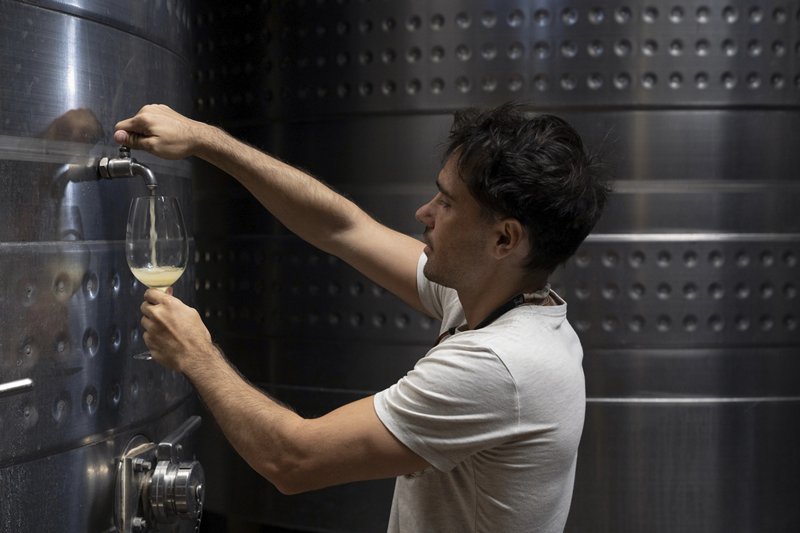
Researchers at the University of Arkansas are testing fermentation strategies meant to lower the alcohol content of wine without stripping out the aromas that help define its quality, a problem that has become more important as consumer interest in lower-alcohol beverages continues to grow.
The work focuses on changing what happens during fermentation rather than removing alcohol after the wine is made. That distinction is central to the project. Post-fermentation dealcoholization is already used in parts of the wine industry, but researchers say heat-based treatments and mechanical separation methods can alter volatile compounds tied to aroma and flavor. Those processes can also introduce cooked or burned notes, making it harder to preserve the balance expected in finished wine.
The Arkansas team is studying whether it is possible to cut ethanol production earlier in the process by changing yeast behavior and fermentation conditions. The goal is not necessarily to make alcohol-free wine. Instead, the researchers are trying to move wines from a more typical 11%-12% alcohol range to about 9%-10%, and possibly lower in some cases, while keeping the sensory profile as intact as possible.
The project is being carried out by Zachary Bean, a master’s student in the University of Arkansas Department of Food Science, in collaboration with Renee Threlfall, an associate professor of enology and viticulture and a member of the university’s Beverage Innovation Center. Bean is studying how to reduce ethanol formation during fermentation and how to offset possible aroma losses through yeast selection and process control.
One part of the research examines nonconventional yeast species that are less commonly used in winemaking. The idea is that some yeasts may direct sugar metabolism in ways that yield less ethanol than standard fermentation strains. The team is also evaluating controlled aeration, introducing oxygen in carefully managed amounts during fermentation, to see how it changes yeast activity and the way sugars are processed. Researchers say the effect depends heavily on fermentation conditions, so the work is centered on fine-tuning the process rather than applying a single fixed formula.
A separate line of study involves a selected strain of Saccharomyces cerevisiae chosen for its ability to produce higher levels of aromatic compounds. That approach is meant to counter part of the sensory intensity that can fade when alcohol levels are reduced. The researchers do not present any of the strategies as a universal answer for all wines. Instead, they describe them as options that must be tested according to the yeast used, the fermentation setup, and the style of wine being made.
The issue matters directly to the beverage business because lower-alcohol products are drawing more attention across wine and other drink categories, but wine presents a specific technical challenge. Producers are not only trying to reduce ethanol. They are also trying to preserve aroma, flavor, and structure, and to do so without adding a costly treatment step after fermentation. If fermentation-based methods prove reliable, they could give wineries another route to lighter wines while avoiding some of the quality losses and capital costs linked to later dealcoholization.
Bean is expected to continue the work in Austria after receiving support from the Austrian Marshall Plan Foundation. He is set to spend four months at Graz University of Technology, where he will work with Erich Leitner, a food chemistry specialist who heads the Institute of Analytical Chemistry and Food Chemistry. There, the research will focus on measuring how the experimental fermentation methods affect aroma compounds in wine.
The analysis will combine gas chromatography-mass spectrometry, known as GC-MS, with gas chromatography-olfactometry, or GC-O. GC-MS allows researchers to identify and quantify volatile compounds. GC-O adds a sensory layer by helping determine which of those compounds are actually perceived as aroma by the human nose. Used together, the methods are intended to show not only which substances are present in the wine, but also which ones matter most to how it smells.
That link between chemistry and sensory perception is important because a lower alcohol number alone does not determine whether a wine will be accepted by consumers. A drop from 11%-12% to 9%-10% can change the wine’s balance, body, and overall impression. It can also have economic and tax implications for wineries, depending on the market and product classification.
The Arkansas researchers say another possible advantage of fermentation-based approaches is access. Conventional dealcoholization systems, including spinning cone technology, can require major investment or force wineries to send product to outside facilities for processing. A method that works inside the normal fermentation stage could be more practical for smaller wineries and regional producers, if the research shows that the results are technically sound and reproducible.
Market data suggest why the question is getting more attention. According to the International Organisation of Vine and Wine, using statistics from International Wine and Spirits, global consumption of alcohol-free wine rose by 13% a year from 2018 to 2023. Consumption of low-alcohol wine increased by 21% a year over the same period. Those figures point to a fast-growing segment, but they do not solve the production problem that winemakers face when trying to lower alcohol without losing the qualities consumers expect.
The research remains in progress, and the team has not claimed that the tested methods can already deliver lower-alcohol wines at commercial scale without tradeoffs. What the project does show is where current winemaking research is moving: toward using yeast selection, controlled fermentation, and detailed aroma analysis to reduce alcohol at the source rather than stripping it out later.