Luxembourg wins backing from 20 EU states for stronger plant disease funding
After Xylella fastidiosa was detected in Moselle vineyards, the country urged more EU support for cross-border monitoring and containment
Tuesday, October 27, 2026
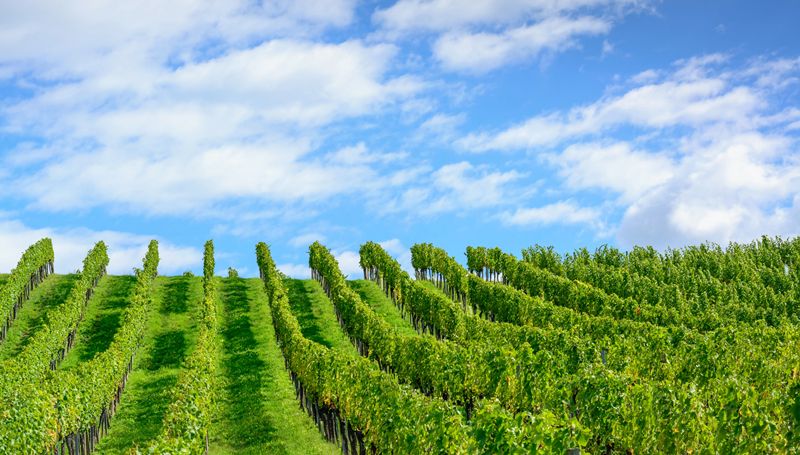
Luxembourg used a European Union agriculture meeting on Monday to press two linked priorities: a more stable and predictable farm policy after 2027 and stronger European support to contain plant diseases after the detection of Xylella fastidiosa in the country’s Moselle vineyards.
The Luxembourg Ministry of Agriculture, Food and Viticulture said Agriculture Minister Martine Hansen raised both issues during the meeting of the EU Agriculture and Fisheries Council, which was held in Luxembourg on October 26. The main focus of the council was the future of the Common Agricultural Policy, or CAP, beyond 2027.
EU ministers reached what the ministry described as a partial general approach on the future CAP regulation. The compromise would give member states more room to adapt support to the needs of their own agricultural sectors. Luxembourg presented that flexibility as important for a small country with specific farming structures and argued that major disruption should be avoided as the next policy framework is designed.
Hansen told counterparts that the next reform should build on the current system rather than overturn it, saying farmers need stability and predictability. According to the ministry, Luxembourg considers the agreement reached so far an important step, even though several sensitive issues remain unresolved and will move into the next stage of negotiations with the European Parliament.
The Luxembourg government said the compromise includes several points it had pushed for during the talks. One is the principle that support should go to people whose main activity is agricultural production. On that issue, the ministry said the compromise on the definition of an active farmer would allow Luxembourg to keep the approach already set out in its national agricultural law. That would preserve continuity in how aid is targeted.
The ministry also said generational renewal remains a central objective in the proposed CAP for the post-2027 period, with stronger support for young farmers. Luxembourg has repeatedly argued that attracting younger people into farming is necessary to maintain production capacity and keep rural areas economically active.
Another point highlighted by Luxembourg concerns labor rules. The ministry said occupational safety and workers’ rights should be governed clearly under labor law and should no longer be covered a second time through social conditionality in agricultural legislation. That position reflects a broader concern among some member states about overlapping legal requirements and added administrative burdens for farmers.
Even with Monday’s progress, the overall deal is not finished. The ministry said the general approach remains only partial because financial questions still have to be settled in negotiations on the EU’s next Multiannual Financial Framework. Those pending issues include degressivity and capping of support, both of which can have a direct effect on how farm subsidies are distributed among different types of producers.
Luxembourg also warned that time is becoming a practical concern. Hansen said a transition period will be needed so farmers have enough certainty for the 2027-2028 growing season. That request reflects concern that long institutional negotiations in Brussels could leave producers without a clear framework as planting and investment decisions approach.
Alongside the CAP debate, Luxembourg used the council meeting to brief other member states on the detection of Xylella fastidiosa in the Moselle wine-growing area. The bacterium is one of the most closely watched plant health threats in Europe because it can infect a wide range of plants and has forced eradication measures in affected areas.
According to the ministry, Luxembourg has responded by uprooting and destroying affected plants, increasing surveillance and stepping up control of insect vectors that can spread the disease. Hansen also pointed to close cooperation with German authorities because part of the territory covered by the buffer zone lies across the border. The case underlined the cross-border nature of plant health risks in a region where agricultural production and transport networks are closely linked.
Luxembourg used that example to argue for stronger European financial backing for monitoring, prevention and disease control. Hansen called for sufficient EU funding to help member states deal with cross-border plant diseases that threaten agriculture. The ministry said that position received support from 20 EU member states at the meeting, giving Luxembourg broad backing for its call to reinforce phytosanitary resources at the European level.
That part of the discussion has implications beyond general crop protection. In Luxembourg’s Moselle region, vineyard removals and extended surveillance can directly affect grape production, and wider EU funding for detection and containment could help limit disruptions for wine growers if outbreaks spread or require further plant destruction. The issue is also relevant for the broader beverage sector because vineyard health affects the supply chain for wine production and can influence longer-term investment decisions in wine-growing areas.
The council meeting brought together two pressures that are shaping current EU farm debates: the need to redesign subsidy rules for the next budget cycle and the growing demand for coordinated responses to diseases that do not stop at national borders. Luxembourg’s position combined both themes by arguing that farmers need policy certainty on one hand and stronger disease protection tools on the other, especially as negotiations move toward the European Parliament and later into the budget talks that will determine how much money is available for the next CAP and related health measures.