Veneto’s wine exports fell 8.4% in the first half of 2026
The country’s largest wine-exporting region underperformed Italy’s overall trade by 2.2 percentage points after years of growth
Monday, October 26, 2026
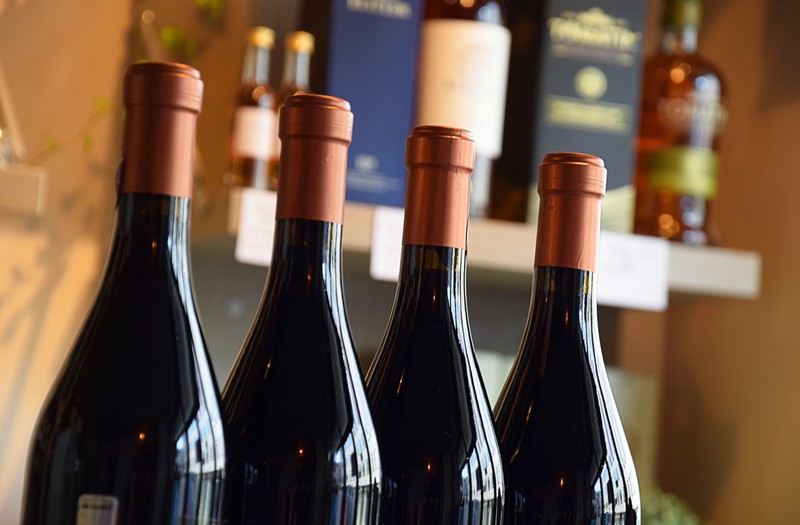
Veneto, Italy’s largest wine-exporting region, posted a sharp drop in foreign sales in the first half of 2026, adding to signs that the wine trade is under pressure in some of Europe’s main producing areas. According to an analysis by the regional agency Veneto Agricoltura reported by ANSA, the region exported €1.32 billion worth of wine from January through June, down 8.4% from the same period a year earlier.
The decline was steeper than the national trend. Italy’s wine exports as a whole fell 6.2% in the first half, meaning Veneto underperformed the country by 2.2 percentage points. Based on the rounded figures, the setback represents about €121 million in lost sales compared with the first six months of 2025. The drop interrupts the growth pattern the region had maintained for years, even though Veneto still accounted for 36.3% of total Italian wine export value.
That scale gives the figures weight beyond one region. Veneto is the main export platform for Italian wine and a central supplier of sparkling wine to international markets. A weaker performance there can be an early sign of softer global demand, lower pricing power, or both, with potential effects across the broader beverage business, including importers, distributors, retailers, and producers that depend on wine and sparkling categories.
The pressure had already emerged in 2025. Veneto exported €2.93 billion of wine last year, down 1.1% from 2024, even as shipment volumes rose 1.2%. The average export price fell 2.3% to €3.64 per liter. In simple terms, the region sold more wine but generated less revenue. Italy’s overall wine exports fell 3.4% in 2025, so the slowdown was not limited to Veneto, though the region’s size makes any reversal more visible.
The first-half 2026 data do not show how much of the decline came from lower volumes and how much came from lower prices, because the report did not break down the latest results by product type, quantity, or average value. Still, the 2025 pattern suggests that pricing has been a major factor. The Veneto Agricoltura study also pointed to changing consumer habits and a fragile geopolitical environment as pressures on the export market.
The region’s product mix helps explain why pricing matters so much. In 2025, bottled still wines made up 49.2% of Veneto’s export value, while sparkling wines represented 47%. Still wines were broadly stable, generating €1.44 billion, up 0.5%, on about 3.8 million hectoliters, up 0.6%. Sparkling wines were weaker. Export volumes rose 0.8% to 3.3 million hectoliters, but revenue fell 3% to €1.38 billion because average prices moved down.
That is a key issue for Veneto because sparkling wine, led by Prosecco, has been the region’s main engine of export growth for about a decade. Compared with 2016, Veneto’s sparkling exports in 2025 were up 97.9% in value and 76% in volume. The category remains large, but it is no longer expanding at the same pace, and it appears more exposed to price competition. The first-half report did not isolate Prosecco, but the broader sparkling numbers suggest that selling more bottles is not necessarily enough to protect revenue when buyers push prices lower.
Veneto’s export base also remains concentrated. The region sold wine to about 150 countries in 2025, but 20 markets generated roughly 89% of export value. The United States was the largest destination, taking 21.6% of Veneto’s export value, worth more than €633 million. Germany followed at €437 million, and the United Kingdom at €369 million. That concentration leaves producers exposed to demand shifts in a small group of large markets. At the same time, some eastern European destinations have grown quickly over the past decade. Ukraine and Slovakia entered Veneto’s top 20 markets, with export values up 467% and 384%, respectively, from 2016 levels.
The weakness in Veneto comes as Spain is also reporting a difficult year in wine exports, though the data cover a different period and market structure. According to Spanish Tax Agency figures analyzed by the Interprofessional Wine Organization of Spain, or OIVE, and reported by Mercados del Vino, Spain exported 115.7 million liters of wine worth €175.8 million in August 2026, down 8.2% in value and 13.7% in volume from August 2025. That monthly result reduced revenue by €15.7 million and volumes by 18.4 million liters.
Spain’s year-to-date figures also remain negative. From January through August, wine exports totaled €1.7718 billion, down 6.8% from the same period in 2025, while export volume fell 13.9% to 1.1247 billion liters. In absolute terms, Spain exported 181.4 million fewer liters and billed €128.7 million less than in the first eight months of last year. On a rolling 12-month basis from September 2025 through August 2026, Spanish wine exports were down 6.3% in value to €2.7709 billion and down 10.8% in volume to 1.7262 billion liters.
The Spanish data show pressure across several categories. Protected designation wines posted the largest decline in value in the first eight months, with revenue down €56.3 million, or 7.4%, and volumes down 11.6%. Bulk wine showed the largest volume loss, falling by 140.9 million liters, or 18.3%, with revenue down 11.3%. Sparkling wines also weakened, with export value down 7.4% and volumes down 7.6%. By contrast, bottled varietal wines and bag-in-box wines recorded growth in both value and volume.
Destination trends in Spain also point to shifting demand. The United Kingdom moved ahead of the United States as the top market for Spanish packaged still wine sold in containers under two liters, excluding sparkling wine. In bulk wine, Germany remained the largest market, ahead of France, which recorded the biggest reduction in purchases of Spanish wine during the first eight months of the year. Portugal rose above Italy and Ivory Coast to become the third-largest destination for Spanish bulk wine, with volumes up 6.9% and value up 15%.