Italian Vine Nurseries Urge a National Plan to Renew Vineyards
The appeal comes after wine stocks rose 6.9% and export value fell 6.2% in the first half of 2026.
Wednesday, October 14, 2026
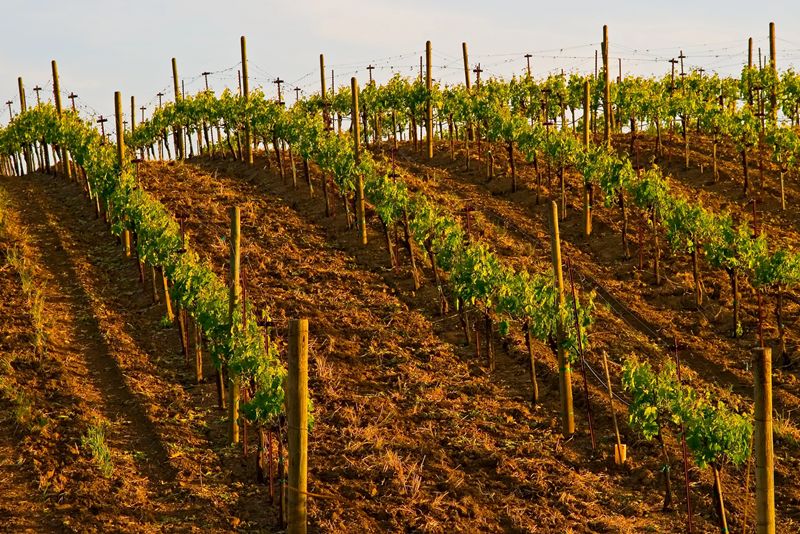
Italian vine nursery groups on Wednesday called for a national plan to renew the country’s vineyards and argued against using public money to pay growers to remove vines, saying Italy should respond to weaker demand and climate pressure by modernizing production rather than shrinking it.
The appeal came from Miva, the association of Italian viticultural propagators, and the Association of Vine Nurseries of Friuli Venezia Giulia, two groups that together represent most of Italy’s nursery sector. Their intervention adds a new voice to a debate that has been growing across the wine industry as producers in several countries, including France, Spain, Australia and the United States, especially California, face excess supply and softer consumption.
In Italy, industry groups and regional interests have been discussing whether targeted vine removals should be allowed in areas under particular stress. The nursery groups said that approach would risk cutting productive capacity built over decades and would not solve the deeper problems facing the sector.
“The answer to the crisis cannot be found in subsidies for uprooting,” Dino Scanavino, president of Miva, said in a statement released through the two associations. He said the available resources should instead be directed toward vineyard restructuring and conversion so farms can move toward plots that are more efficient, more resilient and better aligned with future market demand.
Miva said it represents 100 businesses across all Italian regions. The Friuli Venezia Giulia association said it includes 12 nurseries of different sizes and production levels, among them Vivai Cooperativi Rauscedo, one of the country’s leading operators. The groups said Friuli Venezia Giulia accounts for more than 50% of Italy’s vine nursery production.
Their proposal is built around an existing policy tool. The associations said funding already provided under European Union wine policy and Italy’s Common Agricultural Policy strategic plan should be used more aggressively as a lever for innovation, not simply as support for replanting vineyards in the same way they existed before.
The groups argued that restructuring has too often meant replacing an old vineyard with a new one that is largely identical, using the same grape varieties, clones, rootstocks, planting density and training systems without fully accounting for changes in climate and consumer demand. In their view, renewal should be more selective and more technical, focusing on plant material and vineyard designs that can perform under warmer conditions, use water more efficiently, resist disease and preserve balance and quality in the fruit.
Yuri Zambon, director of Vivai Cooperativi Rauscedo, said that simply removing a Merlot vineyard and planting another Merlot vineyard under the same production model may reduce the average age of the vines but does not necessarily improve the vineyard’s ability to meet future conditions. He said genetics, varieties, clones, rootstocks and training methods should be part of a broader strategy that starts with a basic commercial question: what kind of wine will Italian producers need to make and sell in 10 or 15 years.
The nursery groups based their argument on both market data and weather trends. They said that on July 31, 2026, just before an unusually early harvest, Italian cellars held 42.6 million hectoliters of wine, up 6.9% from the same period in 2025. Another 3.1 million hectoliters of must were also in storage, a rise of 31.5%.
At the same time, they said demand has slowed. In the first half of 2026, Italian wine exports were worth a little more than 3.6 billion euros, down 6.2% in value and 4% in volume from a year earlier. Bottled still wines fell 8.9% in value, while sales in large-scale retail on the domestic market declined 2.5% in volume.
The associations said these commercial pressures are being compounded by changes in the growing environment. Faster ripening, earlier harvests, higher temperatures and increasingly unpredictable weather events are altering the conditions under which grapes are produced, they said. In that context, they warned, climate and market forces are pressing on the same production model at the same time.
The groups also urged caution because, in their view, past uprooting policies have not produced a lasting correction in the balance between supply and demand. They said the issue is especially sensitive in historic and hillside vineyards, where winegrowing also plays a territorial role by helping preserve landscapes and countering land abandonment and hydrogeological instability.
Beyond vineyard renewal, the nursery sector said product strategy should also begin in the field. The associations pointed to rising interest in wines with lower alcohol levels and said that trend should not be addressed only through cellar technology or by diverting excess production into different categories. They argued that lighter wines can be planned from the vineyard stage through genetic choices, clone selection, rootstocks, agronomic practices and harvest timing that allow aromatic and phenolic ripeness to be reached with lower sugar levels.
Zambon said the issue is not how to adapt wine already made to a changing market, but how to design the vineyard for the kind of wine consumers will want in the future. He said the nursery sector can supply plant genetics, agronomic knowledge and planting material to support that transition.
The two associations said they want to open talks with public institutions, industry organizations, consortia and the research community to build a national vineyard renewal project linking public resources, genetic research, sustainability, climate adaptation and market strategy.
Their intervention comes as Italy’s wine industry continues to weigh how to respond to lower consumption in some markets and persistent stock levels without undermining a sector that remains central to rural economies and the country’s export profile. The nursery groups said Italy’s wine leadership will not be protected simply by producing less, but by renewing vineyards in ways that improve what can be produced and sold in the years ahead.