Burgundy Growers Rework Vineyards After an Unusually Early 2026 Harvest
Producers in the Côte d’Or are prioritizing soil health, water retention, estate autonomy to preserve terroir, land value.
2026-09-09
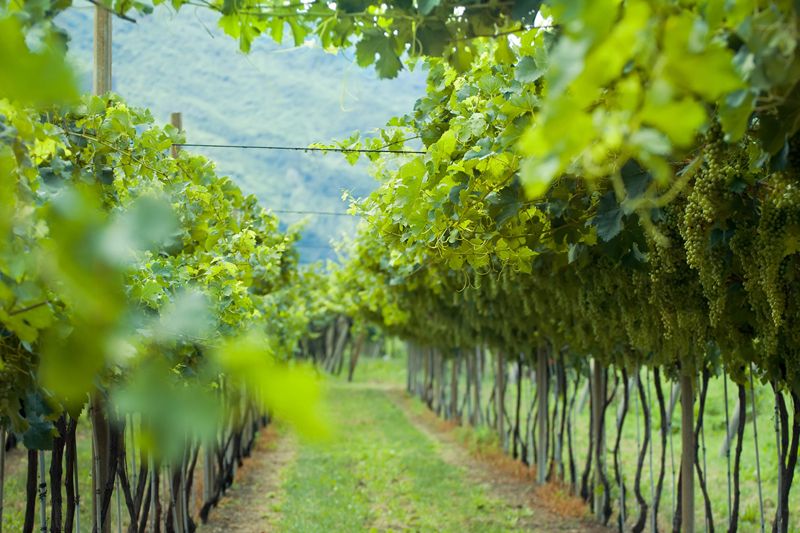
Burgundy’s wine industry is moving to adapt to climate change as earlier harvests, hotter summers, longer dry periods, and less predictable water supplies reshape one of the world’s most closely watched vineyard regions.
The pressure is especially clear in the Côte d’Or, where the identity and market value of wine are tied to small differences in place, soil, and exposure. In that setting, changes in vineyard practice are not only a farming issue. They are also part of a broader effort to protect the long-term value of land, appellations, and estates whose reputations were built over centuries.
Among the producers drawing attention in that debate is Thibault Liger-Belair of Domaine Liger-Belair in the Côte de Nuits, one of Burgundy’s most prestigious areas. Speaking recently at the “Reincontrare Giulio Gambelli” forum in Val d’Orcia, Italy, Liger-Belair described an approach centered on soil, water, energy, and autonomy. His comments reflect a wider shift taking place across Burgundy as growers try to adjust to a changing climate without weakening the regional idea of terroir, the belief that the character of a wine is inseparable from the place where it is grown.
The 2026 season has added urgency to that discussion. Burgundy has already faced an unusually early harvest, a sign of how far growing conditions have moved from historic patterns. Warmer temperatures can speed up sugar accumulation in grapes, but acidity, phenolic ripeness, and aromatic development do not always advance at the same pace. That creates a central problem for growers and winemakers: deciding when fruit is truly ready to pick.
Liger-Belair said the answer cannot be reduced to a date on the calendar. In his view, growers need to observe each parcel closely and accept that each vintage may require a different response. He argued that the goal is not to force vineyards into a fixed timetable, but to reduce vulnerability and adapt with as little damage as possible.
That approach carries economic weight in Burgundy. In many parts of the region, bottle prices and vineyard values depend on a wine’s ability to express a precise site. If climate change alters the balance of the fruit, growers face a direct risk not only to annual production but to the identity that supports the market standing of the region’s best-known names.
For that reason, Liger-Belair places quality ahead of volume. In Burgundy, that view is more than a stylistic preference. It is part of protecting the long-term value of vineyards where scarcity, reputation, and place are central to price. In a warmer climate, maximizing yield may offer short-term gains, but many producers increasingly see resilience and site expression as the stronger strategy.
Water is becoming one of the most important parts of that strategy. Liger-Belair said water management is now central, but he does not frame the issue simply as a matter of using more of it. Instead, he argues for systems that help vineyards capture, store, and use water more effectively, beginning with the soil itself.
That has pushed attention toward organic matter, root depth, and soil structure. Soils that are alive, less compacted, and richer in organic material can absorb and retain more moisture, giving vines a better chance to endure heat and drought stress. Cover crops, grassing, biodiversity, and careful tillage are being treated less as optional environmental measures and more as production tools tied to the future stability of the vineyard.
This way of thinking also changes how the vineyard is viewed. Rather than seeing it only as a surface that produces grapes, growers increasingly describe it as an ecosystem. In that model, the asset to protect is not only the vine itself but the broader system that allows the vine to function under pressure from heat and water stress.
At Domaine Liger-Belair, that logic extends beyond the field. The estate is being managed with an emphasis on autonomy and circular use of resources. Energy, water, soil work, and waste reduction are being linked in an effort to make the business less dependent on outside inputs. The reasoning is both environmental and financial. A more self-sufficient estate is also a more resilient one, especially in a period when climate volatility can raise costs and increase uncertainty.
The same principles are being applied in the cellar. If climate change produces more variability in the grapes, Liger-Belair argues that winemaking also needs flexibility. That includes work on yeasts and fermentation choices that respond to the character of a given parcel and vintage instead of trying to standardize fruit through a fixed technical formula.
Even materials often treated as byproducts are now part of the discussion. Liger-Belair has pointed to work on water recovery and to the possibility of capturing carbon dioxide generated during fermentation. Those projects are part of a broader attempt to make the estate function more like a closed loop, where resources are reused rather than discarded whenever possible.
Another part of the adaptation effort involves plant material itself. Genetic diversity within Pinot Noir and Chardonnay is receiving greater attention as growers weigh how Burgundy’s traditional grapes may perform under future conditions. Preserving a wider range of vine material can create more options over time, especially if warmer and less predictable weather becomes the norm.
That discussion also reaches older grape varieties once present in Burgundy but now marginal in commercial terms. Some producers and researchers are asking whether those historic varieties could play a larger role if climate conditions continue to shift. In a region defined by strict tradition and tightly drawn appellation rules, even raising that question shows how seriously climate risk is being taken.
The stakes are especially high in the Côte d’Or. Vineyard land there ranks among the most valuable in the wine world, and the region’s leading appellations depend on a reputation for precision and consistency that can be difficult to maintain as seasons become less stable. Any long-term erosion in wine style or site expression would have consequences far beyond one vintage.
That is why climate adaptation in Burgundy is increasingly being treated as a matter of asset protection as well as agricultural management. Preserving terroir means preserving a form of capital built over generations, one that includes not only land prices and bottle values but also the cultural standing of the region in the global wine trade.
Liger-Belair has said he remains optimistic and believes Burgundy is more open to renewal than it has been in the past. That optimism does not rest on the idea that climate change can be stopped at the level of one estate or one region. It rests on the belief that tradition can survive if producers are willing to change the tools they use to defend it.
In practice, that means slower and more careful decisions in the vineyard, close monitoring of parcel differences, more attention to soil biology and water retention, greater interest in energy and resource efficiency, and a willingness to experiment in the cellar without abandoning the regional identity of the wines. Across Burgundy, the challenge is not only to keep making fine wine in hotter years, but to do so in a way that allows the vineyards of the Côte de Nuits and the wider Côte d’Or to remain recognizable as the same places that built Burgundy’s standing in the first place.
