China’s South African Wine Imports Jumped 185% in July
Importers attributed the rebound to delayed shipments, customs paperwork, post-tariff restocking, with average declared values falling.
Monday, September 7, 2026
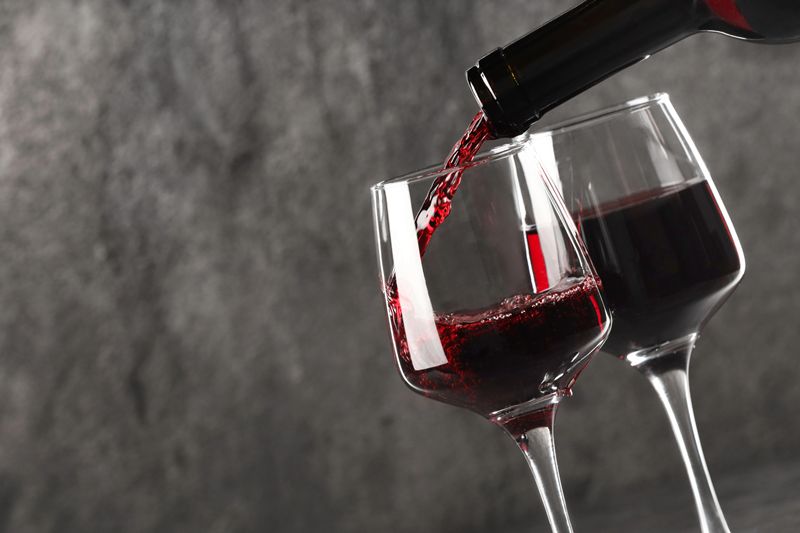
China sharply increased its purchases of bottled South African wine in July, importing about 210,000 liters worth roughly $770,000, according to Wine Business Observer, which cited China Customs data. Compared with June, the volume rose 184.61% and the value increased 145.85%, a jump that amounts to an additional roughly 136,200 liters and about $457,000 in one month.
Using the July figures and the reported monthly growth rates, China imported an implied 73,800 liters of bottled South African wine worth about $313,000 in June. Because the published numbers are rounded and the underlying customs tables were not linked directly in the secondary report, those June comparisons should be read as approximate. Even so, the July change was large enough to mark the first strong month-to-month recovery since China began granting South African wine zero-tariff treatment in May.
The rebound in volume outpaced the rise in value. The average declared value fell to about $3.67 per liter in July from roughly $4.24 per liter in June, a decline of about 13.6%. That suggests the July increase was driven more by larger quantities than by a move toward higher-priced products. On a 750-milliliter bottle equivalent, the July import value works out to about $2.75 before distribution and retail costs.
China’s zero-tariff policy for South African wine took effect on May 1 as part of a two-year preferential tariff program covering 20 African countries. Under that change, the previous 14% tariff on bottled South African wine and the 20% tariff on bulk wine were reduced to zero. Importers and traders interviewed by Wine Business Observer said the July rebound is consistent with the normal lag between a policy change and the appearance of new shipments in customs data, but they also said it would be too early to credit the entire increase to the tariff cut alone.
Several trade participants cited shipping times, paperwork and customs timing as key reasons the benefit did not show up immediately in May or June. Wu Wenfeng, a Shanghai wine importer quoted by Wine Business Observer, said the full cycle from shipment in South Africa to entry into the Chinese market usually takes 45 to 50 days. He said South African routes generally offer fewer sailings and container options than more established routes from places such as Chile, which can make arrival times less predictable.
Other importers said orders were also held back until the details of the new tariff treatment and origin rules became clear. A South African winery executive cited by the publication said some Chinese buyers waited for formal confirmation of the zero-tariff policy, proof-of-origin requirements and actual customs procedures before locking in orders. In that account, purchases placed after May would not necessarily show up in customs figures until July because of booking, loading, sea transit, declaration and warehouse entry.
Paperwork also appears to have played a role. Hong Boyong, general manager of Shanghai Lusui Liquor Industry, told the publication that some cargoes were slowed early on by the application and verification process for certificates of origin. Once those materials were completed, he said, some shipments cleared customs in a more concentrated way, lifting the July total. That kind of bunching can produce sharp monthly swings, especially in a trade flow that starts from a relatively small base.
That low base is central to how traders are reading the data. South African bottled wine remains a small segment in China compared with wine from major suppliers such as Australia, Chile and France. On that scale, a few containers arriving in the same month can make the growth rate look dramatic. Some importers told Wine Business Observer that their July cargoes were mainly used to refill existing channel inventory rather than to support a broad expansion in demand.
Zhang Wu, identified by the publication as a Shanghai importer of South African wine, said one shipment that had been ordered earlier completed customs clearance in July and was used mostly to replenish stock already sold through established customers. He said the tariff cut reduced import costs, but end-market sales were still slow enough that his company did not want to overbuild inventory. Chen Weijun of Shanghai Kaniegao International Trade said his company restocked South African products in June and August and described the market as small and more disciplined after several years of adjustment, with importers focusing closely on intake volumes.
The July price data also reinforced the view that the month’s growth leaned toward entry-level wine. Traders interviewed by the publication said South African wine in China is often positioned on value, with strong competition in the lower and middle price bands. That can help the category win shelf space, especially in online channels and warehouse clubs, but it also limits how much revenue growth can follow a rise in physical volume. If more of the July arrivals were lower-priced white wines, customized channel labels or high-volume stock-keeping units, the decline in average value per liter would make sense.
South African wine also faces a broader market challenge in China that tariff relief alone cannot solve. Importers said the category still lacks the brand recognition and channel reach enjoyed by more established origins. South Africa is known in the trade for grapes such as Chenin Blanc and Pinotage, but those varieties remain less familiar to many Chinese consumers than Sauvignon Blanc from New Zealand, Riesling from Germany or the better-known labels coming from Australia, France and Chile. Several merchants told Wine Business Observer that selling South African wine often requires more explanation about region, grape and style than selling wine from bigger imported categories.
Competition has also intensified as Australian wine returned to China after the end of the anti-dumping and countervailing measures that had once disrupted that trade. During the years when Australian wine was largely absent, some South African products benefited from substitution demand, especially in entry-level and mainstream price points. Traders said that support has weakened as Australian suppliers re-entered the market and as other origins also pushed harder on price. In that environment, zero tariffs improve South Africa’s cost position, but they do not guarantee a lasting gain in share.
For now, the July customs figures point to a clear monthly rebound in bottled South African wine imports into China, but the trade is treating the move with caution because the comparison base was small, the monthly series is volatile and the increase was accompanied by a lower average declared value. Importers said the next few months will matter more than a single spike, especially whether new arrivals continue after the first wave of post-tariff restocking and whether repeat orders follow through in existing retail and wholesale channels.