Veneto asks chambers of commerce to register reciprocal farm labor customs
Officials say a Trentino-style system could clarify when unpaid harvest help is a rural custom rather than illegal work.
Tuesday, September 1, 2026
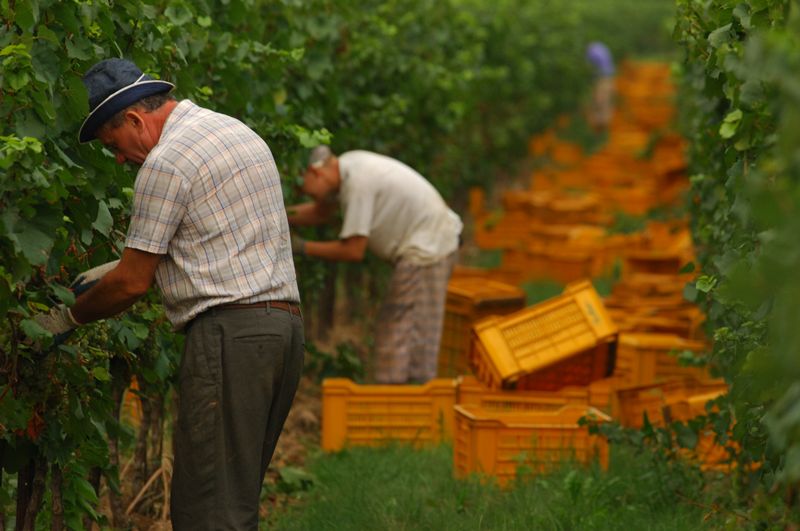
Veneto is looking at Trentino’s approach to informal harvest help and reciprocal labor among farmers as regional officials push for clearer rules around practices that remain common in the countryside during grape picking and other seasonal harvests.
Dario Bond, the Veneto region’s agriculture councilor, has called on the chambers of commerce in the region, with particular attention to Treviso and Belluno, to examine whether they can begin formally collecting and registering local customs tied to labor exchange between agricultural businesses. The goal, he said, is to give farmers who act in good faith more legal certainty and to reduce the risk that traditional forms of mutual help are treated as illegal work.
Bond said exchanges of labor between farmers, along with help from relatives and extended family members, are widespread in rural areas, especially during the harvest season. He argued that those practices should be framed more clearly so that genuine cooperation is not confused with undeclared employment.
The Veneto initiative draws directly from a model recently recognized in the Autonomous Province of Trento. There, local authorities moved to give formal recognition to two longstanding practices: “Ganzega” and what is described as solidarity or emergency labor.
“Ganzega” refers to spontaneous, occasional and unpaid help offered by family members, friends and neighbors for farm work such as the grape harvest or the apple harvest. Under that custom, the work is not paid with wages. Instead, the only form of acknowledgment is a shared meal or another simple social moment tied to the workday. In Trentino, supporters of the measure have presented it as a way to protect a historic rural tradition while also drawing a line between that kind of community help and regular labor relationships.
The second practice concerns mutual aid between agricultural entrepreneurs in special situations of need, such as illness or injury. In those cases, one farm operator may step in to help another on a temporary basis, not as part of a standard employment contract but as a reciprocal form of support rooted in local agricultural practice.
Bond said the Trentino example shows that a path exists to bring more clarity to these issues. He is now asking Veneto’s chambers of commerce to consider adapting a similar system in their own territories through a coordinated process and shared criteria.
The request focuses on the register of local customs and usages, a tool used in Italy to document established commercial and social practices in a given area. Bond said he understands that gathering and certifying such customs takes time, but he argued that the work should begin quickly because the harvest season puts the issue in sharp focus for many farms.
According to the regional official, greater certainty would help reduce gray areas and protect farmers who operate correctly. He said the Veneto regional government is ready to offer technical and institutional support if the chambers of commerce decide to move ahead.
The issue is especially relevant for small family-run farms, where finding extra workers for harvest operations can be difficult. Supporters of the Trentino framework say formal recognition of occasional unpaid help and reciprocal emergency assistance can ease that pressure without changing the basic legal rules that govern paid agricultural work.
At the same time, the proposal touches on a sensitive area in Italian agriculture, where authorities have long sought to combat undeclared labor and exploitation in the fields. That is why the distinction between traditional mutual help and irregular employment is central to the discussion. Bond framed the Veneto proposal as an attempt to reduce bureaucratic uncertainty while keeping labor safety rules fully in place.
His appeal was directed above all to the chambers of commerce of Treviso and Belluno, areas with important agricultural activity and vineyard production, but the broader message was aimed at Veneto as a whole. By starting a formal review of local usage, the region hopes to establish whether customs similar to those acknowledged in Trentino exist in Veneto and whether they can be recognized in a clear and legally sound way.
The debate comes as growers across northern Italy prepare for or enter the harvest period, when family networks and relations among neighboring farms often become part of the daily work needed to bring in crops on time. In that setting, officials in Veneto are arguing that long-established practices should not remain in a legal gray zone if they can be documented and regulated with clear limits.
Any move in Veneto would require the chambers of commerce to assess the local record, gather evidence on how these practices are used, and determine whether they meet the standards for inclusion in the register of usages. The process would likely involve coordination among local institutions and agricultural stakeholders, since the point is not only to preserve tradition but also to define when unpaid help remains a customary social practice and when it crosses into labor activity subject to other rules.
For now, the region has not announced a formal adoption of the Trentino system. What it has done is open a political and administrative push to see whether the same approach can be applied in Veneto, where officials say many farmers are asking for clearer guidance before routine harvest cooperation is challenged as irregular work.