Champagne Producers Set 2026 Yield Cap at a Modern-Era Low
The fourth straight reduction seeks to trim inventories after postpandemic demand growth cooled.
Friday, August 28, 2026
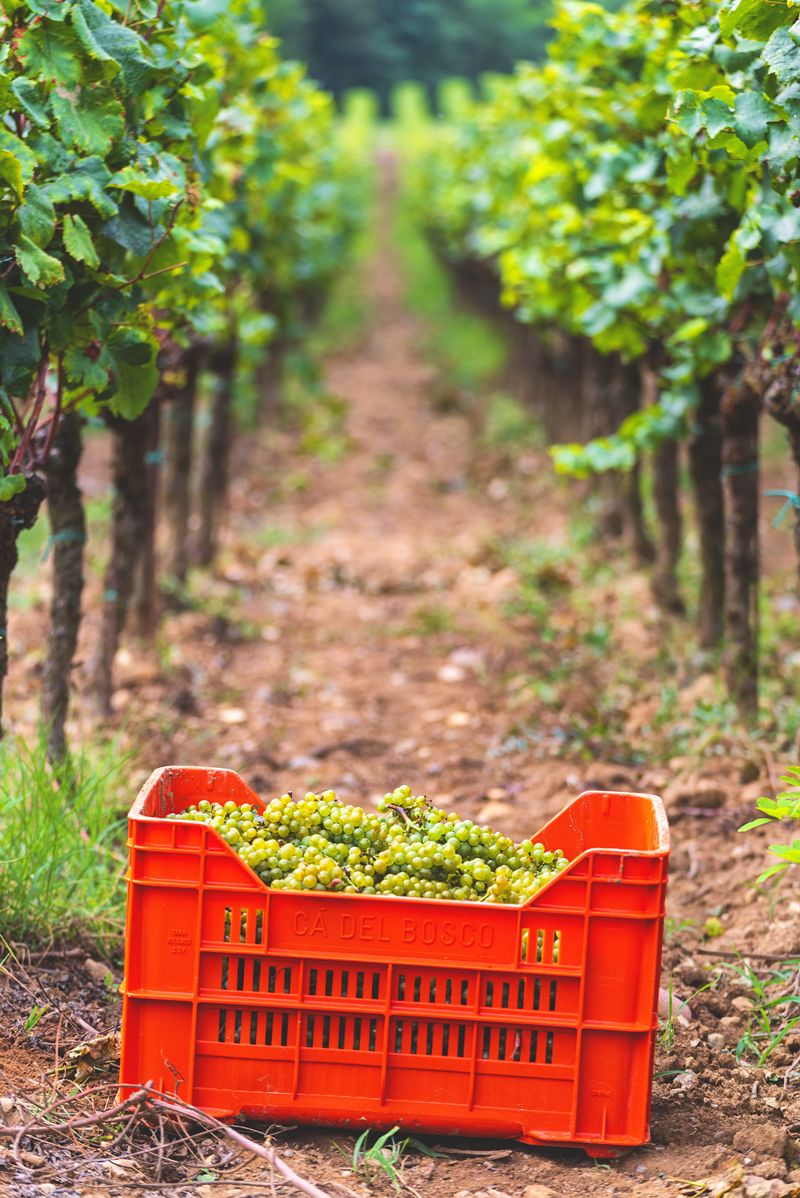
Champagne has set its 2026 marketable yield at 8,800 kilograms per hectare, the lowest level of the modern era outside the disruption of 2020, as the region tries to trim inventories without undermining prices or quality.
The decision was taken on July 22 by the Comité Champagne, the body that brings together growers and houses in the region. The cap applies to the amount of grapes that can be turned into wine for sale. The Comité said that level would translate into about 250 million bottles. It is down from 9,000 kilograms per hectare in 2025, 10,000 in 2024, 11,400 in 2023 and 12,000 in 2022. Over four harvests, the allowed commercial yield has fallen by more than 26%.
That makes 2026 the fourth straight cut and the second-lowest commercial yield of the century, after the pandemic year, when the initial cap was set at 8,000 kilograms per hectare before being revised to 8,400 later in the year as sales began to recover. This time, the committee said the goal is to reduce stocks by about 10 million bottles in a gradual way while preserving the economic balance of vineyards and the quality standards that support the Champagne name.
David Chatillon, president of the Union des Maisons de Champagne and co-president of the Comité Champagne, said the region’s collective model allows it to adjust production to market conditions while protecting the long-term value of the appellation. Maxime Toubart, president of the Syndicat Général des Vignerons and co-president of the CIVC, described the move as a measured decision that reflects both vineyard conditions and the future needs of the sector.
The market backdrop helps explain the caution. Shipment volumes have not collapsed, but they are no longer rising at the pace seen after the pandemic rebound. In the first six months of 2026, shipments reached 107.1 million bottles, up 1.2% from the same period a year earlier. Exports led the increase, while sales in France were flat. If that pace continues through the second half, annual shipments would reach about 269 million bottles, slightly above the 266 million recorded in 2025. Even so, that would come after a 2% decline in 2025 from 271 million bottles in 2024, leaving the region with a narrow gap between stable demand and still-elevated stocks.
For the broader beverage business, that matters beyond northeastern France. Champagne remains a benchmark for the premium sparkling wine trade, and decisions on yield and stock management can help support pricing in the category. If lower authorized volumes continue, they could also affect the amount of Champagne available in export markets and shift some demand toward other sparkling wines, though that effect is not yet clear.
The production cut also comes during a difficult growing season. Industry officials have described the 2026 year as uneven and fragile, marked by spring frosts, extreme heat in June and more recent dry conditions. Weather pressure has varied sharply from one part of the vineyard to another. Early estimates for the agronomic yield, meaning the grapes physically present on the vines before any commercial limit is applied, were close to 10,000 kilograms per hectare. Those estimates have since been lowered to a range of 7,000 to 8,000 kilograms per hectare, pending rainfall in the coming weeks.
If those lower estimates hold, the actual crop could end up below the commercial ceiling, reversing the usual situation in Champagne, where the market limit often acts as the main brake on production. In that case, the 2026 campaign would be constrained not just by a business decision but by weather damage as well. For growers and houses, that raises the stakes around fruit quality and sourcing at a time when costs remain high and many companies are trying to protect margins without pushing too hard on retail prices.
The harvest itself is expected to be one of the earliest on record. The official opening of picking was set for Saturday, Aug. 15, with the main work concentrated between Aug. 20 and Aug. 25, roughly 10 to 15 days earlier than the historical average. Earlier harvests have become more common as warmer conditions speed up ripening, but the 2026 timing still stands out in a region where harvest decisions can influence both style and volume.
At the same time, the sector has opened talks with France’s Agriculture Ministry over a separate flexibility measure that would allow harvesters to buy grapes covering up to 15% of their needs. That would give some producers room to manage the impact of the lower yield, especially those with less fruit of their own or more exposure to short crops. Whether that request is approved could matter for smaller operators and for houses trying to secure enough supply while the region continues to restrain volumes.
The message from Épernay is that Champagne would rather keep a tight hold on output than risk letting excess stocks weaken the market. In 2026, that strategy is colliding with a growing season that may already be delivering fewer grapes than the commercial cap allows.