Heat pushes Italy’s 2026 grape harvest earlier in key wine regions
Maremma Toscana is running up to 15 days ahead of average, leaving growers to fine-tune picking for balance and quality.
Monday, August 17, 2026
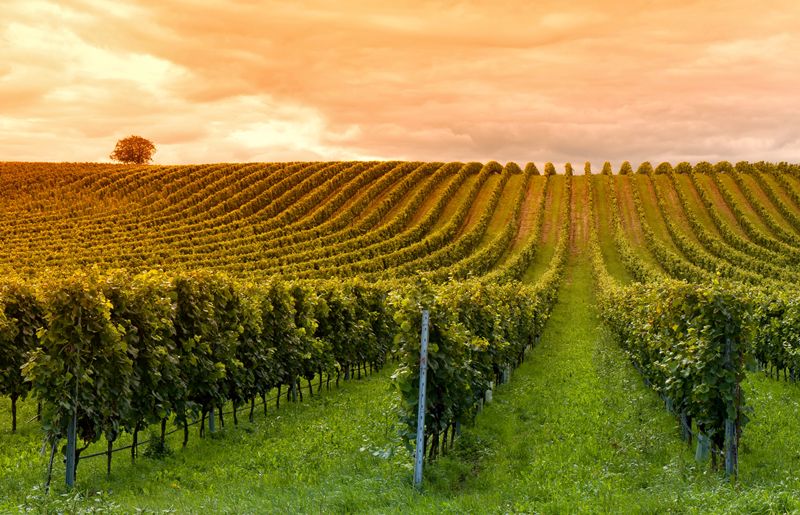
Italy’s 2026 grape harvest is starting earlier than usual in several key wine areas, and growers say the most important decisions are being made before fruit reaches the winery. In the Colli Euganei, Maremma Toscana and the vast Delle Venezie Pinot Grigio area, producers are reporting healthy vineyards and promising quality, but also a season shaped by heat, faster ripening and close monitoring of sugar, acidity and water stress.
In the Colli Euganei, in the Veneto region, harvest began on Monday, Aug. 10, about a week earlier than last year, with the earliest varieties, including Pinot Bianco and Chardonnay, along with fruit from vineyards in their first year of production. Serprino and other grapes intended for sparkling wine bases are expected to follow. Red Bordeaux varieties grown for Colli Euganei DOC wines are likely to wait until late August or the first days of September.
Growers there describe the vineyard picture as favorable. Disease pressure has been low, grape health is strong and expected volumes are in line with the denomination’s production limits. But heat and wind have also pushed ripening forward, especially in hillside vineyards that cannot be irrigated. That has raised sugar concentration and sped the breakdown of malic acid, making timing more delicate for growers who want to preserve balance in the fruit.
“We are very satisfied with the season so far,” Gianluca Carraro, president of the Colli Euganei consortium, said in remarks released this week. He said the year looks positive for both volume and quality, and that hot weather helped keep vine diseases such as downy mildew and powdery mildew away.
That optimism comes with caution. Producers say the final assessment will depend on the later-ripening grapes, especially reds, which still face the hottest part of the season. In the area, growers are also still dealing with damage from wild boars, a recurring problem that can become more severe just before harvest.
Farther south, in Maremma Toscana, the pace is even faster. The harvest is running as much as 15 days ahead of the historical average, according to the local protection consortium. Early white grapes and fruit for sparkling wine bases have already been picked. Attention will soon turn to some red varieties, beginning with Ciliegiolo, and some estates are also weighing an earlier harvest for Sangiovese in hillier sites with less water available.
There, too, the condition of the grapes is described as very good, but vineyard work has become central to preserving quality. Rainfall between winter and spring rebuilt water reserves in the soils, giving growers a buffer after drier years. But a long stretch of high temperatures is now increasing stress on vines, especially in lighter soils and in sites with more limited access to water.
To manage that pressure, estates are relying on targeted practices in the vineyard rather than waiting for a single ideal picking date to appear on the calendar. They are adjusting canopy growth, shading bunches and calibrating crop loads to guide ripening and protect fruit from excess heat. The goal is to keep vines in balance long enough to harvest grapes with freshness as well as full flavor.
Francesco Mazzei, president of the Consorzio Tutela Vini della Maremma Toscana, said producers are meeting the season with “competence and a strong capacity to adapt,” using agronomic practices to preserve the plant’s balance and the quality of the grapes. He said interventions range from crop-load management to shading bunches, all aimed at reducing the effect of high temperatures.
Mazzei said the grapes are in very healthy condition and that quality prospects remain encouraging. But he also pointed to one risk for the region’s final output. Cluster weights are lighter, and unless there is meaningful rain in the coming weeks, total production could end up below average even if fruit quality stays high.
The same balance between promise and pressure is shaping the harvest in Delle Venezie DOC, the large Pinot Grigio denomination that stretches across Veneto, Friuli-Venezia Giulia and the autonomous province of Trento. The 2026 campaign is opening with different harvest dates from one area to another, but the common themes are advanced vine development, high temperatures and the need to decide harvest timing on a site-by-site basis.
Across the denomination, grape health is reported as good and quality prospects as positive. Even so, growers and technicians say picking decisions must be tied closely to local conditions, with particular attention to acidity, pH and aromatic maturity. A broad area such as Delle Venezie does not ripen evenly, especially in a hot season when water availability, soil type and vineyard management can lead to sharp differences from one zone to the next.
In western Veneto, higher heat and lower water availability have accelerated ripening, especially in lighter soils and in vineyards without irrigation. Where growers maintained a good balance between vegetative growth and crop levels, the outlook remains positive. In Trentino, the vegetative cycle moved especially fast, and Pinot Grigio is among the first varieties being harvested, with healthy grapes and a favorable balance between sugars and acidity. In central and eastern Veneto, as well as Friuli-Venezia Giulia, conditions are also seen as favorable, though producers say high temperatures may leave acidity slightly below average in some places.
Luca Rigotti, president of the Delle Venezie consortium, said the denomination is approaching harvest with broadly positive health and quality indicators, while also recognizing the differences across such a large production area. In that context, he said, the moment of harvest is being set in each production zone with the aim of finding the best possible balance to express the character of Delle Venezie Pinot Grigio.
The consortium is also taking steps beyond the vineyard to regulate supply in 2026. It has reduced the maximum yield for Pinot Grigio destined for the DOC from 180 to 160 quintals per hectare. Fruit produced above 130 quintals per hectare will be subject to administrative storage, meaning part of the crop can be held back rather than immediately entering the market under the denomination. The measures are intended to keep supply aligned with demand and to protect the value of the appellation in a year when vineyard conditions are moving quickly.
Taken together, the updates from the three areas show how harvest timing in Italy is becoming less a fixed seasonal ritual and more a series of precise choices made parcel by parcel. In all three regions, growers are describing the fruit as healthy and the quality outlook as good. But they are also dealing with a season in which heat can improve sanitary conditions while at the same time pushing sugars ahead of acidity, shrinking cluster weight and increasing the need for intervention in the vineyard.
For producers in the Colli Euganei, that means watching the balance between sugar and freshness as early varieties come in and red grapes approach the final stretch of ripening. In Maremma, it means protecting vines from heat and deciding whether varieties such as Sangiovese should come off sooner in the driest hillside sites. In Delle Venezie, it means reading a large and varied landscape carefully so that Pinot Grigio is picked at the right point in each zone rather than by a single regional timetable.
The 2026 harvest has only begun, and the most decisive days for many late-ripening grapes are still ahead. For now, the message from growers is clear: healthy fruit alone will not define the vintage. The outcome will depend on how closely producers manage ripening in the vineyard and how quickly they respond when the balance in the grapes begins to shift.