Britain’s no- and low-alcohol beer sales are set to hit a summer record
Brewers forecast more than 64 million pints sold as demand for moderation surges and the industry presses for looser labeling rules
Wednesday, July 15, 2026
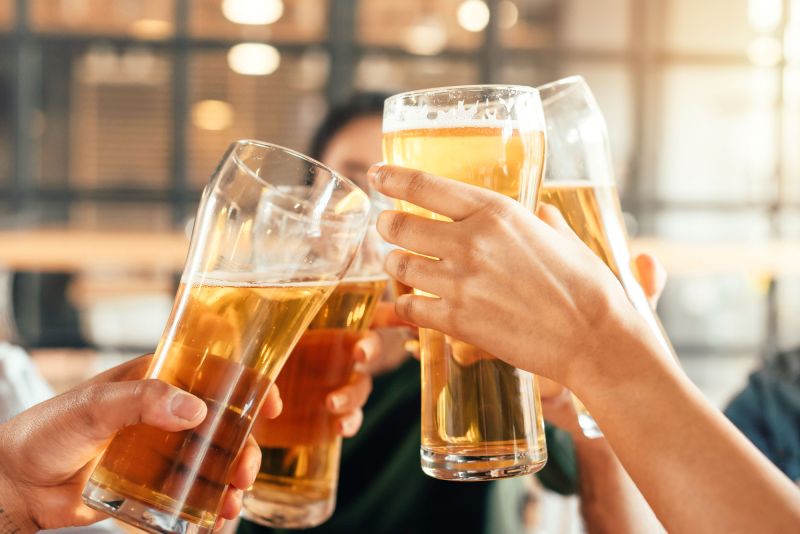
Britain’s beer industry expects this to be its biggest summer yet for no- and low-alcohol beer, with more than 64 million pints projected to be sold during the season, according to new research released by the British Beer and Pub Association.
The trade group said that would be more than eight million pints above the level recorded in the summer of 2025, extending a sharp rise in demand that has turned the category into one of the fastest-growing parts of the country’s beer market. The BBPA said about 200 million no- and low-alcohol beers were consumed last year, making 2025 the strongest year on record for the segment.
The figures come as brewers and pub operators in Britain report stronger consumer interest in moderation, especially during warm-weather drinking occasions tied to pub gardens, parks and sports viewing. The association said the category’s volume has grown 870% since 2013, a pace it described as evidence that no- and low-alcohol beer is now a lasting part of the beer business rather than a short-lived trend.
At the same time, the group is pressing the British government to change the legal definition of “alcohol free,” arguing that current rules are limiting investment and product development. Under existing U.K. regulations, a beer must contain less than 0.05% alcohol by volume to be labeled alcohol free. The BBPA wants that threshold raised to 0.5% ABV, which is used in many other countries.
The distinction matters because it affects how brewers formulate products, how they label them and whether entering the category is commercially viable. A higher threshold could potentially make it easier for more producers to launch alcohol-free beers, broaden consumer choice and encourage further investment across the wider drinks sector, particularly as demand continues to rise.
Emma McClarkin, chief executive of the British Beer and Pub Association, said brewers and pubs across the country were already responding to changing drinking habits by expanding their range of lower-strength options. She said the government should “keep the momentum going” by updating the alcohol-free definition to 0.5%, which she argued would align Britain with international markets and support greater investment.
Industry executives cited summer weather and changing social habits as key drivers of sales. James Rabagliati, head brewer at Nirvana Brewery, said hotter temperatures had lifted demand at a time when some consumers were cutting back on alcohol intake. He said customers were either choosing alcohol-free beers outright or “zebra-striping,” alternating between nonalcoholic and alcoholic drinks over the course of an occasion.
Luke Boase, founder of Lucky Saint, said demand for alcohol-free beer tends to rise in summer as people spend longer socializing outdoors or watching sports. He said recent sales gains at his company reflected how alcohol-free beer had become part of mainstream drinking behavior in Britain.
The BBPA also pointed to recent sales data showing steady momentum before this summer’s forecast. In June and July 2024, the equivalent of 27 million pints of no- and low-alcohol beer were sold in Britain, up from 23 million during the same period in 2023 and 20 million in 2022.
The debate over labeling standards is likely to draw attention beyond beer because definitions around low- and no-alcohol products increasingly shape innovation across beverages. For brewers in particular, a move from 0.05% ABV to 0.5% ABV could open room for more recipes and production methods while bringing Britain closer to rules already common in overseas markets.