LVMH puts soil health at the center of its wine strategy
At a forum in Arles, Antoine Arnault said regenerative agriculture is essential to climate resilience, water management and terroir protection.
2026-06-09
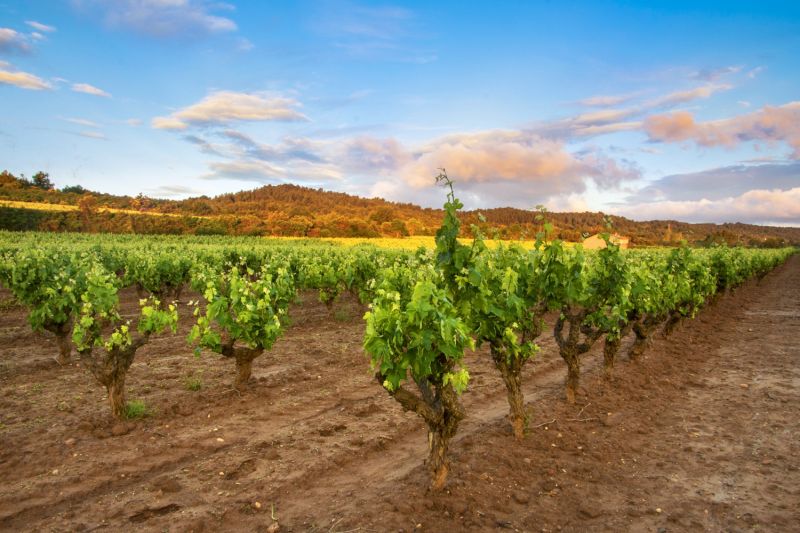
LVMH is putting soil health at the center of its wine and spirits strategy, using a global forum in southern France to argue that regenerative agriculture is no longer a side issue for vineyards but a core business concern tied to climate risk, biodiversity and water management.
At the third World Living Soils Forum, held June 3 and 4 at Luma Arles in Provence and organized by Moët Hennessy with ChangeNOW, Antoine Arnault, LVMH’s head of image, communication and environment, said the group would keep and accelerate its environmental goals despite economic pressure and geopolitical instability. His message was direct: healthy soils are essential to the future of wine production and to the resilience of the broader luxury group’s supply chains.
The forum brought together researchers, public institutions, journalists, trade groups and companies from the wine and food sectors around a subject that has gained new urgency in viticulture. For years, much of the industry’s attention focused on grape quality, vine health and the finished bottle. Now the discussion is shifting below ground, toward soil structure, microbial life, water retention and carbon storage.
That shift is especially significant for Moët Hennessy, the wines and spirits division of LVMH, whose Champagne and wine portfolio includes Moët & Chandon, Krug, Dom Pérignon, Ruinart, Veuve Clicquot, Château d’Yquem, Cheval Blanc, Domaine des Lambrays, Cloudy Bay, Bodega Numanthia, Terrazas de los Andes and Ao Yun. According to figures cited at the forum, LVMH’s Champagne and wine business generated €3 billion in revenue in 2025.
Arnault said LVMH’s environmental policy is not tied to short-term economic indicators. Climate change, he said, does not pause while macroeconomic conditions improve. He told participants that difficult periods are precisely when companies show whether their commitments are real. He also linked that position to the group’s longer environmental history, saying LVMH has built successive road maps since creating an environment department in 1992. Its current plan, Life 360, launched in 2021, is meant to integrate sustainability across operations including wines and spirits, perfumes and cosmetics, fashion and leather goods, watches and jewelry, retail and hospitality.
In practical terms, Arnault described changes that go beyond vineyard management. He said production sites and workshops have been redesigned with solar panels, bio-based building materials and surrounding landscapes managed for biodiversity. Some sites now produce their own energy. He said logistics centers have been relocated to cut transport emissions, especially in the United States. Packaging now uses more recycled and bio-based materials, he said, while repair and restoration programs are extending product life across several divisions.
Still, it was the vineyard landscape that drew the clearest line between old practices and new ones. Arnault said many of LVMH’s estates have changed visibly over the past five years. Instead of long uninterrupted rows of vines, he described vineyards now shaped by trees, shrubs, hedges and fruit trees. The aim is to improve soil health while also supporting biodiversity and reducing vulnerability to extreme weather.
He framed that transition as a major internal change for the wines and spirits division. For decades, he said, grape quality and vine health were treated as the main priorities. Today, he argued, soil health comes first. He called living soils “the mother of all battles,” saying they matter for climate because healthy soils store more carbon, for biodiversity because they host 50% of terrestrial biodiversity worldwide, and for water because they retain more moisture.
That argument reflects a broader trend in wine as producers face repeated droughts, heat spikes and heavy rainfall events that can erode topsoil or flood vineyards. Regenerative practices such as cover crops, reduced tillage and more diverse planting are increasingly presented not only as environmental measures but also as tools for adaptation.
Arnault said LVMH has seen measurable results after three years of cover cropping in some vineyards. He said soil quality has improved clearly enough to be measured with precision and that better soils reduce exposure to risks including flooding. As an example, he pointed to recent torrential rains in southern France that left no visible damage at one of the group’s estates because water retention strategies had been put in place. By contrast, he said vineyards using conventional practices a few miles away were fully flooded.
Those claims were presented as evidence that regenerative agriculture can deliver operational benefits as well as environmental ones. Arnault said agroecology and regenerative farming “really work,” a point meant to strengthen the case for wider adoption across supply chains tied to luxury goods as well as wine.
He also widened the discussion beyond vineyards. LVMH has been working with partner growers over the past five years on regenerative agriculture projects in several sectors, he said, including regenerative cotton programs for fashion houses in countries such as France, Turkey, Brazil, Spain, Mongolia, Chad and Australia. He added that partnerships with UNESCO on biodiversity protection helped support restoration work covering 1 million hectares of habitat for flora and fauna worldwide in 2025.
The forum itself was created in 2022 by Moët Hennessy around a simple premise: soils are among the planet’s most important natural resources, yet they are often overlooked because they remain largely invisible until they fail. Its stated goals include connecting people working on soil regeneration; sharing concrete actions for sustainable viticulture and regenerative agriculture; strengthening ties between science, innovation and field practice; and improving methods used to measure soil health.
Carlo De Biasi, president of Association Lien de la Vigne Vinelink, which brings together scientists and wine professionals focused on innovation in viticulture, summarized one of the event’s central ideas by saying soil is often treated as little more than a physical support when it is actually the basis of life on Earth.
That framing matters because one of the hardest issues in sustainable winegrowing remains measurement. Producers can adopt cover crops or reduce chemical inputs relatively quickly compared with replanting vineyards or changing cellar infrastructure. But proving how those changes affect carbon storage, biodiversity or resilience requires common indicators over time. The forum has made that technical question part of its mission.
Arnault used his speech to argue that no company can address those challenges alone. He said ecological pressures are too large for isolated action and called alliances among institutions, businesses and suppliers essential if environmental gains are to be scaled without losing sight of economic realities. For that reason, he announced that Moët Hennessy had decided to open the governance of the World Living Soils Forum to other companies committed to soil regeneration.
That move suggests LVMH wants the forum to become more than a branded sustainability event tied to one luxury group. It is positioning it instead as an international platform where scientific findings, field experience and corporate investment can meet around practical questions facing agriculture: how to decarbonize production systems; how to protect water resources; how to preserve biodiversity; and how to maintain yields and quality under climate stress.
For wine producers in particular, soil has become a strategic issue because it sits at the intersection of terroir identity and climate adaptation. Healthy soils influence drainage during storms, water availability during dry periods and root development over time. They also shape how vineyards respond to rising temperatures and erratic weather patterns that are already affecting harvest timing and grape composition across many regions.
By placing soil at the center of its message in Arles, LVMH was also making a commercial point. In fine wine and Champagne, terroir remains one of the strongest claims behind value and distinction. Protecting that terroir now increasingly means managing living systems rather than simply preserving land boundaries or vineyard classifications.
Arnault told participants that terroirs are an inheritance received by wine houses over decades or centuries and that companies have a responsibility to keep them resilient enough to face current environmental pressures. That will require scientific research, innovation and what he called a creative mindset.
The emphasis on science was not incidental. The forum’s growing audience includes researchers working on microbiology, agronomy and climate adaptation alongside producers trying to translate those findings into vineyard practice. That exchange has become more important as growers seek evidence on what works under different conditions rather than relying only on broad sustainability claims.
In Arles, LVMH’s message was that soil regeneration should be treated as infrastructure for the future of wine: less visible than bottles or brands but fundamental to both quality and continuity. For a group whose prestige labels depend heavily on place-based identity, that argument carries weight well beyond one conference stage in Provence.
