Researchers test tractor noise on barn owl hunting
The study could shape how vineyards use the birds to control rodents without chemicals
2026-05-26
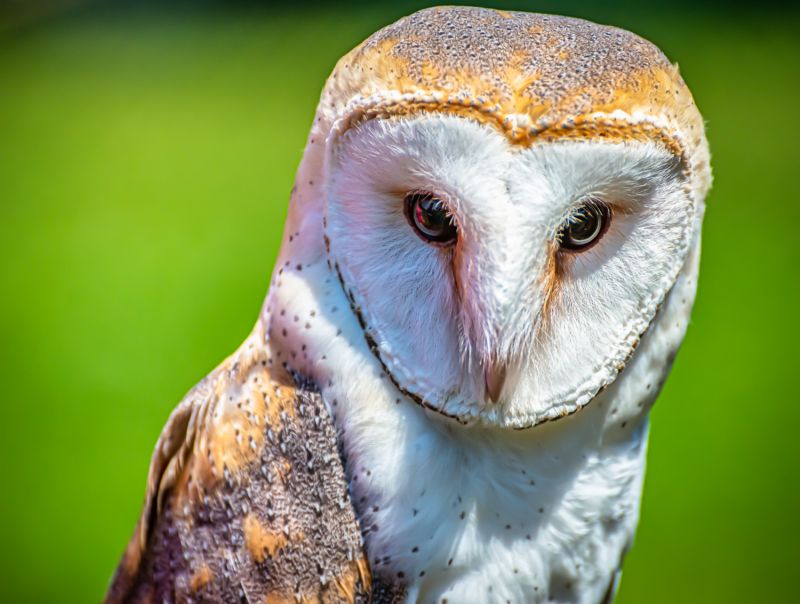
In California’s wine country, researchers are testing whether nighttime noise from tractors and other farm equipment is changing how barn owls hunt, a question that could affect how growers use the birds as a chemical-free way to control rodents in vineyards.
The study, led by Karen Gallardo Cruz, a Ph.D. candidate in ecology at the University of California, Davis, is taking place in vineyards and orchards across San Joaquin County, including sites near Lodi. The team is working with researchers from UC Davis, California State Polytechnic University, Humboldt and California State Polytechnic University, San Luis Obispo to see whether sound alters where barn owls search for prey and how rodents respond when the fields get louder after dark.
Barn owls have long been valued by growers because they eat large numbers of gophers, voles and mice that can damage vines and irrigation lines. Matt Johnson, a professor at Cal Poly Humboldt and a collaborator on the project, said previous research showed that a single barn owl family can kill 3,000 to 4,000 rodents in a year. He said maintaining owl boxes is more than eight times less expensive than labor-intensive rodent trapping.
The researchers are studying more than 200 nest boxes placed across vineyards and other crop fields. They trap adult owls from the boxes, fit them with lightweight GPS devices that work like small backpacks and track their movements for about three hours each night over five nights before recapturing them. The birds also receive leg bands for identification.
The goal is to learn whether barn owls avoid noisy areas when tractors or other machinery are running at night. Barn owls depend heavily on hearing to locate prey in darkness. Their ears are slightly offset, which helps them pinpoint the location of rustling rodents even when they cannot see them.
To test that response, the team has placed large speakers among rows of grapevines. On different nights, the speakers broadcast tractor noise, recordings of rodents rustling through leaves or silence. The researchers then compare owl flight paths with rodent activity at nearby monitoring stations stocked with sunflower seeds and equipped with motion-sensitive cameras.
Daniel Karp, a professor in UC Davis’ Department of Wildlife, Fish and Conservation Biology, said one question is whether growers could use sound to guide owls toward problem areas. He said the challenge is that farmers cannot direct the birds where to hunt, but rodent sounds might help draw them to places where pests are concentrated.
The project began in March and is scheduled to continue through July. During that time, the team also checks nest boxes about once a month with a GoPro camera attached to a long pole. Those visits have already turned up owlets only days old.
The work has also become part of outreach in Lodi. Researchers are working with the Lodi Wine Visitor Center, where a pair of barn owls is raising four chicks in a nest box with a livestream online. The team held a public event there on May 21 that included owl banding and an invitation for visitors to help name the babies. Another field day is planned for June at Jessie’s Grove Winery with Wild Farm Alliance and Salmon Safe.
Gallardo Cruz said many vineyards already have multiple nest boxes on their properties and want to know more about what the owls are doing and how best to support them while they hunt through noisy nights over California vineyards.
