Wine Growers Face a Water Reckoning
Porto Protocol urges vineyards to treat water as a living system as climate change intensifies drought and runoff.
2026-05-05
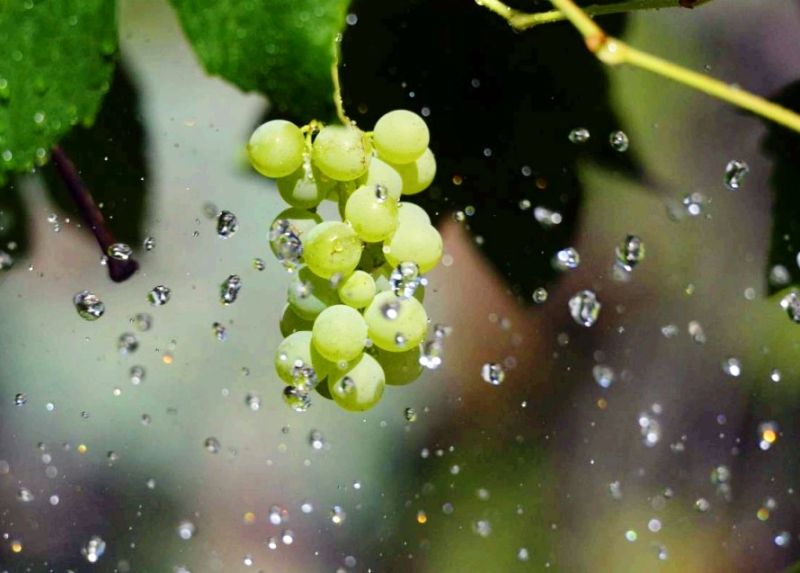
The Porto Protocol has released a new report that argues the wine industry must rethink how it manages water as climate change makes rainfall less predictable and droughts more severe in many growing regions.
The report, called “Saving Every Drop”, was developed by the Porto Protocol, a climate action network founded by Taylor’s Port, and it frames water not as a simple utility used in vineyards and wineries but as part of a larger living system tied to soil health, biodiversity and regional resilience. The group says the goal is to help producers use less water, restore more of it to the landscape and protect the long-term viability of wine regions.
The report arrives as growers in places such as the Mediterranean, California, Chile, South Africa and Australia face hotter conditions, longer dry periods and storms that can dump large amounts of rain in short bursts. The document says that pattern can leave vineyards with less usable water in the soil even in years when total rainfall appears normal or above average. It cites climate science showing that for every 1°C of warming, the atmosphere can hold about 7% more moisture, which can lead to heavier downpours, more runoff and more erosion instead of steady infiltration into the ground.
That shift matters because vineyards depend on water stored in soils and aquifers during critical stages of vine growth, especially ripening. The report argues that producers should stop measuring water only by how much they withdraw from wells or municipal systems and instead look at where water goes after use, how much is retained in the landscape and whether management practices improve or weaken the local hydrological cycle.
The Porto Protocol says its framework rests on three ideas: retain, recycle and regenerate. In practical terms, that means improving soil structure so it holds more moisture, reducing unnecessary water use in vineyards and wineries, reusing water where possible and adopting practices that support natural recharge rather than continuous extraction. The report also points to traditional and indigenous knowledge as part of the solution, alongside scientific monitoring and modern technology.
Jihany Brecci, who led the project and works as both a viticulturist and economist, said in the report that water should be understood as an interconnected system rather than a line item in an operating budget. Other contributors include specialists from CNRS in France, Bordeaux Sciences Agro, Università Cattolica in Italy and wine industry experts from the United States and Britain.
The network says more than 500 companies have endorsed the work. It also notes that agriculture accounts for 70% of global freshwater withdrawals and 90% of global water consumption, making vineyard management one part of a much larger challenge. The report argues that because wine has cultural influence far beyond its physical footprint, it can serve as a visible test case for broader climate adaptation in agriculture.
The document also addresses what it calls the gap between the price of water and its real cost. A winery’s monthly bill often reflects pumping or delivery expenses but not groundwater depletion, ecosystem damage or risks passed on to future generations. The report says that disconnect makes current practices harder to defend as climate volatility increases.
Across six chapters, “Saving Every Drop” lays out an approach built around understanding how water moves through macro, meso and micro cycles; observing water use from vineyard to cellar; and acting through changes in soil management, irrigation strategy, cleaning systems and cooling operations. The Porto Protocol says it wants producers to share field-tested solutions across borders rather than rely on one-size-fits-all rules.
The organization describes itself as a global network with more than 250 members and partners in more than 20 countries. It says its members manage more than 75,000 hectares of vineyards and represent more than 500 companies.

Founded in 2007, Vinetur® is a registered trademark of VGSC S.L. with a long history in the wine industry.
VGSC, S.L. with VAT number B70255591 is a spanish company legally registered in the Commercial Register of the city of Santiago de Compostela, with registration number: Bulletin 181, Reference 356049 in Volume 13, Page 107, Section 6, Sheet 45028, Entry 2.
Email: [email protected]
Headquarters and offices located in Vilagarcia de Arousa, Spain.