Italian red wine producers face high stocks and weak demand as regions adopt mixed strategies on yield cuts
Appellations across Piedmont, Veneto, and Tuscany weigh production limits to stabilize prices amid shifting consumer habits and market uncertainty
2025-08-27
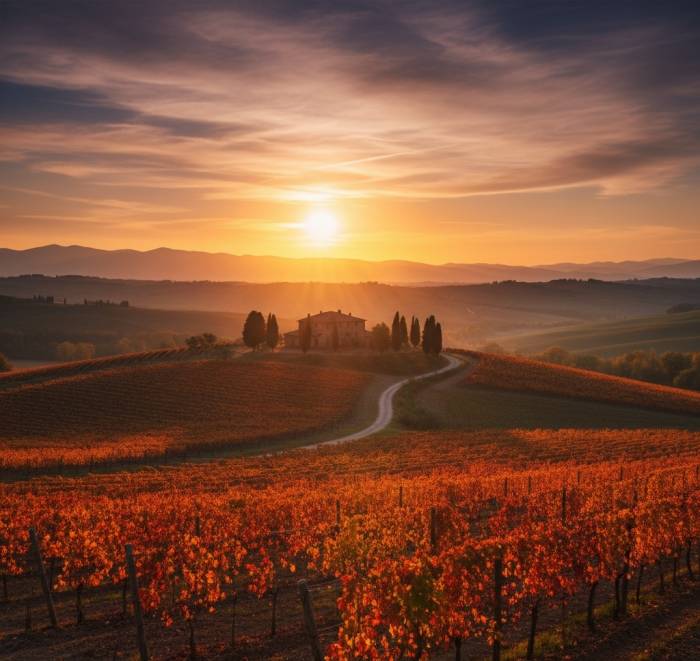
Italy’s major red wine appellations are facing a challenging period as sluggish markets, both at home and abroad, have led to high stock levels and growing concerns about the economic sustainability of the sector. According to data from Cantina Italia by ICQRF (Central Inspection for the Protection of Quality and the Repression of Fraud in Agri-Food Products), as of July 30, 2025, Italian cellars held 39.8 million hectoliters of wine, a slight increase of 0.5% over the same period in 2024. This comes after a particularly poor harvest in 2023, highlighting a structural decline in wine consumption and increased health consciousness among consumers.
The situation has prompted widespread discussion across Italy’s wine industry about the need to reduce production, not just for the upcoming 2025 harvest but as a long-term strategy to avoid oversupply and falling prices. While structural changes take time to implement, many appellations are already taking short-term measures to manage yields and protect their market positions.
In Piedmont, no cuts are planned for Barolo and Barbaresco, with maximum yields remaining at 80 quintals per hectare as set by regulations. Andrea Ferrero, director of the Barolo Barbaresco Alba Langhe Dogliani consortium, explained that a 10% reduction has been decided for Langhe Nebbiolo and Barbera d'Alba. This move is not due to immediate market problems but is intended to support growth while maintaining value, especially as Langhe Nebbiolo continues to expand in both production and sales.
Veneto’s Valpolicella Wine Consortium has taken a different approach. Christian Marchesini, president of the consortium, said that grape yields will be reduced by 10 quintals per hectare—from 110 to 100—for the next three years. No additional restrictions have been introduced for Amarone production. The goal is to maintain balance within the appellation and defend its value during an uncertain market phase. The consortium is also increasing promotional activities in key markets and adapting its offerings to meet new consumer preferences for fresher, lighter wines served at lower temperatures.
In Tuscany, strategies vary by region. The Bolgheri Consortium, led by Albiera Antinori and directed by Daniele Parri, reports that no yield cuts are planned for the 2025 harvest. The appellation remains balanced with regulatory limits set at 90 quintals per hectare for Bolgheri Rosso and 80 for Rosso Superiore.
Montalcino’s consortium has decided to reduce Brunello di Montalcino yields from 80 to 70 quintals per hectare, excluding the first hectare to protect small producers. Giacomo Bartolommei, president of the Consorzio del Brunello di Montalcino, said this decision was influenced by international market conditions and ongoing efforts to improve grape quality. The measure has been reviewed annually for two decades based on vintage performance and stock levels.
The Chianti Classico Consortium has also opted for a proactive approach. Giovanni Manetti, president of the consortium, confirmed a reduction in grape yields from 75 to 65 quintals per hectare. He noted that while there are no significant market difficulties at present—production and sales have been balanced over the past five years—the decision was made unanimously to anticipate potential market tensions and support price stability.
In contrast, Montepulciano’s Consorzio del Vino Nobile has not implemented any yield cuts. Paolo Solini, director of the consortium, stated that despite some market nervousness and concerns about US tariffs, the appellation remains balanced with no immediate plans for changes.
Meanwhile, Chianti DOCG—the region’s largest red wine appellation—has confirmed a longstanding plan for a 20% reduction in yields for 2025 compared to previous regulatory limits.
These varied responses reflect the diversity of Italy’s wine regions and their unique challenges. Each appellation is navigating current uncertainties with its own strategy, balancing short-term actions with longer-term considerations as they await more favorable market conditions.
