














Champagne Sales Decline as Prices Rise Amid Economic Challenges
Producers face a crossroads with rising costs and shifting consumer preferences impacting global Champagne shipments and market dynamics.
2025-03-18
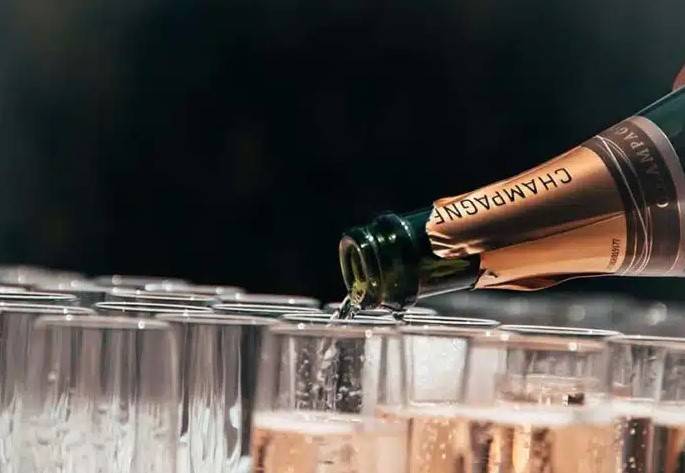
The question of whether Champagne has become too expensive is a pressing one, especially in light of declining demand over the past two years. During a recent visit to the Champagne region, I spoke with several producers about this issue. Opinions varied, with some attributing the drop in sales to rising prices, while others saw it as a minor factor. The decline in global Champagne shipments is significant, with a loss of nearly 55 million bottles since 2022. This drop has brought sales back to levels seen two decades ago, according to Laurent d’Harcourt, president of Pol Roger. Shipments fell from 326 million bottles in 2022 to 271 million in 2024, the lowest since 2001, excluding the pandemic-related dip in 2020.
The price of Champagne has increased by about 25% since 2022, driven by rising costs rather than profiteering. The cost of grapes, now over €7 per kilogram, is a major factor, with each bottle requiring at least 1.2 kg of grapes. Other costs, such as energy, wages, and interest rates, have also risen. Producers must finance stock for aging, which adds to production costs. Consequently, the retail price of a typical bottle of Brut NV Champagne has increased by around €10, now often exceeding €40 in Europe and £40 in the UK.
Charles Philipponnat of Champagne Philipponnat and Sebastien Briend of Champagne Jacquart both noted that price increases have contributed to declining sales. In the US, retailers like K&L Wine Merchants have observed similar trends, with customers resisting significant price hikes. Ruinart CEO Frédéric Dufour highlighted that in France, a €40 price point is a barrier for many consumers, leading them to choose other sparkling or non-sparkling options.
The lower end of the Champagne market, particularly Brut Non-Vintage labels sold in supermarkets, is where price sensitivity is most pronounced. Christophe Prieux of Champagne Gardet noted a decrease in supermarket sales due to higher prices and less attractive promotions. Pierre Desanlis of Champagne De Saint-Gall observed that consumers are waiting for discounts before purchasing, yet overall volumes remain down.
The rapid price increase, rather than the usual 1-2% annual rise, has led to consumers substituting Champagne with alternatives like crémant and Prosecco. Julien Duval-Leroy of Champagne Duval-Leroy mentioned that passing on price increases to restaurants is challenging, as they struggle to maintain affordable menus. High-end restaurants still offer Champagne, but the margins make it expensive for most patrons.
Champagne is at a crossroads, with some envisioning a future similar to white Burgundy, focusing on high-value, low-volume sales. Others, like Duval-Leroy, hope to return to higher volumes, making Champagne accessible for more casual occasions. Despite price increases, some argue that Champagne remains competitively priced compared to fine wines from other regions. Laurent d’Harcourt of Pol Roger and Charles-Armand de Belenet of Bollinger both emphasized that Champagne's price rise aligns with global inflation and remains reasonable compared to other luxury goods.
The decline in Champagne sales is not solely due to price increases. The removal of celebratory occasions, economic uncertainty, and high stock levels have also played roles. Poor weather in key markets and increased spending on travel have further impacted sales. Cocktails are also capturing a share of the aperitif market, traditionally dominated by Champagne.
Looking ahead, Champagne producers agree on the need for price stability in 2025. This decision, along with reduced oversupply, is expected to help stabilize sales. James Simpson MW, head of the UK Champagne Shippers Association, believes that while prices have risen, Champagne still offers good value compared to fine Chardonnay from Burgundy. He notes that older, financially secure consumers continue to purchase Champagne, while younger drinkers find it too expensive. The challenge lies with middle-aged consumers facing financial pressures.
Champagne remains a special occasion drink, celebrated for its association with memorable events. Despite competition from other sparkling wines, its brand strength endures. As Simpson points out, while you may not recall the last time you opened a bottle of crémant, you likely remember the last time you celebrated with Champagne.
