Bacardi says moderation will reshape cocktail drinking by 2027
Its annual trends report found 70% of consumers plan to alternate cocktails with water or nonalcoholic drinks, rising to 82% among Generation Z
Wednesday, November 25, 2026

Views › 327
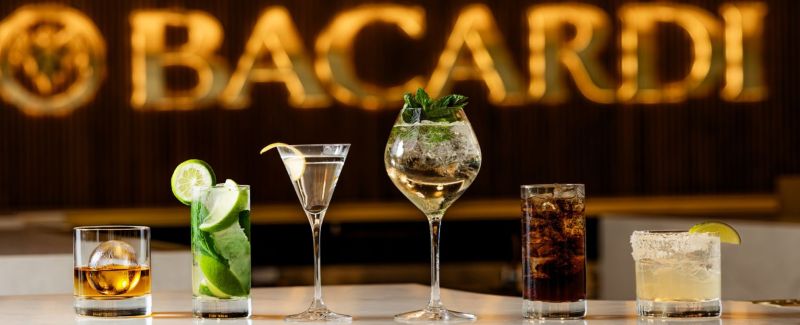
Bacardi Limited expects the cocktail business in 2027 to be shaped by a return to classic drinks, growing moderation in alcohol use, new flavor combinations and bar concepts that place more value on experience, according to the company’s eighth annual Cocktail Trends Report, prepared with the consulting firm The Future Laboratory.
The report, based on international consumer surveys, interviews with bar and restaurant professionals and market research, says the industry is moving beyond a model centered mainly on launching new products. Bacardi argues that producers, distributors and hospitality operators now face pressure to adapt drinks and formats to different age groups, budgets and drinking occasions.
One of the clearest changes in the report is moderation. Bacardi said 70% of consumers surveyed plan to alternate cocktails with water or nonalcoholic drinks. Among members of Generation Z, that share rises to 82%. The company said that pattern could change orders at bars and restaurants by making alcoholic and nonalcoholic drinks part of the same social occasion rather than separate choices.
The report also points to tighter household budgets. Bacardi said 50% of consumers expect to buy smaller bottles of their favorite spirits. The company said that suggests some drinkers want to stay loyal to preferred brands even as spending power comes under pressure. That could create opportunities for suppliers that offer more package sizes, especially in higher-priced categories.
Ingredients are also becoming more important in buying decisions. According to the report, 71% of those surveyed would choose a cocktail made without artificial additives or flavorings over one that contains them.
Bacardi’s forecast for 2027 includes a strong revival of classic cocktails, though not always in their original form. The company said the comeback is likely to come through reinterpretations that use different spirits, ingredients and preparation methods rather than strict returns to older recipes.
In the United Kingdom, 43% of consumers said more classic cocktails should become fashionable again, while 38% said they enjoy trying modern versions of those drinks. Bacardi linked that interest to both younger and older consumers. Younger drinkers are showing nostalgia for earlier decades, while older customers remain attached to drinks they knew when they were younger.
The report cites research from the Archbridge Institute in the United States showing that 68% of Generation Z feels nostalgic for periods before they were born, 73% is interested in older styles, hobbies or traditions, and 78% thinks new products and technologies should borrow ideas and design elements from earlier eras.
Bacardi also highlighted the buying power of Generation X, which it said may play a larger role in drinks marketing. Citing NIQ data, the report said the group’s global spending power stood at $15.2 trillion in 2025 and could reach $23 trillion in 2035, though those figures refer to overall spending power, not only alcohol purchases.
At the same time, the company said drinking participation remains broad across age groups. Based on IWSR data from July 2026, 81% of millennials, 77% of Generation X and 74% of Generation Z consumers take part in alcohol consumption. Bacardi said that relatively narrow spread means brands have room to market products that appeal across generations.
One change already visible in bars is the substitution of spirits inside well-known recipes. In Italy, 19% of consumers said they had ordered a classic cocktail in which the original spirit had been replaced by tequila. In Mexico, that figure reached 22%. Bacardi said 83% of the brand ambassadors in its global survey believe bartenders are experimenting with alternative spirits in classic serves.
That shift is putting tequila into drinks more commonly tied to vodka, while rum is appearing in some Martini variations. Bacardi also said more bars are mixing several spirits in the same cocktail to create different alcohol levels and flavor profiles.
Among specific drinks that could gain ground in 2027, the company pointed to the Hugo Spritz, usually made with elderflower liqueur, sparkling wine and soda. Bacardi said 62% of surveyed brand ambassadors believe it will be the next major hit within the Spritz family. The company also said the Limoncello Spritz has strong potential, with 27% of consumers naming it as the Spritz variation they most want to try. Spain posted the highest interest among the markets surveyed, at 41%.
Even with those new variations, Bacardi’s global ranking of bar orders remained led by familiar drinks. The Margarita ranked first, followed by the Mojito, Piña Colada, Spritz and whiskey with cola. Rounding out the top 10 were rum with cola, vodka with lemonade, vodka with soda, Tequila Sunrise and gin and tonic.
A second major theme in the report is the changing business model for bars. Bacardi said 57% of consumers would rather visit a place that helps them escape daily life and step into a different environment than one that simply recreates the comfort of home. That preference was strongest in Japan at 65%, followed by India at 61%, the United Kingdom at 60%, France at 59%, Spain at 55% and Canada at 53%.
The company said that demand is pushing bars to borrow from entertainment, art, music, theater and design. In that model, the room, the service and the mood become part of what the customer is buying. Bacardi pointed to venues such as Salmon Guru in Madrid, which blends a 1960s-inspired setting with comic book and superhero references, and Bacchanalia in London, which uses classical mythology in its cocktail offering. In Singapore and Seoul, the report said, some bars are using zodiac signs to tailor drinks to customers.
Bacardi also said the traditional happy hour may evolve into what it called a “hype hour,” with entertainment and nightlife-style energy starting earlier in the day. In North America, 45% of surveyed brand ambassadors said bars with that kind of atmosphere would be among the strongest formats going forward.
Flavor innovation forms another large part of the company’s outlook. Bacardi said it does not expect one single ingredient to dominate the market in 2027. Instead, it sees a wider mix of sweet, sour, salty, spicy, vegetal and smoky profiles.
Preferences vary by country. In Mexico, 54% of consumers said they favor citrus flavors and 52% said they favor sweet ones. In Spain, those figures were 43% and 40%. In Canada they were 39% and 37%, and in Italy 36% and 35%.
More than half of Bacardi’s surveyed brand ambassadors, 54%, identified tamarind, chamoy and chipotle as flavor trends to watch. The report also said ingredients and drinks linked to Japanese and South Korean cuisine are moving further into cocktails, including yuzu, shiso, ume plum, sake and soju.
Those changes are spreading into ready-to-drink products as well. Bacardi said producers are expanding beyond heavily sweet profiles by adding fruits, spices, bitter elements and herbal notes.
Behind the bar, the report said, bartenders are using more techniques associated with professional kitchens. Bacardi said 81% of brand ambassadors have seen increased use of clarification, 73% have seen more carbonation and 57% have seen more acid-adjustment methods. It also reported growing use of fat-washing at 51%, vacuum infusions at 48% and fermentation at 44%.
The company’s fourth trend centers on hospitality and group occasions, both in bars and at home. Nearly 60% of the brand ambassadors surveyed said bars are paying more attention to the full hospitality experience. That share rises to 67% in Latin America and the Caribbean.
In France, 30% of consumers said tasting several cocktails in one visit is their preferred bar experience. In Italy, the figure was 33%. Bacardi said some bars are adapting the restaurant tasting-menu model to cocktails. It cited Cariño by Handshake in Mexico City, which offers a 12-seat experience built around six services using Mexican spirits, ingredients and techniques.
At-home drinking is also part of the company’s forecast. Bacardi cited Mintel data showing that 80% of adults in the United Kingdom buy alcohol for home consumption, and said 46% choose higher-end food and drinks when entertaining guests. In Mexico, 60% of consumers identified house parties and gatherings as one of the occasions when they are most likely to drink spirits, compared with 44% in Spain.
The report said premiumization at home could support stronger sales in some markets. Bacardi found that 51% of surveyed consumers in India buy super-premium spirits for home celebrations, along with 38% in Canada, 36% in Japan and 34% in France. Glassware and cocktail tools are also part of that market, the company said.
The fifth trend in the report is a renewed focus on human recommendation over algorithms and artificial intelligence. Bacardi said bartenders continue to play a direct role in shaping what customers order. Citing an NIQ report on bartending professionals, the company said one bartender influences nearly 11,000 drink decisions a year, 88% make recommendations during every shift and 95% say customers follow those suggestions most of the time.
In the United Kingdom, 42% of bartending professionals said they recommend a specific spirits brand during every shift, compared with an international average of 31%. Bacardi said that gives drinks companies a strong reason to keep investing in staff education and product training.
Consumers also still appear cautious about AI-generated drinks. Bacardi said 60% of consumers surveyed have reservations about cocktails created by artificial intelligence. Among Generation Z, that rises to 67%. In Germany, 39% of consumers said their favorite bar experience is receiving a custom drink created by the bartender and not listed on the menu. In Canada, that figure was 30%.
The report said priorities inside the bar trade are also changing. Bacardi found that 69% of respondents want more opportunities to build professional networks, and 67% want more training and career development. In 2025, cocktail competitions were the leading priority.
Environmental concerns remain part of buying decisions as well. Bacardi said reducing plastic and single-use packaging and buying local products tied for the top spot at 35%. Recyclable packaging followed at 31%, then protecting clean water at 29%, sustainably sourced ingredients at 27%, reducing carbon footprints at 23% and buying ethically produced goods at 22%. The company said that ranking was unchanged from the previous edition of the study.
Bacardi also examined airport drinking and duty-free shopping, an important sales channel for large international spirits groups. The Mojito, gin and tonic and Margarita ranked as the three most popular cocktails before boarding. In duty-free stores, 45% of shoppers said they buy alcohol for themselves, 30% said they buy it as a gift and 25% said they do both.