Researchers say redesigned beer taxes in South Africa could prevent 1,900 deaths a year
They argue Treasury's proposed bands are too broad to push brewers toward lower-alcohol products, leaving harmful drinking harder to curb
Thursday, November 19, 2026

Views › 399
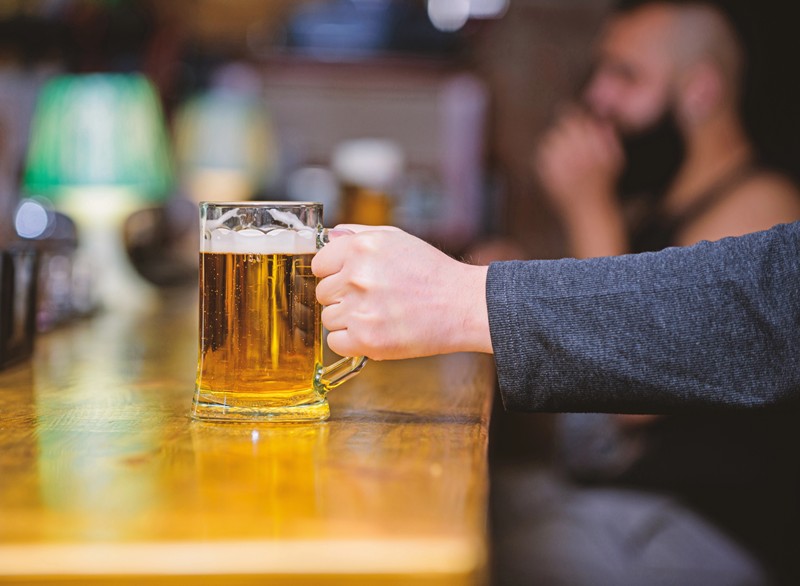
Alcohol is linked to 3.7% of all deaths in South Africa, according to researchers from the South African Medical Research Council and the University of Cape Town, who said on Wednesday, November 18 that the country’s tax system for beer should be redesigned to do more to reduce harmful drinking.
The researchers presented findings from the 2023 Global Burden of Disease study and a separate modeling study during a media roundtable on alcohol policy. They said alcohol was responsible for about one million disability-adjusted life years, or DALYs, in South Africa, equal to 3.3% of the country’s total disease burden.
Dr. Annibale Cois, a senior specialist scientist at the Medical Research Council’s Burden of Disease Research Unit and an honorary senior lecturer at the University of Cape Town, said alcohol’s health effects are often treated too narrowly in public debate.
He said alcohol is associated with a wide range of conditions, including cardiovascular disease, neuropsychiatric disorders, cancer and other chronic illnesses, and that the harm goes far beyond the common public association between drinking and liver damage.
The discussion comes as South Africa’s National Treasury continues a review of alcohol excise taxes. Researchers said the structure of the current proposal, especially for beer, may be too broad to encourage manufacturers to lower alcohol content in mainstream products.
A study called Lives Saved and Disease Burden Averted Through Reduced Alcohol Consumption in South Africa, produced by the University of Cape Town’s Research Unit on the Economics of Excisable Products and the Medical Research Council, examined how different beer tax structures could change drinking patterns and public health outcomes.
Under the strongest scenario modeled by the researchers, beer consumption would fall by 15.7% and total absolute alcohol consumption by 8.5%. They estimated that such a change could prevent about 1,900 deaths a year and add more than 91,000 healthy life-years annually.
Beer is central to the debate because it accounts for about 54% of the absolute alcohol consumed in South Africa. That makes any change in beer taxation especially important for both public health policy and the drinks industry, since a different tax design could eventually affect pricing, product formulation and competition among brewers.
Dr. Nicole Vellios, chief research officer at the economics unit, said alcohol excise taxes should be treated primarily as a public health tool rather than mainly as a revenue source.
She said regular increases are needed because alcohol can become more affordable over time if tax changes only match inflation while household incomes rise. In that case, she said, consumption may not fall even when taxes increase in nominal terms.
Researchers also challenged Treasury’s proposed beer tax bands. Under that proposal, beer would be taxed using two thresholds, at 2.5% alcohol by volume and 9% alcohol by volume. Vellios said that approach leaves most beer sold in South Africa, which typically ranges from 4% to 6% alcohol, inside the same band.
According to the researchers, that creates little reason for brewers to make modest cuts to alcohol strength, because a typical product would need to drop below 2.5% alcohol to qualify for the lower rate. Vellios said that is a large shift from where most products currently sit, around 4.5% to 5.5%.
The alternative model proposed by the researchers would introduce narrower thresholds at 2.5%, 3.5% and 4.5%. They argue that those bands would create a stronger incentive for producers to develop lower-strength beers that remain closer to mainstream consumer preferences.
That debate matters beyond tax policy. If South Africa were to adopt narrower thresholds, brewers could face pressure to reformulate existing brands or expand low-alcohol offerings, while retailers and consumers could see wider price differences between stronger and weaker beers. The change has not been approved, and Treasury’s consultation process is still underway.
The researchers also examined alcohol’s role in violence. Under the strongest scenario in their model, they estimated that about 66 deaths linked to interpersonal violence could be avoided each year, along with more than 4,044 violence-related DALYs.
They said the results do not mean tax reform alone would stop gender-based violence or other forms of interpersonal harm. But they argued that reducing harmful drinking could make a meaningful contribution to broader violence-prevention efforts.
Nomcebo Dlamini, campaign director at SAAPA SA, said the impact of alcohol misuse is often borne by people other than the drinker, especially women, children and other vulnerable family members. She said public discussion too often centers only on the individual consuming alcohol and overlooks the wider harm inside households and communities.
Professor Richard Matzopoulos, director of the Medical Research Council’s Burden of Disease Research Unit and an honorary professor at the University of Cape Town, said the economic cost of alcohol harm is often understated when attention is focused on jobs, sales and tax revenue from the alcohol industry.
He said the largest losses come from premature deaths and years of healthy life lost, rather than only from direct spending by the government or the formal economy. He also said efforts to reduce alcohol consumption at the population level often face resistance because they can threaten industry profits.
South Africa’s National Treasury said in its 2026 Budget Review that consultations on alcohol excise taxation would continue during the year. That leaves open whether the government will keep the broader beer tax bands in its current proposal or consider a narrower system favored by the researchers.