Record heat pushes France’s 2026 grape harvest 13 days early
The national wine institute says drought has disrupted ripening, raising costs for cooling, fermentation control and alcohol adjustment
Thursday, October 29, 2026
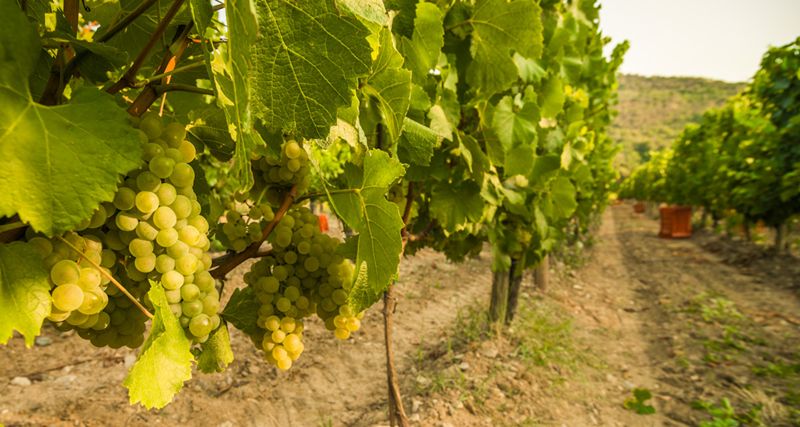
France’s 2026 grape harvest is coming in earlier and with a different chemical balance after an exceptionally hot and dry growing season, according to the Institut Français de la Vigne et du Vin, which said on Thursday, October 29, that growers and wineries may need to adjust both harvest timing and cellar practices to protect wine quality.
The French wine research body said June and July were the hottest months ever recorded nationwide in France. It also reported an early water deficit, with average rainfall shortages of 45% in June and 65% in July. The institute said the stress on vineyards has not been uniform. Conditions have varied by region and even by plot, depending on soil depth, water reserves, the timing of rainfall, plant material and vineyard practices.
That weather pattern has pushed vine development forward from the start of the season. The institute said the average advance was about 10 days at veraison, when grapes begin to ripen, and 13 days by harvest. It also reported signs of smaller berries and fewer bunches, conditions that could reduce production potential at the national level, although it said the picture remains mixed across regions, soil types and grape varieties.
Beyond volume, the main concern is the profile of the fruit entering wineries. The institute said technological maturity, measured through the balance between sugar and acidity, is unusually out of step with phenolic maturity, which reflects the development of tannins and color compounds in the berries. In practical terms, it said many grapes are showing high sugar levels, higher pH and lower acidity. Those imbalances can shape the style of the finished wines and complicate winemaking decisions.
For the drinks industry, the issue goes beyond agriculture. Higher sugar and lower acidity can push wines toward higher alcohol levels and a less fresh profile, while the technical steps needed to manage that fruit can add costs in the cellar. Extra cooling, closer fermentation monitoring, yeast nutrition and alcohol adjustment tools all have potential implications for winery operations, product style and margins.
One of the first steps, the institute said, is to keep harvested grapes as cool as possible. Fruit picked at high temperatures is more exposed to oxidation, premature fermentation and the growth of unwanted microorganisms. When conditions allow, harvesting during the coolest hours, including at night, can help preserve quality. The institute said hand harvesting can also make it easier to manage fruit flow and organize work in the winery, allowing pressing to be scheduled early in the morning when temperatures are lower. If cool harvest windows are not available, producers can cool grapes during transport or on arrival at the winery, though the institute said that option brings added costs and energy use.
The institute also highlighted the risk of nitrogen deficiency in musts. It said the amount of nitrogen available to yeast depends on several factors, including grape variety, rootstock, growing conditions and the environment. Spring drought can reduce the vine’s ability to absorb nitrogen, which can leave musts short of the nutrients yeast need to multiply and finish fermentation. That problem becomes more important when sugar levels are high, because fermentations can be more demanding from a nutritional standpoint. If a clear deficiency is identified, the institute said a correction in the winery can provide a quick and simple fix. If the problem is recurrent, it said producers should look more closely at soil balance, soil function and nitrogen fertilization in the vineyard.
Temperature control during fermentation is another key tool. The institute said excessive temperatures can kill yeast and damage aroma profiles, while temperatures that are too low can slow fermentation. In a season when grapes may carry more sugar than usual, it said wineries should closely track temperature, density and the pace of fermentation to reduce the risk of sluggish or stuck fermentations and to make sure fermentable sugars are fully consumed.
To limit oxidation and unwanted microbial growth, the institute pointed to bioprotection. That approach uses selected microorganisms, including certain yeasts, introduced early so they occupy the medium before undesirable organisms can develop. The institute said they can be added as soon as grapes arrive at the winery, either before or after pressing, depending on the goal. Some non-Saccharomyces yeasts can also consume oxygen, which may help reduce oxidation. The institute said that feature can be especially useful for white and rosé wines, particularly during juice settling. It described bioprotection as an alternative to sulfiting, while noting that its effectiveness depends on adding enough yeast, doing so early enough and providing conditions that allow the microorganisms to establish themselves.
For wines made from fruit with high sugar and low acidity, the institute said some yeasts can also help rebalance the wine through bioacidification. It cited Lachancea thermotolerans, a yeast from the natural grape microflora that can turn part of the sugar into lactic acid instead of alcohol. That can raise acidity without using additives. The institute said results depend on the strain selected and on winemaking conditions, and it recommended testing the method in a smaller service tank rather than adding the yeast directly to the main tank, where the wine could become too acidic.
The institute also reviewed options for controlling alcohol levels. One is desugaring, which reduces the sugar content of the must to lower the wine’s potential alcohol. It said that process relies mainly on membrane techniques, used alone or in combination, to remove a sugary concentrate from the must. Under the rules, the institute said, desugaring of musts cannot be combined with some enrichment operations and also prevents later correction of alcohol levels in wines made from those musts. If a finished wine still has alcohol levels considered too high, correction can be carried out with methods such as vacuum evaporation, membrane contactors or distillation. The institute said that operation is allowed up to a 20% reduction of the initial alcohol content. It also distinguished that type of correction from partial dealcoholization, for wines between 0.5% vol. and 9% vol., and total dealcoholization, for wines between 0% vol. and 0.5% vol.
The research body placed its recommendations within a broader climate adaptation effort. It said its VITILIENCE project, funded by CASDAR and led by the institute since 2022, brings together more than 20 partners through a network of demonstration sites in 12 wine regions. Those sites are used to test adaptation and mitigation tools tailored to the problems of different winegrowing areas, including plant material, vineyard practices, machinery, farm strategy and oenological methods. The institute said it has also made practical resources available, including an adaptation map and technical fact sheets on how the different tools work, their conditions of use, their effectiveness and their implementation costs.