Italy’s retail wine sales fell 1.3% in the year through Aug. 23
Volumes dropped 2.8% despite higher average prices, suggesting pricing cushioned weaker demand rather than a broad consumer move upscale
Saturday, October 24, 2026
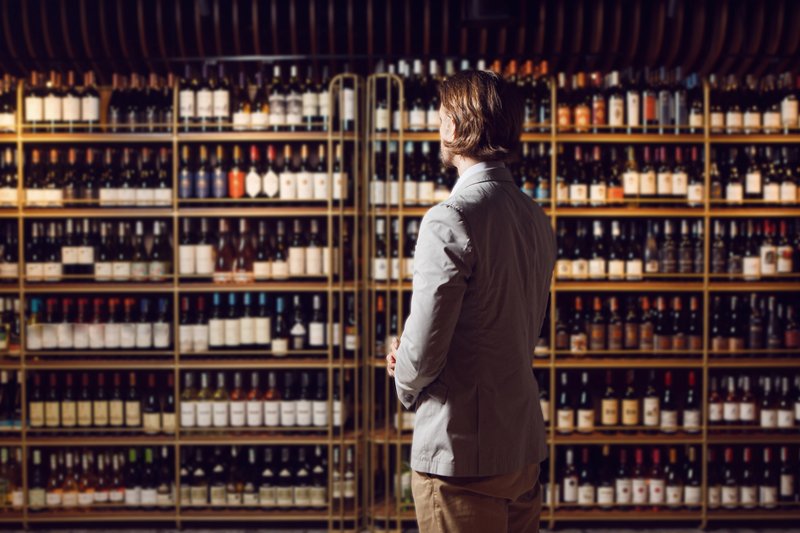
Italy’s retail wine market shrank over the past year even as average prices moved higher, a sign that the industry’s revenue pressure is being softened by pricing and product mix rather than by stronger consumer demand for more expensive bottles.
NielsenIQ data presented at Milano Wine Week showed that sales of wine, sparkling wine and Champagne in monitored retail channels totaled about €3.1 billion in the 12 months ended Aug. 23, with volume at 713 million liters. That was down 1.3% in value and 2.8% in volume from the previous year, according to figures reported by Wine Meridian.
The decline was steeper in still wine alone, excluding sparkling wine and Champagne. In that segment, sales fell 2.1% by value and 3.6% by volume. The average price rose 1.6% to €3.81 per liter, but that increase was not enough to offset the drop in liters sold.
The figures point to a distinction that matters for producers, retailers and distributors: a higher average price does not automatically mean consumers are trading up in a sustained way. It can also reflect higher list prices, inflation-related adjustments or a greater weight of certain categories in the shopping basket. For beverage companies, that difference can shape decisions on assortment, margins and pricing strategy in one of Europe’s largest wine markets.
By contrast, sparkling wine and Champagne held up better. NielsenIQ’s data showed that category growing 1.1% in value and 1.4% in volume, while the average price slipped 0.3% to €7.05 per liter. In that case, demand increased with prices broadly stable, a healthier pattern than what appeared in still wine.
Within sparkling wine, dry Charmat products account for close to 70% of category revenue, according to the presentation at the Milan event. Their broad use in spring and summer drinking occasions appears to be helping spread sales beyond the year-end holiday period, reducing the category’s traditional seasonal concentration.
Traditional-method sparkling wine, or Metodo Classico, posted stronger gains, rising more than 6% in value and more than 9% in volume. That also suggests volume growth outpaced revenue growth, indicating that expansion in the segment is not being driven only by higher prices.
The NielsenIQ data was presented by Eleonora Formisano and Matteo Fortarezza during Milano Wine Week. Their figures, as cited by Wine Meridian, add to a broader debate in the industry over “premiumization,” a term often used to describe consumers moving toward higher-value products. The latest retail results suggest that label may not fully explain what is happening in Italian wine aisles.
Regional differences further complicate the picture. Wine Meridian reported that retail sales in Puglia showed weakness, while wines originating from Puglia posted growth. That gap highlights the difference between where wine is bought and where it is produced, and it suggests that national or regional averages can mask important shifts in distribution, brand positioning and retailer performance.
The source also noted that trends in out-of-home consumption remain mixed. Survey data cited at the event showed that 41% of respondents expect to spend less on lunches and dinners outside the home. In a separate question, 44.1% said eating out was the activity they most associate with treating themselves. The combined result points to a consumer who still values the experience of going out but is more careful about spending.
That caution could affect wine sales in restaurants and bars, where consumers often face higher markups than in retail stores. Even if the number of consumption venues is rising overall, the increase is concentrated mainly in hospitality and businesses such as gelato shops and rotisserie outlets, while bars and restaurants have slightly reduced their presence, according to the report cited by Wine Meridian. More places serving food and drink do not necessarily translate into more opportunities for wine.
For wine sellers and the broader drinks business, that makes product presentation and entry pricing more important. If household budgets remain tight, retailers and on-premise operators may need to rethink which labels they carry, how many price tiers they offer and which categories deserve more shelf or menu space. Sparkling wines, which are showing more resilient demand, may gain relative importance, while still wine operators could face pressure to sharpen value positioning.
The data also comes as the industry tries to deepen direct contact with consumers. Wine Meridian said a forum discussion during Milano Wine Week pointed to stronger interest among younger consumers in winery visits than two years earlier. That trend may matter because it offers producers another channel to build loyalty at a time when supermarket and restaurant purchasing patterns are under strain.
For now, the retail numbers show a market selling fewer liters at slightly higher average prices, with sparkling wines remaining the main exception. In Italy’s monitored retail channels, that leaves producers and beverage companies balancing two realities at once: consumers are still buying, but they are buying more selectively, and category growth is increasingly uneven.