French cognac producer Boinaud enters court protection with €60 million in debt
A six-month safeguard process will let Cognac’s largest vineyard operator restructure after sales in China collapsed
Thursday, October 22, 2026
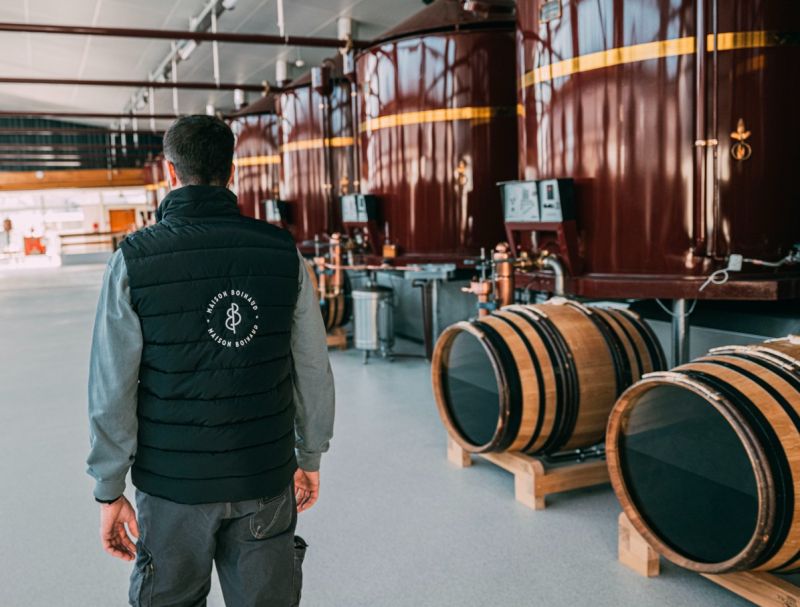
French cognac producer Boinaud has entered court protection after disclosing €60 million in bank debt, a sign of how the downturn in the cognac business is now affecting financing and corporate stability as well as sales.
According to sector publication Vitisphere, citing court-related information published on Oct. 21, the Commercial Court of Angoulême opened a safeguard procedure for the group on Oct. 19 and set a six-month observation period. The company is based in Angeac-Champagne in the Charente department, at the center of France’s cognac-producing region.
The safeguard procedure, under French law, is a court-supervised restructuring process designed for companies that are not yet insolvent but need protection while they reorganize their debts and operations. It does not mean liquidation. Boinaud’s management said the decision was made before the company reached a state in which it could no longer meet its obligations.
Boinaud said the group sought the court’s protection earlier this month. Charles Boinaud, the company’s president, said the move was difficult but necessary and framed it as an effort to act early rather than wait for a full payment crisis. He also said the hardest decisions had involved the company’s employees, with cuts affecting staff as the business adjusts to weaker market conditions.
Vitisphere reported that the Boinaud group operates 650 hectares of vineyards and 41 stills, making it the largest vineyard operator in the Cognac area by surface. The company is also known for the De Luze cognac brand. The report said the group’s annual revenue fell to €21 million in 2026 from €45 million in 2023 as sales weakened sharply. It also said De Luze sales dropped from about 700,000 bottles a year to roughly half that level.
The company’s problems have been tied in large part to the reversal in the Chinese market, which had represented more than half of its business before the covid crisis, according to the publication. Charles Boinaud said the group had directed a large share of its commercial and marketing investment toward China in earlier years, when demand there was strong and the product mix favored higher-end categories such as XO and Extra. He said the covid crisis badly weakened the distribution network and led to the failure of the company’s local distribution partner, after which consumption patterns in that market changed deeply.
Boinaud now says its priority markets are Europe, Asia and South Africa. The company said it remains active in China and Southeast Asia, but with a stronger focus on VSOP, while continuing XO sales.
The court filing comes with a new social plan. Vitisphere reported that eight vineyard employees are affected out of a workforce of 60 across the group. At the same time, Boinaud said it intends to maintain payments and commitments to grape growers. The company works with about 50 winegrowers in Charente, representing 200 hectares and about one-quarter of its supply needs, according to the report.
Charles Boinaud said the purpose of the safeguard process is to protect the company’s activity, preserve its know-how and maintain the confidence of clients and partners, especially growers. He said the next 12 months should allow the company to build a medium- and long-term plan to stabilize its business model and prepare the future of the house and its brands.
The case is being closely watched in the Cognac region because it is one of the clearest signs yet that the sector’s commercial slowdown is creating strain across the supply chain. Vitisphere said Boinaud is not the first company to face such pressure. It pointed to the Moisans distillery, which has been in judicial reorganization since the summer, and to legal disputes involving contract terminations by the house Sazerac.
Yves Adol, president of the Commercial Court of Angoulême, said in remarks reported by Vitisphere that businesses should not base their financial balance on the assumption of a quick return to the stronger economic conditions of previous years. He said cash-flow stress, debt burdens that have become too heavy and an inability to meet deadlines all require a diagnosis and a response tailored to each company’s situation, which is where preventive court tools are meant to help.
The Boinaud case also highlights the risks tied to expansion strategies in a premium spirits market that can change quickly. A source familiar with the Charente cognac industry told Vitisphere that the company had invested heavily in its house and brand in an effort to compete with larger groups, but said building a brand and selling bottled product requires a specific set of skills. The same source warned that other houses also appear fragile.
For now, the safeguard process gives Boinaud a legal framework to negotiate with creditors and review its operations while continuing to trade. The six-month observation period is expected to focus on debt restructuring and on adapting the group’s production tool to a market that has become much weaker than management had expected when it expanded its commercial ambitions.