Jefferies keeps beer stock ratings unchanged after wholesalers report a 4% drop in volumes
Distributors reset growth targets to 0%-1%, looking beyond beer to protect margins through broader portfolios
Wednesday, October 21, 2026
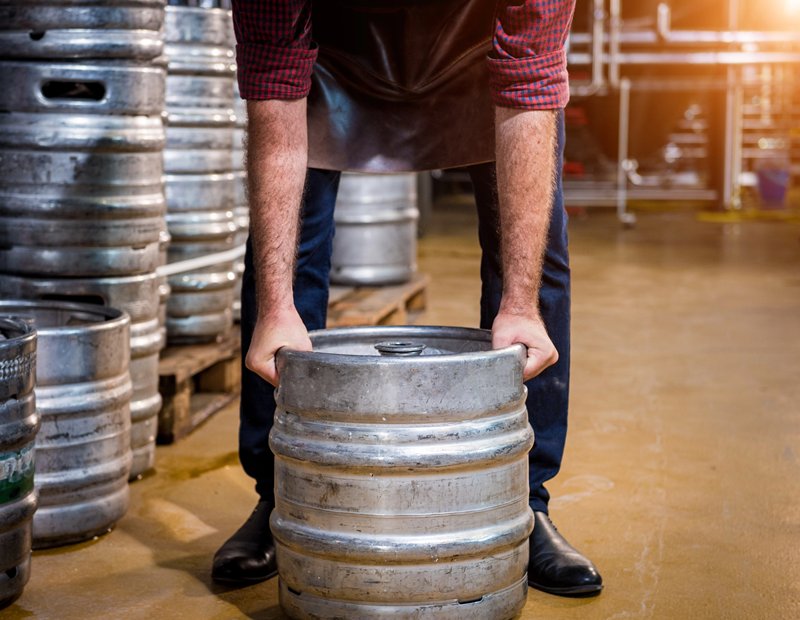
Jefferies left its ratings unchanged on several beer-related stocks after attending the National Beer Wholesalers Association’s annual convention, where distributors described a market still under pressure from weak volumes and shifting consumer demand.
In a note issued Tuesday, the firm kept hold ratings on Constellation Brands, Molson Coors and Boston Beer, while maintaining a buy rating on Tilray Brands. The update followed meetings at the industry gathering, where wholesalers and brand executives focused on slowing beer sales, margin protection and the search for growth in adjacent beverage categories.
Jefferies said beer volumes fell 4% over the last 12 weeks, a figure that underscored the cautious tone at the event. Distributors said the category is no longer aiming for strong near-term expansion and instead is trying to return to 0%-1% sales growth. That target reflects a reset in expectations for a business that remains large and profitable but is facing more competition for consumer spending and attention.
The firm said the picture improves somewhat when ready-to-drink cocktails are counted alongside beer. On that basis, the decline is about 2.4%. Jefferies said wholesalers increasingly view canned ready-to-drink products as operating much like beer within their networks because they move through similar retail channels and fill some of the same drinking occasions.
That detail matters beyond beer because it shows how lines are blurring across the broader beverage industry. If wholesalers continue to treat ready-to-drink cocktails, spirits and even soft drinks as natural extensions of their portfolios, pressure in core beer could speed up changes in distribution strategy, brand investment and shelf competition across alcoholic and nonalcoholic drinks. For producers of wine, spirits, beer and other beverages, that could mean a more contested fight for wholesaler attention and retail placement.
At the convention, distributors said they are concentrating on factors they can control while waiting for demand to stabilize. Jefferies said those efforts include cost cuts, broader use of artificial intelligence and operational steps meant to protect profitability even if case volumes remain soft. The message from wholesalers was that efficiency is becoming just as important as volume recovery, especially in a category where modest growth now counts as progress.
Wholesalers also discussed expanding further into spirits and soft drinks using their existing infrastructure. Beer remains their main business, but the interest in diversification appeared clear. For distributors, adding more products to the truck can be a way to improve route economics and reduce dependence on a single category that has become harder to grow consistently.
Even in a difficult market, some brands stood out. Jefferies said convention participants pointed to Michelob Ultra, Busch Light and Coors Banquet as examples of labels that are still gaining ground. Over the last 12 weeks, Michelob Ultra and Busch Light each rose 3%, while Coors Banquet increased 7%, according to the firm’s summary of the discussion. Pacifico posted an 18% gain over the same period, making it one of the stronger performers mentioned at the event.
Executives and distributors said the better-performing brands have a clearer identity and a more disciplined approach to marketing. Jefferies said speakers repeatedly argued that beer companies need to work harder to keep their products at the center of social occasions. Several presenters also said the industry should do more to frame moderate drinking as compatible with social connection and health-conscious lifestyles, an argument aimed at consumers who are being more selective about when and what they drink.
The examples cited at the convention reflected that strategy. Michelob Ultra was described as having built relevance around fitness and active living, while Busch Light was linked to outdoor activities. The broader point from wholesalers was that brands with a defined audience and consistent execution are holding up better than those with less distinct positioning.
Jefferies’ unchanged ratings suggested the firm did not come away from the event expecting a near-term break in industry trends. Instead, the convention appeared to reinforce a view that the beer business is managing through a period of slower consumption, modest growth goals and a push for efficiency, while distributors look for help from product mix and portfolio expansion rather than from a broad rebound in volume.