Sensi Expands to 54 Foreign Markets Beyond Its Chianti Roots
The Tuscan producer says it exports 6 million of 13 million bottles a year across a broader Italian portfolio.
Tuesday, October 13, 2026
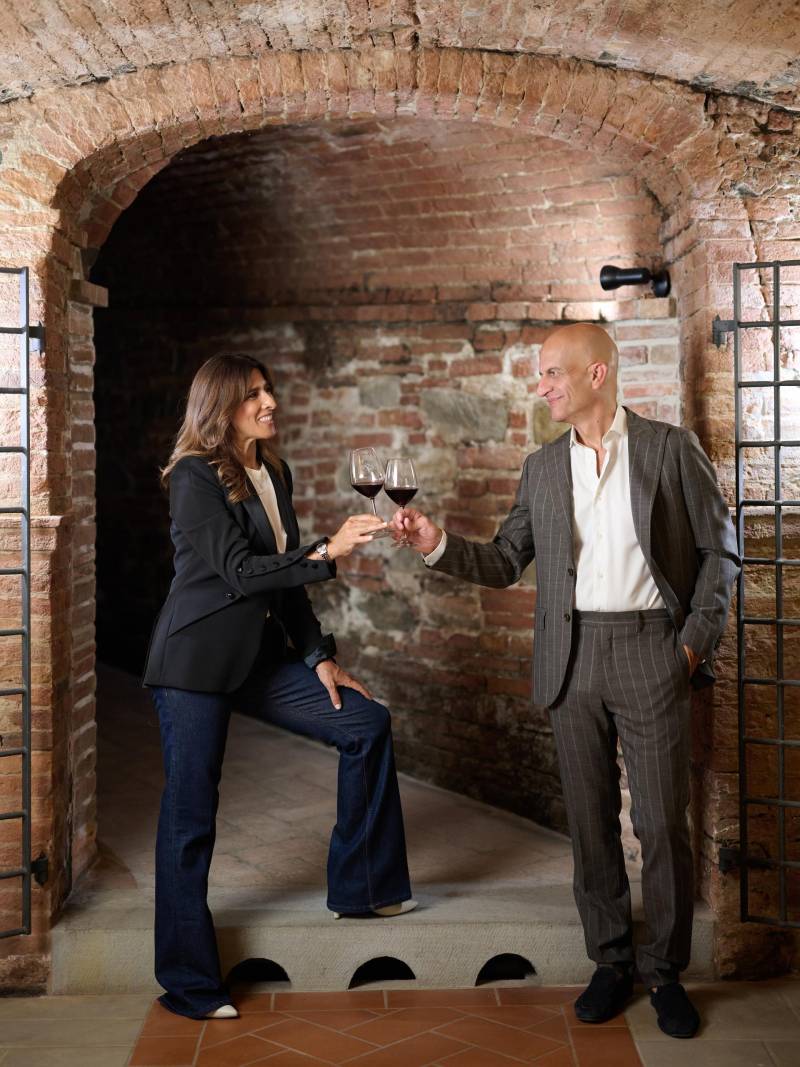
Tuscan wine producer Sensi said it now sells in 54 foreign markets, a sign of how a family winery founded in 1890 has expanded from its roots in Chianti into a broad international business centered on Italian appellation wines.
The company, based in Lamporecchio in the province of Pistoia, said in materials released this month that it produces 13 million bottles a year and exports 6 million of them, while another 6 million bottles are sold through Italy’s large-scale retail channel. The remaining volume was not detailed in the company statement.
Sensi traces its origins to Pietro Sensi, who began producing wine for the local market in Tuscany at the end of the 19th century. The business took a more defined commercial form in 1916, when Vittorio and Armido Sensi established Ditta Fratelli Sensi. During the 1920s, the family name began appearing on straw-covered flasks associated with Chianti, helping build recognition in the domestic market before the company expanded more widely in Italy and later overseas.
According to the company, Chianti has remained the core of its identity even as its portfolio has grown. Sensi said its first major foreign step came in 1960, when Chianti under the family name reached France. From there, the business expanded into Germany, the United States, Japan and Australia, while continuing to rely on the Tuscan denomination as its most recognizable product line.
The company’s current structure reflects both its family ownership and a broader sourcing model. Sensi said it works with vineyards it owns or manages in Tuscany and also buys from a network of selected producers in other Italian wine regions. Its production center in Lamporecchio covers 20,000 square meters and includes storage, winemaking, bottling and packaging. The family said it remains directly involved in production decisions alongside the technical team, overseeing wine selection, processing and quality control.
In its description of operations, Sensi put strong emphasis on consistency rather than on small-batch prestige. The company said tastings, lab analysis and checks before bottling are used to keep a stable style across large volumes. That approach appears aimed at a segment of the wine market where reliable supply, recognizable packaging and predictable taste are important to importers, retailers and consumers.
That commercial focus helps explain how the winery has positioned itself abroad. Rather than concentrating only on high-end labels, Sensi has built a portfolio meant to cover different price points, regions and drinking occasions. The company said it wants its wines to be easy to understand and easy to choose, with a style that remains stable over time. In practical terms, that means linking wine style, package design, retail positioning and distribution to specific consumer uses, from everyday meals to celebrations.
The company’s portfolio now extends well beyond Chianti. Under the Sensi name, it sells wines that include Chianti Classico, Brunello di Montalcino, Bolgheri and Vernaccia di San Gimignano, along with white, rosé and organic wines. It also markets other ranges for different audiences. Dalcampo is focused on Chianti for everyday consumption, while Collezione is positioned as a broader tour of Italian regions and grape varieties, including wines from Tuscany, Puglia, Sicily and Abruzzo.
One of the clearest examples of the company’s move beyond its historic base is 18K, a sparkling wine line launched in 2012. That range is dedicated to Prosecco and other Italian sparkling wines and is packaged in a gold-colored bottle intended to stand out in a category driven by gift purchases, nightlife sales and celebration-oriented marketing. The label shows how far the business has moved from its early identity as a traditional Chianti producer while still relying on the family name as a common commercial marker.
Sensi’s growth has taken place during a period when Italian wine companies have faced two parallel pressures: the need to expand abroad and the need to show stronger environmental credentials. On the sustainability side, Sensi said it began a path toward organic farming in 2014. It also said it holds Equalitas certification as a “Sustainable Organisation,” a standard that covers environmental, social and economic aspects of company management. The company presented those measures as part of a wider effort to make its production chain more verifiable.
The family leadership has also evolved across generations. Sensi said a new phase began in the 1990s with the arrival of Massimo, Marco and Roberta Sensi. That period brought investment in vineyards, winemaking facilities and quality systems, along with a wider product range and faster growth abroad. While the company did not disclose financial figures in the release, its emphasis on facilities, volume and export reach suggests a strategy based on scale as well as brand continuity.
For the wider Italian wine industry, Sensi’s path reflects a familiar model. Many long-established producers have used a flagship regional identity, often tied to Tuscany, to build foreign distribution and then broadened into other appellations that meet retailer demand for a more complete Italian offering. In Sensi’s case, the company said its experience with importers, buyers and commercial partners has been built over decades and has helped it adapt products to different markets and sales channels.
Its reliance on both exports and domestic mass retail also points to a business less dependent on restaurants and luxury wine shops than some smaller producers. Large retail distribution requires stable volumes, clear labeling and steady pricing. Those needs can favor companies with centralized bottling, broad sourcing relationships and the capacity to standardize style from year to year. Sensi’s description of its quality controls, supply system and brand architecture suggests it has organized itself around those demands.
The company’s message remains closely tied to the value of the family name. In its statement, Sensi described the brand as a mark of trust for consumers looking for Italian wine with reliable quality and accessible positioning. That framing places the winery in a competitive middle ground: not a niche artisanal house, but not a generic bulk supplier either. Instead, it is presenting itself as a long-running family producer that uses scale, regional range and brand recognition to hold shelf space in both Italy and foreign markets.
From its base in Lamporecchio, that strategy has turned a business once identified mainly with Chianti flasks on Tuscan tables into a producer with an international footprint and a multi-regional portfolio. The company says that expansion still rests on the same elements that shaped its early history: family control, a strong link to Tuscany and a commercial belief that Italian wine can reach a broad public if the style remains clear, consistent and easy to recognize.