Champagne recorded its earliest harvest in modern history following a ripening surge from 4.5% to 8.3% in a week
The trade body said dry conditions kept fruit healthy, with yields falling well short of the 8,800kg target
Wednesday, September 16, 2026
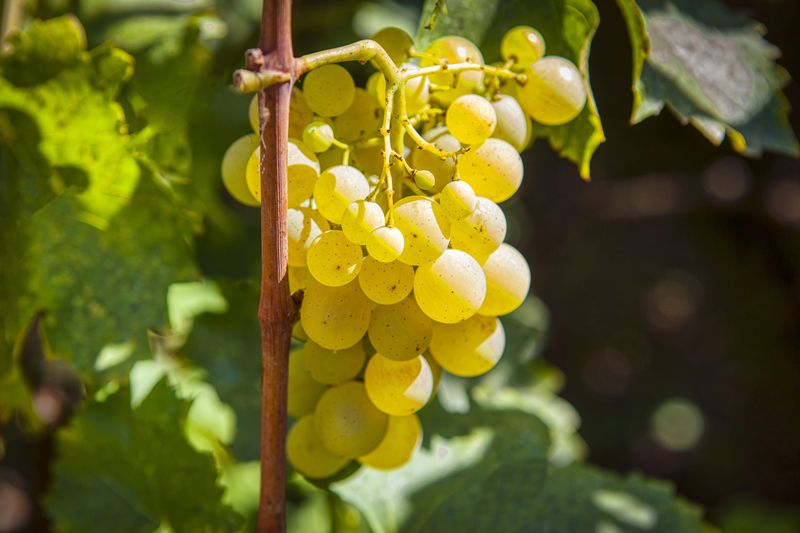
Champagne producers in northeastern France have finished a 2026 harvest that the region’s trade body described as unlike any other on record, with grapes picked as early as the first week of August after a sudden surge in ripening, strong fruit health and lower-than-planned yields.
In an assessment released Tuesday, the Champagne Committee, known in France as Comité Champagne, said the campaign stood out for its timing, the condition of the grapes and the balance seen in the juices. The group’s co-presidents, David Chatillon and Maxime Toubart, and research director Sébastien Debuisson said the region had experienced its earliest harvest ever.
The pace of ripening accelerated sharply at the end of July and forced the industry to change its schedule in real time. According to Debuisson, measurements taken across almost 600 vineyard plots showed average potential alcohol at 4.5% on July 27. By August 3, that figure had already climbed to 8.3%. The jump led the interprofessional body to bring forward the official start of the harvest, with the first picking beginning on August 12 and most vineyards starting around August 17.
Some areas moved even earlier. In Montgueux, in the Aube department, picking began on August 6. Debuisson said Champagne had to go back to 1893 to find a harvest date that early, while noting that vineyard practices and grape varieties were different at that time. On that basis, he said, 2026 can be treated as the earliest harvest the region has known in its modern history.
The speed of the season surprised growers, houses and technical teams, but Champagne officials said the sector adapted quickly enough to avoid major disruption in the field. Chatillon said the shift tested logistics across the region, from labor and picking schedules to press operations, but that producers were able to respond.
On quality, the early signs are strong. The committee said average potential alcohol for the crop was close to 11.8%, with Chardonnay around 12.3%. At the same time, bunches and berries were smaller than usual. Average cluster weight was about 100 grams, compared with roughly 135 grams in recent years. Dry conditions helped keep disease pressure low, leaving the fruit in what the committee called remarkable sanitary condition.
Debuisson said early juice tastings pointed to freshness, fruit, texture and finesse. Champagne’s production method may have helped preserve those qualities. The region still relies on hand harvesting, which keeps bunches intact until they reach the press. Producers then use a gentle, precise and segmented pressing process designed to extract juice without damaging balance.
That combination has encouraged comparisons with some of the region’s most respected vintages, although Champagne officials stopped short of making firm claims this early. Debuisson said the balance between ripeness and acidity recalled a small number of notable years from the last century, including 1921, 1947 and 1959. He also said it was too soon to call 2026 a legendary vintage, but that the condition of the fruit and the quality of the juices gave winemakers a solid base.
The main weakness of the year was volume. Average yield came in at 7,000kg per hectare, well below the 8,800kg per hectare level set earlier by the industry. As in most years, conditions varied across the region, and the shortfall was not uniform from one village or vineyard to another.
Champagne’s reserve system is expected to soften part of that blow. Under the model used in the region, producers can draw on wines stored from earlier years to help meet the amount that can be marketed, even when the agricultural harvest falls short. Chatillon said that mechanism has long allowed Champagne to separate the marketable yield from the agronomic yield and to fill gaps where needed. He said some individual operations would still face difficult situations, but that, at a macroeconomic level, he did not expect the 2026 shortfall to become a major issue.
Even so, Toubart said the region’s model is facing growing pressure. He said Champagne had become used to a steady operating rhythm that allowed growers and houses to absorb weather swings while continuing to produce, invest, innovate and pay workers. That rhythm is becoming harder to maintain, he said, and the sector will need to revisit how it supports the supply chain over the next 10, 15 and 20 years. He added that, for growers, 8,800kg per hectare should be considered a floor.
The lower crop matters beyond the vineyard because Champagne houses depend on a careful balance between new production, reserve stocks and shipment plans. A harvest well below target can be absorbed in part through reserves, but if similar patterns continue it could force more precise decisions on inventory use, sales volumes and pricing across the premium sparkling wine business.
For now, the focus is shifting from the vineyard to the cellar, where cooperatives, independent growers and Champagne houses are beginning fermentation and early work on the wines from a harvest that arrived weeks ahead of the usual calendar.