France Delays Its Grape Harvest Forecast After Heatwaves Upend the Wine Crop
Drought, fires, and a 67% rainfall deficit have made yields harder to gauge before the new vintage is priced.
2026-08-21
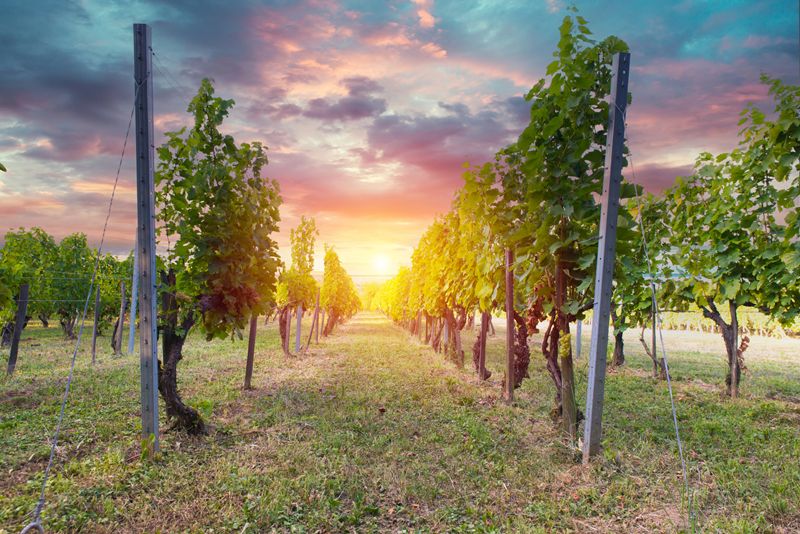
France’s Agriculture Ministry has pushed back its annual grape harvest forecast from early August to early September after an unusually severe summer of heat, drought and wildfires made conditions too unstable to judge the crop with confidence.
The delay reflects the uncertainty facing one of the world’s largest wine producers as growers move into harvest across several regions earlier than usual. Since late May, France has gone through repeated heatwaves, with temperatures often rising above 104 degrees Fahrenheit, or 40 degrees Celsius, according to figures cited by the wine trade and farm representatives. Rainfall has also been scarce. National precipitation is down 67%, and July was the country’s third driest since 1959.
Jérôme Despey, a winegrower in Hérault and vice president of FNSEA, France’s largest agricultural union, said the ministry’s usual estimates, based on field observations and analysis carried out in early July, became too uncertain because of the combination of heat, drought, thunderstorms and fires. For growers, the postponement is more than a bureaucratic change. Official crop forecasts help shape expectations for pricing, contracts and supply planning at a time when merchants, cooperatives, exporters and wineries are preparing for the new vintage.
The summer’s extremes have not hit all vineyards in the same way. In Burgundy, Beaujolais and the Centre-Val de Loire, growers began picking early as high temperatures sped up ripening. In other areas, especially non-irrigated vineyards, the stress has been more damaging. Only about 15% of French vineyard land is irrigated, leaving most vines exposed to prolonged dry conditions. Some growers have reported defoliation, with vines shedding leaves as they struggle to conserve water.
The physical damage has been stark in parts of Provence, where fires have burned through rural areas in recent weeks. In Correns, a town in the Var department, a late-July wildfire destroyed about 15% of local vines. Local growers have described a harvest clouded by loss and uncertainty, with blackened trees and weakened vines still visible as crews move through the rows.
Beyond the vines that were directly burned, many producers are worried about smoke taint, a problem that can undermine the commercial value of a wine even when the grapes appear normal at harvest. Smoke exposure can affect the fruit before picking, but the damage may not become clear until fermentation or even after bottling. The risk is generally higher for red wines because the skins remain in contact with the juice for longer during winemaking.
That threat is pushing some wineries to add extra precautions in the cellar. In Correns, growers have been using charcoal-based treatments in an effort to reduce the effects of smoke compounds. More broadly, the possibility of smoke taint may force wineries and buyers to rely more heavily on testing, lot separation and cautious blending decisions in the coming months, which could raise costs and slow transactions even if the overall vintage proves strong.
In Bordeaux, the picture is more positive for now. The Union des Grands Crus de Bordeaux, which represents 126 châteaux, said at the end of July that no impact on grape quality had been observed to date at the estates it covers. The fires in Gironde were extensive, burning 42,000 hectares, but the major estates in Médoc and Graves were not reached by the flames, according to the group. It said the dry conditions had limited disease pressure and helped sugar concentration in the grapes, while acknowledging the parallel risk of dehydration and sun damage.
That more optimistic view is shared in several other areas where growers say lower yields may be offset by stronger fruit quality. In Chablis, where picking started earlier than usual this month, producers have reported a slightly smaller crop but say the grapes look capable of delivering an exceptional vintage. In western France, growers have also struck a hopeful tone about fruit quality after a hot, dry summer.
Weather has shifted in France this week, bringing cooler temperatures and some rain. For late-ripening varieties, that change could still matter. Growers say the added moisture may help vines recover part of their balance after weeks of stress and may support final ripening before the main harvest is completed.
Even so, a smaller crop remains a real possibility in several regions. Heat can concentrate sugars and flavors, but prolonged drought can also reduce berry size and overall output. Fires add another layer of uncertainty, not only through direct destruction but through possible smoke exposure that may not be fully understood until vinification is underway.
The ministry’s decision to wait until September for its national forecast leaves the trade without an official reading at a sensitive moment, but many in the sector appear to prefer caution over a premature estimate that could quickly prove wrong. For France’s wine business, the stakes extend well beyond the vineyard. The eventual crop size will influence bulk supply, export expectations and purchase negotiations for the 2026 vintage, while the smoke-taint question could determine how much fruit is usable in the most exposed areas.
For now, the dominant view in the trade is that France may be heading toward a year of quality over quantity, though that judgment will depend on what growers and winemakers find once the grapes are fully in.
