Ancient DNA shows Chianti grew white grapes 2,000 years ago
Seeds from Tuscan wells reveal a dominant ancient vine that endured from Etruscan rule into the Roman era
2026-06-16
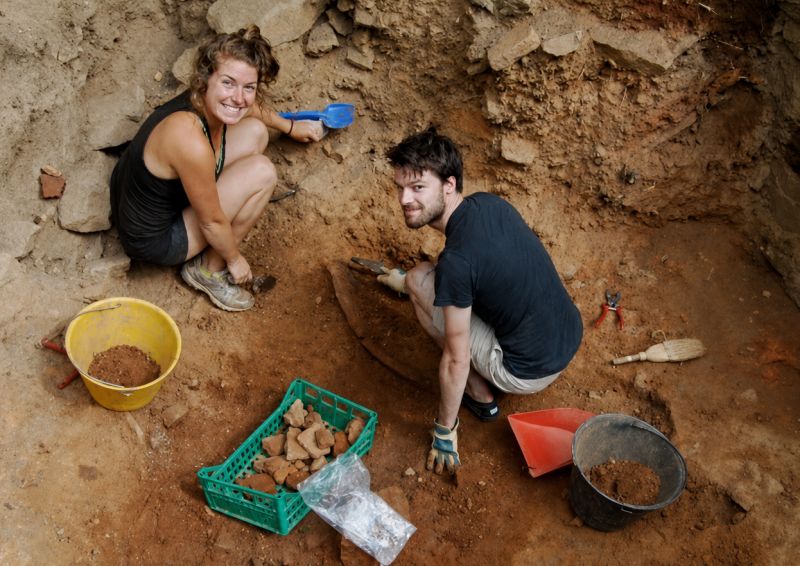
Ancient grape seeds recovered from deep wells in Tuscany are reshaping the history of Chianti, suggesting that one of Italy’s best-known red wine regions was producing mostly white grapes 2,000 years ago.
The finding comes from a study led by researchers at the University of York and published in the Journal of Archaeological Science. The team analyzed DNA from 80 grape seeds found at Cetamura del Chianti, an archaeological site in Gaiole in Chianti, in the heart of today’s Chianti Classico area. The seeds span a period from about 300 B.C. to 300 A.D., covering Etruscan and Roman occupation of the settlement.
Researchers said the seeds had been preserved in unusually good condition because they were discarded into deep wells filled with oxygen-free mud, which slowed bacterial decay and protected ancient biological material for centuries. That preservation allowed scientists to sequence DNA on a scale they described as the most complete genetic reconstruction yet attempted for ancient vines from a single site.
Oya Inanli, who led the work as part of her doctoral research, said the most striking result was the strong continuity in the vineyard material over time. According to the study, most of the seeds belonged to one identical grape variety that passed from the Etruscans to the Romans and remained in use for generations. Genetic markers also showed that this dominant clone produced white grapes.
That result stands in sharp contrast with the modern identity of Chianti, which is closely tied to red wines made mainly from Sangiovese. Today, Chianti is one of the most recognized names in Italian wine, associated around the world with red blends and, in Chianti Classico, with wines centered on Sangiovese. The new evidence suggests that in classical antiquity the area’s vineyard profile was very different.
Nancy De Grummond of Florida State University, who has directed excavations at Cetamura since 1973, said the discovery adds an unexpected chapter to the region’s wine history. She said it was a welcome surprise to learn that the internationally known red wine of today had been preceded by a white wine cultivated and maintained for centuries during Etruscan and Roman times.
The study also points to broader changes after Roman control expanded over the settlement. Researchers found evidence that new vine varieties appeared at Cetamura after the Roman conquest, suggesting that plant material was introduced from other parts of the empire. The team said this supports the idea that Rome was not only trading finished wine across long distances but also moving cuttings and other propagation material to shape vineyard production in different provinces.
Genetic comparisons linked Cetamura’s dominant ancient clone to two previously studied grape seeds from southern France. For researchers, that connection strengthens the case for an agricultural network that extended beyond local cultivation and tied vineyards across Roman territories into a wider system. Nathan Wales, a co-author of the study at the University of York, said it is striking to think that grapes valued by ancient Romans are genetically close to varieties still poured into glasses today.
The researchers also identified one seed from Cetamura that belonged to a grape family still cultivated in Central and Eastern Europe. Its closest modern relative appears to be Baratcsuha szürke, a rare Hungarian variety. The same lineage is also connected to the famous vine in Maribor, Slovenia, which is officially recognized as the oldest living fruit-bearing vine in the world and is about 400 years old.
That link does not mean modern wines are identical to those drunk in Roman times, but it does suggest long genetic continuity in parts of European viticulture. The study argues that grape growing developed not only through replacement and loss but also through slow transmission across centuries, conquests and migrations.
Beyond its historical implications for Chianti, the research highlights how ancient DNA is becoming a more precise tool for wine archaeology. Scientists have already used ancient DNA to reconstruct human history, but its application to Vitis vinifera is now expanding from simple identification toward more detailed traits such as berry color. In this case, fossilized seeds became readable genetic records rather than only archaeological objects defined by shape and context.
The work also combined DNA analysis with seed morphology, which helped researchers detect signs of wild grape gathering alongside cultivated vineyard use. That detail suggests that ancient communities at Cetamura may have relied on both managed vines and collected fruit during part of the site’s long occupation.
For Tuscany’s wine world, the study offers a reminder that regional identity has changed over time. Chianti’s current reputation rests on red wine, but its documented ancient roots now appear tied largely to white grapes grown under Etruscan and Roman rule. The discovery does not alter what Chianti is today, but it changes what historians and wine scholars can say about where that story began.
