Federal Officials Propose Vermont Wine Region
The Champlain Valley could become the state’s first federally recognized American viticultural area, giving wineries a protected label.
2026-04-15
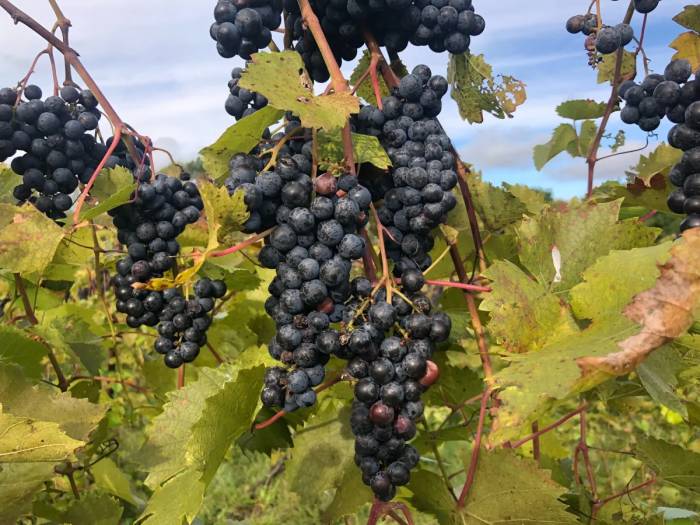
Vermont’s Champlain Valley is on track to become a federally recognized wine region, a move that vineyard owners and state agriculture officials say could help put the state’s small but growing wine industry on firmer footing.
The U.S. Alcohol and Tobacco Tax and Trade Bureau has proposed designating the “Champlain Valley of Vermont” as an American viticultural area, or AVA, a federal classification used to define grape-growing regions with distinct geographic and climatic characteristics. If approved, the designation would allow wineries to identify the region on labels and would require that nearly all grapes used in wines bearing the name come from inside the area’s borders.
The proposed AVA covers a broad stretch of western Vermont between Lake Champlain and the Green Mountains, extending from Rutland County to the Canadian border. For growers who have spent years trying to build a reputation in a state better known for craft beer, the recognition would offer both marketing value and a formal acknowledgment of what they say makes the region different.
“It gives us validity,” said Kenneth Albert, founder of Shelburne Vineyard and a former president of the Vermont Grape and Wine Council. Albert submitted the petition for recognition in 2022. His vineyard, founded in 1998, was among Vermont’s first commercial grape-growing operations. “We’ll finally get some respect,” he said.
Vermont’s wine industry remains small compared with those in larger East Coast states, but it has been expanding steadily. A 2018 University of Vermont study described winemaking as a “unique growth sector” in the state’s agricultural economy. State officials say that growth has been tied not only to production but also to tourism, as visitors increasingly seek out tasting rooms, vineyard tours and farm-based experiences.
Kristen Carrese, who oversees marketing and exports at the Vermont Agency of Agriculture, Food and Markets, said the proposed designation could strengthen that trend by giving travelers and consumers a clearer sense of place.
“An AVA designation is an exciting opportunity to define the Champlain Valley as a distinct wine growing region that’s shaped by our specific climate, soils and geography,” she said.
The case for recognition rests largely on geography and weather. The Champlain Valley sits in one of Vermont’s milder agricultural zones because Lake Champlain helps temper temperatures and extend the growing season compared with other parts of the state. That matters in a place where winter cold can be severe enough to damage vines.
At Shelburne Vineyard, growers have relied on hybrid grapes bred from European and North American varieties that can survive temperatures as low as 20 degrees Fahrenheit below zero. Those grapes are part of what has allowed winemaking to take hold in Vermont despite conditions that remain challenging for traditional wine varieties.
Kendra Knapik, who co-founded Ellison Estate Vineyard in Grand Isle and recently served as president of the Grape and Wine Council, said warming temperatures have made it possible to grow more kinds of grapes than before. But she said that trend comes with risks, including more frequent extreme weather events that can threaten crops.
“There’s this concept in wine called terroir,” Knapik said, using the industry term for how climate, soil and elevation shape grapes. “You’re tasting a place.”
That idea is central to the federal proposal. Supporters argue that the Champlain Valley has enough consistency in climate and landscape to merit its own label, giving wineries a way to tell consumers where their grapes were grown and what makes them different from fruit produced elsewhere.
Albert said that kind of labeling flexibility could help wineries connect more directly with customers who want local products with a clear origin story. He also hopes federal recognition will encourage similar efforts in other parts of Vermont.
David Keck, a sommelier and owner of Stella14 Wines in Jeffersonville, said he sees the proposal as an important step for public awareness even if it does not solve every problem facing the industry.
“I think it’s good recognition for the area,” he said. He added that Vermont wine is “positioned well right now to grow rapidly,” though he said the sector still lacks large-scale investment.
The proposed rule is open for public comment until May 26, after which federal officials will decide whether to finalize the designation.
