Italian wine stocks rose 6.7% in June to 46.5 million hectoliters
The increase, concentrated in DOP and IGP wines, added to concerns that weak demand is outpacing the market’s ability to absorb output
Friday, October 30, 2026
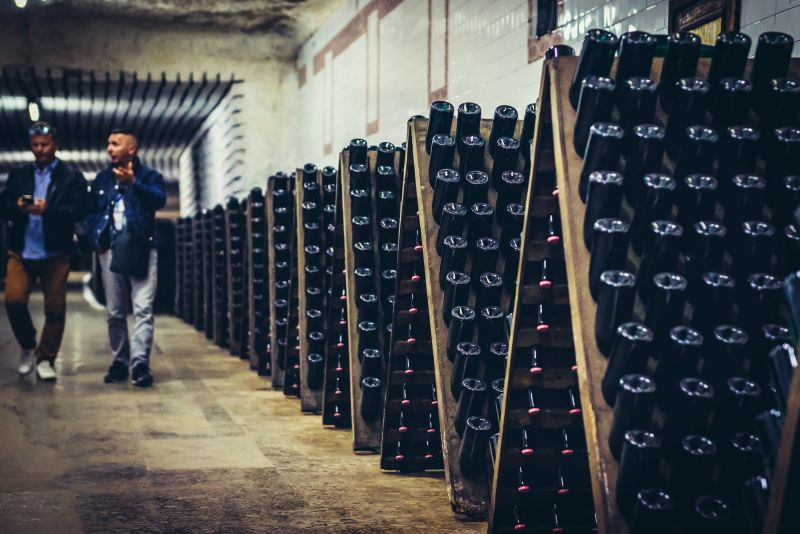
Italian wine stocks rose in June, adding to concerns about the market’s ability to absorb production.
Wineries in Italy held 46.5 million hectoliters of wine in June, up 6.7% from June 2025, according to Horeca Channel Italia, which reported the figures on Thursday, October 29, citing TEHA Group’s “Visione Vino 2026” strategic report. The increase amounts to roughly 2.9 million additional hectoliters based on the rounded data cited by the outlet. Horeca Channel Italia said the total was equal to about 6.2 billion bottles.
More than 80% of the wine held in storage was made up of DOP and IGP wines, the certified categories tied to protected origin and geographical indication rules. That detail matters because it shows the buildup is concentrated mainly in wines with recognized labels, not only in lower-end bulk volumes. A rise of that size in certified inventories can increase commercial pressure on producers and distributors to move stock, especially if demand remains weak or prices continue to soften.
The report, presented October 16 in Voghera during TEHA’s Visione Vino forum, linked the higher inventory levels with lower prices and described the trend as a sign that the market is struggling to absorb output. The figures refer to physical wine stocks in cellars in June. They do not describe inventories after the new harvest and should not be read as a snapshot of stocks at the end of October.
The numbers come at a sensitive time for Italy’s wine sector, which remains one of the country’s most important food and beverage industries. In comments published by Horeca Channel Italia, Benedetta Brioschi, a partner at The European House Ambrosetti and head of food, retail and sustainability, said the broader Italian wine value chain generates about 41 billion euros in added value. She said that is equal to 2% of national GDP and about 10% of total agri-food added value.
At the same time, the report described a sector that is still highly fragmented. According to the figures cited by Horeca Channel Italia, 95% of companies in the industry have fewer than 50 employees, yet those firms account for only 40% of total revenue. Large companies with more than 250 employees make up just 0.3% of the total number of businesses but generate more than 7% of sector revenue.
That structure can make it harder for producers to respond when stocks rise. Smaller wineries often have fewer financial resources, less bargaining power in distribution, and weaker export reach. TEHA’s report, as quoted by the outlet, found a negative correlation between the share of microenterprises in a region and the growth of wine exports. In practical terms, regions with a higher concentration of very small wine businesses tend to have more difficulty expanding in foreign markets.
That matters for inventory management because exports are a critical outlet for Italian wine. When international demand slows or producers cannot expand abroad fast enough, stocks can stay in cellars longer. If the buildup is concentrated in certified categories, the problem can be more difficult to solve quickly because those wines are tied to production rules, appellation positioning, and pricing expectations that producers may be reluctant to weaken.
The report also pointed to generational turnover as a central issue for the industry. Horeca Channel Italia quoted Brioschi as saying that 45% of owners of agricultural businesses in Italy are older than 65, or 10 percentage points above the European average. She said wine companies are younger on average than the broader farm sector, but succession remains a major challenge. According to the figures cited, 65% of the net worth in the Italian wine sector is still held by a family.
That ownership model has long been a defining feature of Italian wine, but it can slow consolidation and investment when family succession is unresolved. TEHA argued that generational change could help improve productivity, innovation and export performance. Horeca Channel Italia reported that younger farm operators tend to be more productive and more inclined to innovate and export than older ones.
The increase in June inventories is likely to sharpen those debates. Holding larger volumes in storage can raise financing, warehousing and working-capital needs, especially for smaller producers. If prices are already under pressure, wineries may have to choose between keeping wines in cellar longer, discounting them, or slowing new commercial activity until stocks are reduced. None of those options is easy for businesses that already operate on thin margins.
The report did not provide, in the material cited by Horeca Channel Italia, a like-for-like monthly comparison beyond the June annual change, and the full study was not included in the outlet’s article. That leaves open key questions about how inventories were distributed across regions, categories and channels, and whether the buildup was driven more by weak domestic demand, slower exports, pricing shifts or production patterns from the previous vintage.
Even so, the June figures point to a market where supply is running ahead of sales in at least part of the system. The fact that certified DOP and IGP wines make up most of the stored volume suggests the issue is not confined to lower-value wine. It also suggests that any effort to reduce stocks may involve some of Italy’s best-known appellation categories, where producers are often more exposed to brand positioning and channel strategy than to simple volume sales.
Horeca Channel Italia also said the TEHA report examined the use of artificial intelligence in the sector. It reported that three out of 10 Italian wineries already use or are testing AI solutions, while 49% do not use them. The article said the tools are being applied mainly in marketing, communications and sales-data analysis, an area where faster market signals could become more important if wineries are trying to manage high stocks and changing demand.