Brazil’s farm belt backed Bolsonaro despite 25% U.S. tariffs on key crops
In wine-growing southern regions, many producers favored promises of lighter regulation over Lula’s subsidies and trade agenda
Tuesday, October 20, 2026
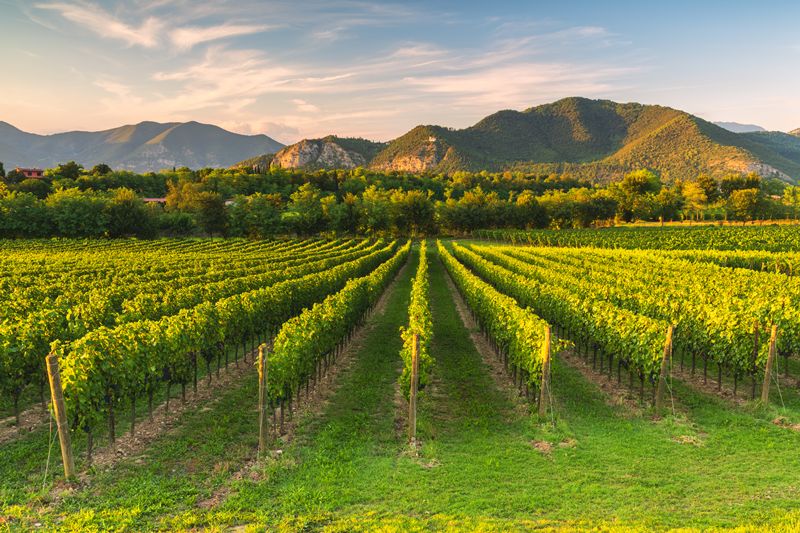
Brazil’s farm sector largely backed far-right candidate Flávio Bolsonaro in the first round of the country’s presidential election, even after new U.S. tariffs hit key Brazilian crops and despite heavy public investment in agriculture under President Luiz Inácio Lula da Silva.
The vote on Oct. 4 showed strong support for Bolsonaro across major producing areas. In eight of Brazil’s 10 leading agricultural municipalities by production value, Bolsonaro defeated Lula, according to data cited by EFEAgro. The result underscored how deeply the political map of rural Brazil has shifted, even as agriculture remains one of the main engines of the national economy and accounts for about a quarter of gross domestic product.
That pattern was also clear in the wine region of Serra Gaúcha in the southern state of Rio Grande do Sul, the country’s main wine-producing area. In Flores da Cunha, one of Brazil’s largest wine-producing municipalities, 79% of voters backed Bolsonaro in the first round, while 12% supported Lula.
For many growers there, the choice was shaped by identity as much as economics. Christian Rancan, a 26-year-old grape grower and city councilman from the region, said his support for the right is rooted in values and in the belief that Bolsonaro is more aligned with the countryside. That view has survived a 25% U.S. tariff imposed in July on roughly one-third of Brazil’s agricultural production, including products such as grapes and rice.
Lula has accused Bolsonaro of encouraging the tariff in order to hurt the government politically, an allegation Bolsonaro denies. Many farmers in southern Brazil do not appear convinced by Lula’s argument. Some say Bolsonaro’s proximity to U.S. President Donald Trump gives him a better chance of negotiating relief.
In the vineyards around Flores da Cunha, where the new season is beginning and the next harvest is expected in January and February, families are weighing politics against immediate business pressures. The generational shift is visible. Rancan said his father and grandfather had voted for Lula when he first ran for president more than 30 years ago, but later moved to the right because they came to believe conservative candidates were more supportive of farming.
That perception has held even though Brazilian harvests have set records in recent years and Lula’s administration rolled out large subsidized rural credit packages. Lula recently expressed frustration on the campaign trail and said farmers should not only vote for him but also “kneel” in recognition of what his government invested in the sector. In farming communities, the remark was taken badly and fed existing resentment.
The divide is also about regulation. Lula has tightened rules and inspections aimed at curbing deforestation, while Bolsonaro has proposed reviewing the work of environmental agencies that many in agribusiness see as heavy-handed or hostile to production. For producers who want fewer controls and less state intervention, that contrast has become a major campaign issue.
Trade policy has added another point of tension, especially in the wine industry. Many farmers, and vintners in particular, are uneasy with the market-opening agenda pursued by Lula, which culminated in the Mercosur-European Union agreement signed in January. Under the deal, imported European wine would no longer face tariffs in Brazil after a 10-year phaseout period.
That prospect has become politically sensitive in southern Brazil. Local winemakers say they are not afraid of competing on quality, but they argue that Brazil’s tax structure already inflates domestic prices and leaves them at a disadvantage. Maicon Galiotto, one of the directors of a winery in the region, said taxes add about 40% to the final price of his wine and warned that lower barriers for European bottles could push many Brazilian wineries into a much tougher fight for market share.
The issue reaches beyond electoral politics because Brazil’s wine market is part of a broader beverages business that includes producers, importers, distributors, retailers, restaurants, and tourism operators. If the agreement moves forward as planned, the gradual opening to European wine could reshape pricing, sourcing, and competition in Brazil’s beverage sector, especially for domestic wineries that already face high costs. At the same time, importers and sellers of foreign wine could see new opportunities over the long term.
The commercial debate is unfolding as some wineries are trying to expand. Galiotto said his company is preparing to open a visitor center and aims to grow sales by 10% a year through 2030, reaching 14 million liters. But he argued that expansion will depend in part on a federal policy mix that gives producers more support against foreign competition and climate risk.
Insurance is another concern. According to producers in the region, the federal government traditionally covered around 40% of the cost of insurance that protects farmers against extreme weather, but funding for that support has been cut sharply in recent months. Bolsonaro has promised to expand it, a pledge that resonates in areas where frost, hail, and drought can quickly damage vineyards and other crops.
In Flores da Cunha, those issues are not abstract. Vineyard families are preparing new products, planning for the next harvest, and deciding how much risk they can take in a changing market. Rancan said his family is focused on releasing a commemorative cabernet sauvignon called TRÉ, a reference to three generations working the same property. What he wants most from the next president, he said, is a government that does not get in the way.