Study Finds Tasting Alone Does Not Create Wine Experts
Among 525 participants, higher intelligence with organized instruction predicted wine knowledge better than consumption did.
Thursday, August 27, 2026
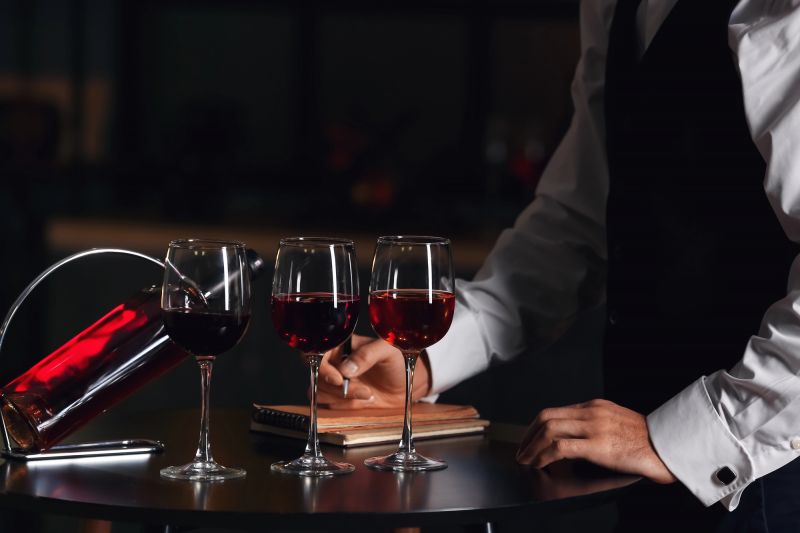
A new study on intelligence and specialist learning has found that simply tasting large amounts of wine does not, by itself, turn someone into a wine expert.
The research was led by Maximilian Krolo, a psychologist and intelligence researcher at Saarland University in Germany, in partnership with Professor Bates of the University of Edinburgh. Their paper examined whether a person’s level of intelligence can help predict the depth of knowledge they develop in a specialized field that most people pursue voluntarily rather than for school or work.
To test that question, the researchers focused on wine, a subject they said offers a useful example of knowledge that is culturally visible, intellectually demanding and often learned outside formal education. The findings were published in the journal Intelligence & Cognitive Abilities.
The study involved 525 participants. Each person first completed the ICAR, a well-known intelligence assessment that measures skills including verbal reasoning, matrix reasoning, spatial ability and number and letter sequence completion. Participants were then given 68 multiple-choice questions drawn from WSET Level 2 material to assess how much they knew about wine.
The researchers said wine was chosen in part because it usually sits outside standard school curricula and is not required in most occupations. That made it a useful field for studying self-directed learning. Krolo said formal education and workplace performance can be shaped by social and economic conditions, which can make it harder to isolate the role of intelligence alone. Wine, by contrast, allowed the researchers to look at a domain where many people learn because they want to, not because they must.
The study also separated people who work in the wine trade from those who do not, allowing the researchers to compare professional exposure with personal interest. In addition, they measured wine consumption to see whether drinking more wine was linked to stronger knowledge.
Two main findings emerged. First, the researchers found that intelligence was a significant predictor of wine knowledge even after accounting for whether someone worked in the wine business and how much wine they drank. In other words, participants with higher scores on the intelligence test were more likely to show deeper knowledge of wine, including in cases where there was no immediate financial or professional reward for acquiring that knowledge.
Second, the paper found that higher wine knowledge was tied not just to experience, but to structured learning. The study challenges a common belief in wine culture that repeated tasting alone naturally leads to connoisseurship.
Krolo said the data did not support that assumption. He said people who enjoy drinking wine do tend to know more about it, but drinking wine by itself does not appear to change how much they learn from the experience. According to the researchers, the key difference is whether the learning takes place in an organized setting where wines are classified, compared and discussed, and where participants receive feedback and correction.
That point was especially visible in professional wine settings, the paper said. In those environments, people are more likely to encounter wines repeatedly, place them into categories and receive guidance within a system of formal or semi-formal instruction. The researchers argued that those conditions give intelligence more room to affect how much a person learns.
The findings have practical implications for businesses and institutions that teach consumers about wine. Krolo said retailers, hospitality operators, vineyards, wineries and wine schools may get more lasting results from tastings if they present them as structured educational exercises rather than informal lineups of bottles. The suggestion is not that tasting is unimportant, but that tasting appears to be most effective when paired with method, repetition and explanation.
The paper adds to a broader debate about the role of intelligence in learning outside traditional academic and professional settings. Intelligence tests have long been used to predict outcomes in school and work, but the authors said those settings are often shaped by incentives, expectations and opportunity. Their wine study was designed to test whether intelligence still matters when people pursue knowledge largely out of personal interest.
The answer, according to this research, was yes. The study indicates that intelligence can help explain who develops advanced knowledge in a specialized hobby-like area, even when there is no clear external pressure to do so. At the same time, the authors stressed that the learning environment matters. Exposure alone was not enough to explain expertise.
The researchers said future work could apply the same approach to other forms of niche knowledge, including areas such as classical music and birdwatching. That would help test whether the pattern seen in wine also appears in other subjects where learning is self-directed, culturally valued and often pursued for pleasure rather than necessity.