Champagne producers cut the 2026 harvest yield to 8,800 kilograms per hectare
The 2% reduction aims to trim inventories by about 10 million bottles as the region pursues annual sales of 300 million bottles
2026-07-22
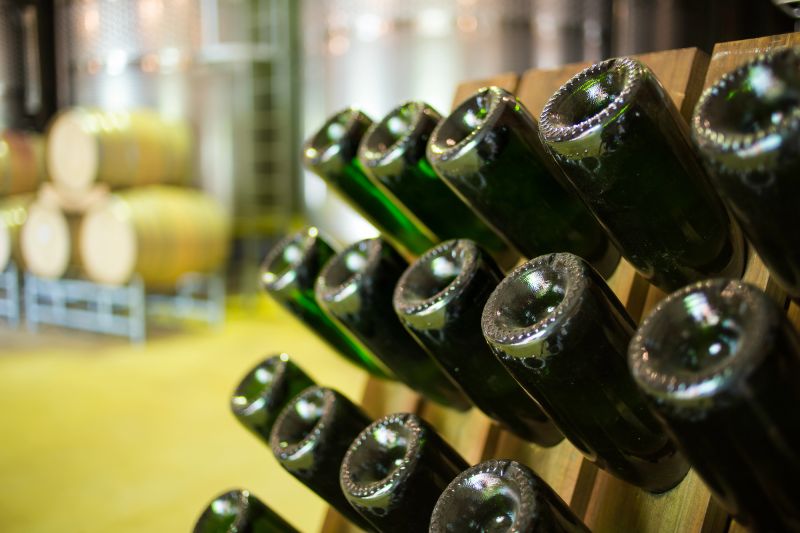
Champagne producers and houses have agreed to lower the authorized yield for the 2026 harvest to 8,800 kilograms per hectare, a 2% drop from 9,000 kilograms per hectare in 2025, as the region tries to reduce inventories by about 10 million bottles while keeping its long-term sales target of 300 million bottles a year.
The decision was announced by leaders of Champagne’s main trade bodies after negotiations between growers and houses. The measure reflects a balancing act in one of the world’s most tightly managed wine regions: family growers want enough production to support farms that have invested heavily in environmental measures, while Champagne houses are carrying stocks that are weighing on cash flow.
Maxime Toubart, president of the Syndicat Général des Vignerons de Champagne and co-president of the Comité Champagne, said the lower yield was meant to address both pressures. He said the level takes into account the needs of family operations while also helping start a gradual reduction in inventories. He added that producers would prefer a yield of 10,000 kilograms per hectare, but that putting too much wine on the market would not be sustainable.
The new ceiling continues a downward trend. The authorized yield was 10,000 kilograms per hectare in 2024, then fell 10% to 9,000 kilograms per hectare in 2025. The latest cut is smaller, but it comes as Champagne seeks to manage supply carefully after weaker demand in recent years.
David Chatillon, president of the Union des Maisons de Champagne and also co-president of the Comité Champagne, said the sector had already agreed last year on a strategy to reduce stocks without moving too abruptly. He said the expected drawdown is around 10 million bottles. He also pointed to a modest recovery in shipments, which rose 1.2% in the first half of the year, and said that if that trend continues it could allow Champagne to reduce inventories further.
For Champagne, controlling yields is one of the main tools used to stabilize prices and protect the region’s economic model. Unlike many wine regions that respond more directly to market swings, Champagne has long relied on collective decisions between growers and houses over how much fruit can be harvested each year. Those decisions affect grape supply, reserve wines and future bottle availability across an appellation built on long aging periods and global branding.
Even with lower yields, industry leaders say they are not giving up on returning to annual sales of 300 million bottles. Toubart said Champagne is structured for that volume and not less. He warned that the current model is under strain and cannot continue for many years at this level of production restraint, but he argued that Champagne remains in a stronger position than many other wine regions facing slower consumption and rising costs.
To support sales, the Comité Champagne plans two promotional events aimed at raising visibility for the appellation in France. The first, Champagne Week, will take place in Paris from Oct. 19 through Oct. 26, 2026. Organizers say it is intended to create new tasting occasions in restaurants, wine bars, hotels and wine shops across the Paris region. Toubart said the goal is to highlight the diversity of Champagne wines and encourage broad participation rather than stage a strictly institutional event.
The interprofessional body will coordinate Champagne Week through a website listing participating events and will back it with targeted communication in the Paris area. The campaign comes at a time when producers are looking for ways to reconnect with consumers through hospitality and direct experience rather than relying only on traditional retail channels.
A second event, called Champagne Rendez-Vous, is scheduled for June 5, 2027, at Parc de Champagne in Reims. Chatillon said the aim will be to extend Champagne’s reach by pairing the main event with additional programs hosted by growers and houses. The format is designed to spread activity beyond one venue and involve more of the region’s producers directly.
The discussions also touched on a proposal from the federation of independent winegrowers to create what it calls an individual commercialization need mechanism, or BIC. Supporters see it as a way to give individual producers more flexibility based on their own commercial situation. But leaders of the Comité Champagne rejected it as unsuitable for managing a collective system.
Toubart said the idea might make sense from an individual standpoint but not for steering the region as a whole. He argued that if some producers were allowed to harvest more under such a system, others would have to harvest less. Chatillon made a similar point from the perspective of Champagne houses, saying companies that own vineyards could use the same logic to increase their own harvests and buy fewer grapes from growers, which he said would undermine collective management.
The debate shows how sensitive production decisions remain in Champagne, where growers and houses depend on each other even when their short-term interests differ. Growers need stable grape demand and viable farm economics. Houses need inventory discipline and enough flexibility to respond if exports recover more strongly. Both sides are trying to avoid sharp corrections after several years marked by inflation, softer consumption in some markets and pressure on margins across the wine trade.
For now, the compromise around 8,800 kilograms per hectare signals that Champagne wants to keep reducing stock cautiously rather than force a rapid contraction. With shipments showing slight growth and new promotional efforts planned in Paris and Reims, the region is betting that tighter supply management and renewed consumer visibility can help move it back toward its benchmark of 300 million bottles sold annually.
