French Wine Regions Weigh Wider Vine Spacing
Researchers say lower vineyard density could cut costs, reduce frost damage and help growers adapt to climate change without altering taste
Thursday, May 7, 2026
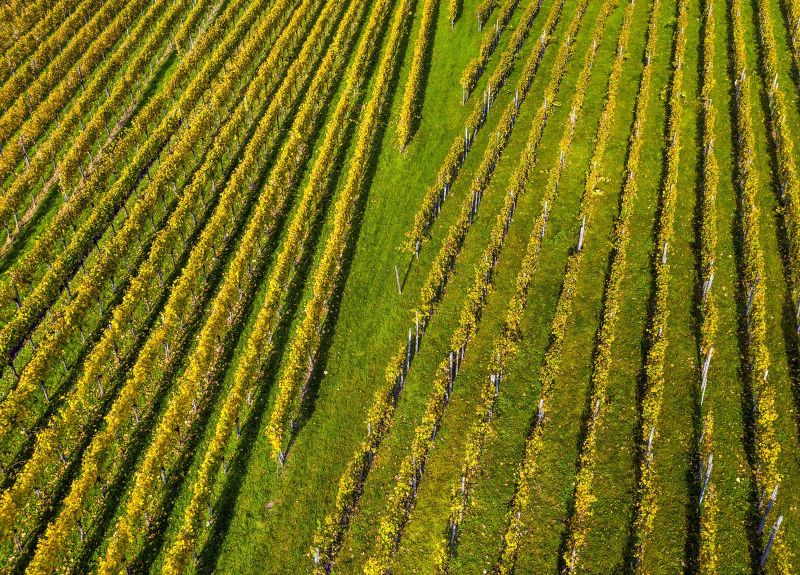
At a conference in Beaune, France, wine researchers and industry officials said that reducing vineyard planting density could help growers adapt to climate change while lowering costs and limiting frost damage, without clearly changing the taste of the wines.
The discussion, held Feb. 6 at the Beaune wine center in Burgundy, came as more French appellation groups seek changes to their rules in response to warmer and less predictable growing conditions. Thiébault Huber, chairman of the Burgundy appellation and winegrowers’ federation, said in opening remarks that requests to amend appellation specifications were increasing, especially on planting density.
“In a wine region like Burgundy, densities were historically increased to expand the leaf canopy, enhancing carbon capture and enabling grapes which had reached a peak to ripen in cooler conditions,” Laurent Torregrosa, a researcher at Agro Montpellier, said at the event. “Today, with climate change, those assumptions are being fundamentally challenged.”
Researchers presenting studies from Champagne, Burgundy and Beaujolais said medium-wide row spacing and lower vine counts per hectare could offer practical benefits. In Champagne, a 20-year trial covering densities from 3,000 to 6,200 vines per hectare found that frost damage fell by 30% to 50%, environmental impact dropped by 20% and mechanization became easier, according to Sébastien Debuisson of Comité Champagne. He said Unesco considered the landscape impact neutral or even positive.
In Burgundy, technical and economic studies cited by Mathieu Oudot of the Burgundy wine marketing board showed that establishment costs could be 24% to 36% lower and average operating costs about 40% lower with wider spacing. That matters in a region where labor and vineyard maintenance remain expensive and where growers are under pressure from heat, drought and spring frosts.
The central question for many producers is whether lower density changes wine character or weakens typicity in regions long associated with tightly planted vines. Jean-Yves Cahurel of the French Vine & Wine Institute said a nearly decade-long study in Beaujolais found that lower densities were compatible with appellation requirements. He said the wines showed slightly higher acidity but little difference in potential alcohol or polyphenols.
Blind tastings did not show consistent sensory differences between wines from high-density and medium-density vineyards. In Champagne, Debuisson said that across 250 tastings, panelists could not distinguish the wines in 66% of cases. When differences were detected, there was no clear preference. He added that wetter vintages tended to favor higher densities slightly, while drier years gave an edge to wider spacing.
The findings come as European wine regions face mounting pressure to revise long-standing vineyard rules. Growers have been dealing with more frequent spring frosts in some areas, hotter summers in others and rising costs tied to labor, fuel and equipment. For appellation systems built around tradition, the research suggests that one of the oldest assumptions in viticulture — that more vines per hectare automatically mean better wine — may no longer hold under current conditions.