Winemakers Embrace Unusual Vessels for Aging
New tank shapes and materials are changing how wine develops after fermentation, altering oxygen exposure, lees contact and texture
2026-05-07
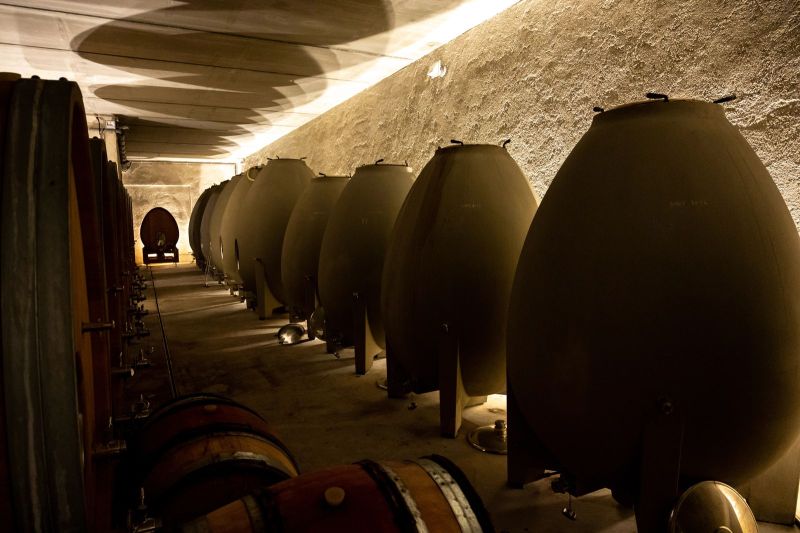
A growing number of wineries are turning to vessels that depart from the familiar cylindrical stainless-steel tank, as winemakers look for new ways to manage oxygen, contact with lees and the pace of wine aging after fermentation.
The shift was outlined by Vincenzo Gerbi, a professor at the University of Turin, in a recent webinar excerpt focused on oxygen management in post-fermentation. In his remarks, Gerbi said that traditional cylindrical tanks remain widely used, but that they are being challenged by new container shapes and materials that can change how wine evolves during aging.
Among the alternatives drawing attention are oval vessels made of wood or ceramic, along with cement tanks built in more unusual forms. Gerbi said these designs are not simply aesthetic choices. Their geometry affects how particles and yeast settle, which in turn changes how much surface area is created between the lees and the wine during aging.
In a cylindrical tank, sediment tends to collect evenly across the bottom. In an oval vessel, by contrast, particles descend along the walls from about the middle of the container down to the base. That movement increases contact between the lees and the wine, a factor that can influence texture, aroma development and other sensory traits.
Gerbi also noted practical limits. Oval vessels are usually built in relatively small sizes, often between 5 hL and 20 hL, because larger versions would be difficult to construct safely. Cylindrical tanks, by comparison, can exceed 50 hL and remain easier to scale for larger production needs.
The discussion also covered porosity and oxygen transfer, two factors that have become central to modern aging decisions. Wood remains the best-studied material in this area and is still considered the most obvious example of a porous vessel. Terracotta comes next, though its behavior depends heavily on both the raw materials used and how it is made.
Gerbi said firing plays an important role in terracotta’s final structure. Less-fired terracotta tends to be less porous, which changes how gases move through the vessel. That makes construction methods as important as shape when producers are trying to control oxygen exposure during aging.
Cement tanks have also returned to prominence in some cellars, including versions with rounded or egg-like forms. Gerbi described this as part of a broader rethinking of post-fermentation aging, where geometry, material and capacity all interact. The result is a wider set of tools for winemakers who want more control over lees contact and oxygen exchange without relying only on stainless steel or oak.
The renewed interest in these vessels reflects a broader technical debate in wine production about how container design shapes maturation. For producers working on texture, freshness and aromatic development, the choice of vessel has become part of the winemaking strategy rather than just a matter of storage.
