Women Farmers Face a Wider Pay Gap in Italy
A new study found women-led farms earn 42% less than men’s, despite growing numbers and output.
Wednesday, April 29, 2026
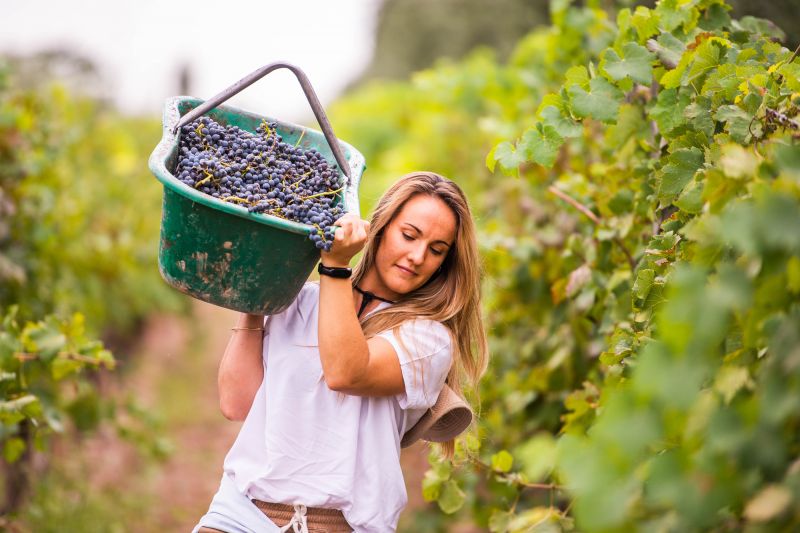
Women now run a little more than 400,000 farms in Italy, about one-third of the country’s total, according to research presented Tuesday in Rome by Confagricoltura Donna and the Crea research center. The figures place Italy in line with the European Union average for female-led farms, but they also show how much work remains to close the gap in income, access to resources and decision-making power.
The study was discussed at a conference titled “Agriculture Is Woman. Female Leadership to Cultivate the Future,” where industry leaders and government officials gathered to examine the role of women in Italian farming. The event came as the United Nations has declared 2026 the International Year of the Woman Farmer, a designation meant to highlight women’s role in food security, rural resilience and agricultural production.
Italy and Romania together account for nearly 1.5 million women-led farms, more than half of the 2.7 million female-run farms in the European Union. Romania has the largest number in Europe, with more than 1 million farms led by women. In Italy, agriculture remains one of the country’s most gender-balanced sectors by European standards, with a female participation rate above the national average for many industries.
But the economic picture is less favorable. The research found that while income at women-led farms has generally risen over the past decade, it is still 42% lower than income at farms run by men. In 2023, after years of steady gains, earnings for female agricultural entrepreneurs fell again, pushing the gender gap back above 40%.
The disparity also appears in European farm support payments. Women make up 31% of beneficiaries under the Common Agricultural Policy, but they receive only 15% of payments. In Italy, the share of payments going to women-led farms is below the European average.
Confagricoltura Donna used the meeting to present what it called the “Rome Document,” a manifesto calling for stronger public support for women in agriculture. Alessandra Oddi Baglioni, president of Confagricoltura Donna, said recognition alone was not enough if policy did not address the conditions that still limit women’s work and business growth in rural areas.
“We are not here only to celebrate an identity or restate a principle that is already accepted,” she said. “We are here to take a step forward and give political form to a mature awareness.”
The manifesto sets out seven priorities: fully recognizing women’s role in agriculture; narrowing the divide between urban and rural areas; strengthening female leadership and participation in governance; providing accessible tools for women-owned farms; promoting innovation, training and knowledge; valuing agriculture’s social, environmental and economic role; and building a more inclusive agricultural policy.
Oddi Baglioni also asked Patrizio Giacomo La Pietra, undersecretary at Italy’s Agriculture Ministry, to create an office focused on female entrepreneurship in farming. La Pietra said public resources had already been directed toward women’s entrepreneurship but added that more was needed, especially basic services in inland areas where many farms operate. He cited health care, schools and child care as essential supports that would make it easier for women to work.
Massimiliano Giansanti, president of Confagricoltura, said women play a central role inside family farms and in preserving agricultural traditions. He said any modern food narrative must also recognize women more clearly within farm businesses.
The study found that women-led farms are generally smaller than those run by men, often covering up to five hectares in Italy and across Europe. Even so, their utilized agricultural area has grown faster than that of male-led farms in Italy, rising 12.5% compared with 2.9% for men over the period examined. Women-led farms also showed higher mechanization levels and nearly twice the growth rate in mechanization over the past decade.
Labor intensity remains higher on women-run farms and has declined less than on male-run operations over the same period.
Viticulture stood out as an exception to many of these trends. In winegrowing, female-led businesses have not only grown but have done so while male-led wine businesses have weakened. The sector is also the only one where researchers found no gender gap.
Michela Marenco, who runs Marenco Vini with her sisters Patrizia and Doretta in Monferrato, said one reason for that strength is cooperation among women entrepreneurs. She pointed to long-standing networks such as Donne del Vino as a source of shared information and practical support.
“We have worked hard,” she told Winenews. “Women know how to work together. We exchange information, we talk, we know how to grow together.”
Martina Dal Grande of Società Agricola Dal Grande, which supplies grapes for Prosecco Superiore Conegliano Valdobbiadene Docg producers, said her region has seen a strong rise in women leading farm businesses. She said many of those operations are small but that women have brought a strong focus on territory and local stewardship.
The conference took place against a broader backdrop of concern over access to land, credit, training, innovation and services for women farmers across Italy’s rural areas.