Precision Tools Lift Tuscany Vineyard Profits
Study finds the biggest gains from variable-rate fertilization and selective harvesting, but only on farms large enough to cover equipment costs
Tuesday, April 28, 2026
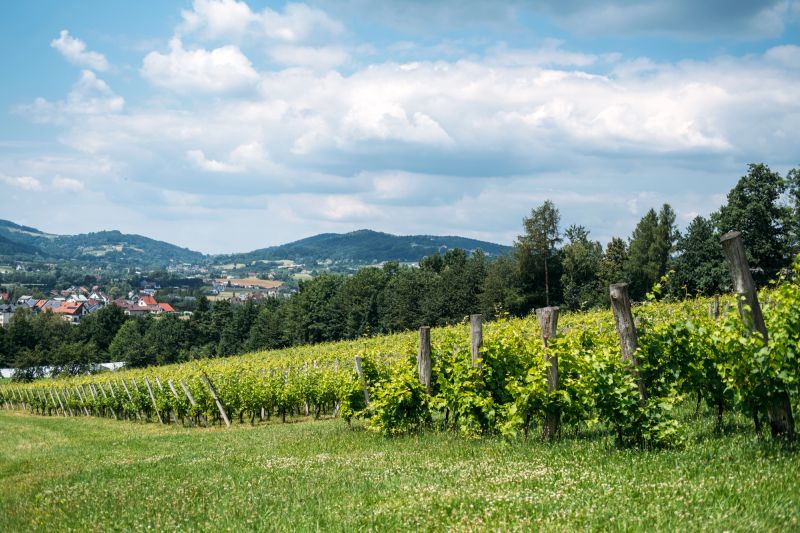
A vineyard in Tuscany found that using precision agriculture tools for fertilization and harvesting can sharply improve profitability, but only if the farm is large enough to absorb the cost of the equipment.
The study, published April 24 in the journal Precision Agriculture, compared three management systems at an organic wine estate in the Chianti Classico area of central Italy: conventional management with a standard fertilizer spreader and manual harvest; a lower-tech precision system with variable-rate fertilization and a self-propelled harvester; and a more advanced system that paired variable-rate fertilization with a selective harvester that sorts grapes by quality.
Researchers said the most advanced system produced the highest gross margin, at €10,732.82 per hectare a year, about twice the return of conventional management. That gain came from two sources: direct cost savings of 66.1% and revenue growth of 33.6%. The lower-tech precision system also improved returns, though not as much as the most advanced setup.
The findings matter because vineyards are among the most input-heavy farms in agriculture, and growers have been under pressure from rising labor, fuel and material costs. Precision tools such as variable-rate technology and selective harvesting are often promoted for their environmental benefits, but economic evidence has been limited, especially for full farm operations rather than single tasks.
The study used real-world data from three growing seasons, from 2020/21 through 2022/23, collected through interviews with the grower in May 2024. It focused on two operations that account for a large share of vineyard costs: fertilization and harvesting. The researchers used a partial budgeting method to compare how each management system affected costs and revenues under similar soil and climate conditions.
The vineyard under conventional management covered 24.2 hectares. A second block of 64.8 hectares used variable-rate fertilization but kept a standard self-propelled harvester. A third block of 61.7 hectares used both variable-rate fertilization and a selective harvester designed to separate grapes into two bins based on quality differences in the field.
All of the precision systems relied on prescription maps generated from drone flights using NDVI imagery, which measures canopy vigor and helps identify variation within the vineyard. Those maps were loaded onto machinery equipped with GPS guidance so fertilizer could be applied site by site rather than at a uniform rate.
The study also calculated the minimum vineyard size needed for the technology to make financial sense. According to the authors, the more advanced precision system becomes economically viable above 25.81 hectares, while the lower-tech precision system becomes viable above 16.42 hectares. Below those thresholds, the investment costs outweigh the gains.
That finding points to one of the main barriers to adoption: upfront spending on machinery and digital tools. The authors said public subsidies could help lower that barrier and make precision agriculture more accessible to smaller winegrowers.
The research adds to a growing body of work showing that precision viticulture can do more than reduce inputs or improve sustainability. In some cases, it can also raise revenue by improving grape quality at harvest. But the study suggests that for many farms, scale remains decisive in determining whether those gains justify the investment.