Rhineland-Palatinate Records Its Smallest Wine Harvest in Eight Years
Heavy September rain cut production 7.8% in Germany’s largest wine state, with Rheinhessen and the Palatinate hit hardest
2026-04-28
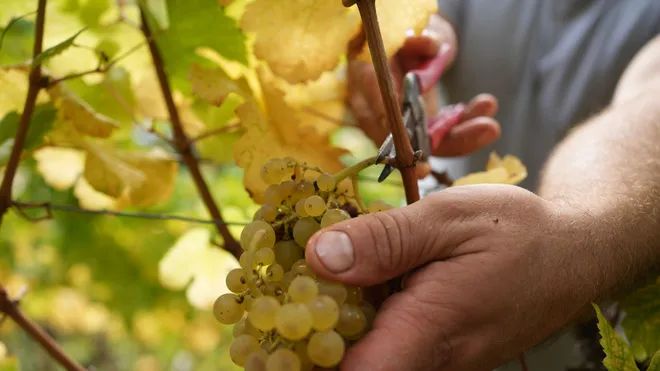
Intensive rainfall in the second half of September cut deeply into wine production in Rhineland-Palatinate in 2025, leaving the state with its smallest harvest in eight years. Winemakers produced 5.1 million hectoliters of wine and must, according to the State Statistical Office in Bad Ems. That was 7.8% less than a year earlier and a little more than 10% below the average of the past decade.
The decline was driven mainly by losses in Rheinhessen and the Palatinate, the two largest wine-growing regions in the state. Rheinhessen produced 2.1 million hectoliters, down 14% from the previous year. The Palatinate followed with 1.5 million hectoliters, also down 14%.
By contrast, production on the Mosel rose 12% to 1.3 million hectoliters. The statistical office said one reason was that wineries and cellar operations based in the Mosel region often buy grapes from other parts of Rhineland-Palatinate and process them there.
Smaller regions posted mixed results. The Nahe produced 170,800 hectoliters, the Ahr 38,400 hectoliters and the Middle Rhine 20,500 hectoliters. The Nahe and Ahr both recorded slight increases.
White wine remained by far the dominant category. It accounted for 75% of total production, or 3.8 million hectoliters. About 26% of all wine produced was classified as Prädikatswein, while 69% was Qualitätswein.
The lower output comes at a time when Rhineland-Palatinate remains central to Germany’s wine supply, making the harvest shortfall relevant not only for growers but also for wineries, merchants and buyers heading into the next season.
