Archaeologists uncover new clues in search for biblical Cana in northern Israel
Competing excavations at Karm er-Ras and Khirbet Qana fuel debate over the true site of Jesus’ first miracle
2025-08-26
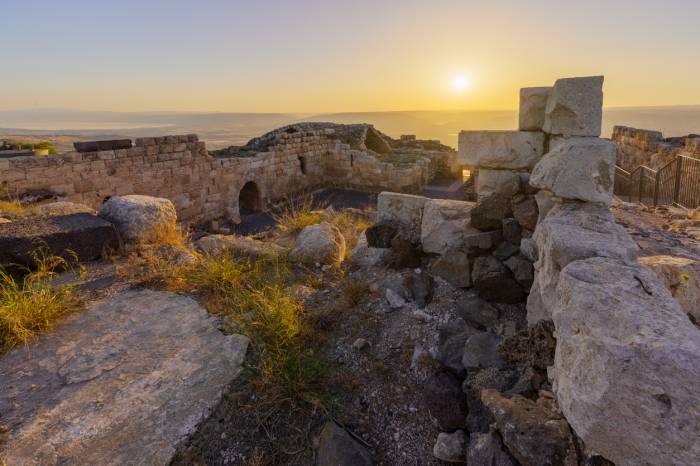
Archaeologists working in the Galilee region of northern Israel are uncovering new evidence that may pinpoint the location of the biblical village of Cana, where, according to the Gospel of John, Jesus performed his first miracle by turning water into wine at a wedding feast. The story has long inspired both religious pilgrims and wine enthusiasts, but the exact site of Cana has remained uncertain for centuries.
Recent research led by Yardenna Alexandre of the Israel Antiquities Authority focuses on a mound known as Karm er-Ras, located on the outskirts of the modern town of Kafr Kanna. After years of excavation, Alexandre and her team have published findings that suggest this site matches the historical and archaeological profile of Cana during the early Roman period. The evidence includes remains of houses from the era, a ritual bath known as a mikveh, fragments of stone drinking vessels, and signs of a local pottery industry. In 2019, archaeologists uncovered waste from pottery production and part of a kiln, indicating that Karm er-Ras may have supplied tableware to surrounding villages.
However, not all scholars agree with this identification. Another group of archaeologists, primarily from the United States, has been excavating at Khirbet Qana, a site northwest of Nazareth. Their work has revealed a substantial Jewish village from the same period, complete with ritual baths, coins, and a hall resembling a synagogue. One notable discovery is a set of caves that were later converted into a Christian shrine. Inside these caves are carved crosses, Greek graffiti invoking Jesus, and a shelf designed to hold six large stone jars—details that closely match the biblical account.
C. Thomas McCollough, who led excavations at Khirbet Qana, argues that early Christian pilgrims identified this site as Cana and venerated it as the place where Jesus performed his miracle. The presence of six stone jars is particularly significant for those interested in the wine story. These jars were made from chalk rather than clay because Jewish law considered stone to be ritually pure. Each jar could hold between 80 and 120 liters—sizes appropriate for communal gatherings like weddings.
Further research has traced the origin of these stone jars to ‘Einot Amitai, a chalk quarry near modern Nof HaGalil. Archaeologists Yitzhak Adler and Danny Mizzi have documented how workers there shaped blocks of chalk into mugs, bowls, and large water jars during the first century CE—the same period as the Cana story. Fragments from these vessels have been found at both Karm er-Ras and Khirbet Qana, showing their widespread use in Jewish households.
The debate over Cana’s true location continues. Alexandre’s recent publication aligns Karm er-Ras with Gospel accounts based on archaeological layers and artifacts. Meanwhile, McCollough points to Khirbet Qana’s cave shrine and its alignment with ancient travel routes as evidence supporting its claim. Modern tradition also plays a role: Kafr Kanna has hosted a “Wedding Church” for centuries and is recognized by many Christian communities as biblical Cana.
For those less concerned with religious tradition and more interested in daily life in ancient Galilee, these discoveries offer insight into local customs. The story centers on a wedding feast running out of wine—a serious social problem in a culture where hospitality was highly valued. Jesus’ instruction to fill six stone jars with water, which then became wine, reflects both ritual purity practices and communal celebration.
While archaeology cannot confirm whether water was ever transformed into wine at Cana, it does reveal much about life in first-century Galilee: villages where chalk jars were crafted for purity laws, potters fired clay vessels for storage and serving food and drink, and community feasts brought people together. The physical remains—stone jars, quarries, pottery kilns—provide tangible links to traditions that continue to resonate today.
The ongoing search for Cana highlights how stories from ancient texts can shape modern identity and tourism in Galilee. Pilgrims still visit both candidate sites to connect with history and faith. For wine lovers and historians alike, the debate over Cana’s location underscores how deeply intertwined wine has been with celebration and symbolism in this region for thousands of years. As archaeologists continue their work in Galilee’s soil, they bring new understanding to an old story—one that remains alive in both faith and scholarship.

Founded in 2007, Vinetur® is a registered trademark of VGSC S.L. with a long history in the wine industry.
VGSC, S.L. with VAT number B70255591 is a spanish company legally registered in the Commercial Register of the city of Santiago de Compostela, with registration number: Bulletin 181, Reference 356049 in Volume 13, Page 107, Section 6, Sheet 45028, Entry 2.
Email: [email protected]
Headquarters and offices located in Vilagarcia de Arousa, Spain.