Renhuai sets a 150 billion yuan baijiu output goal for 2031
The city in Guizhou, home to Moutai’s distilling region, would need to lift output value about 27.4% from current levels
Friday, November 6, 2026
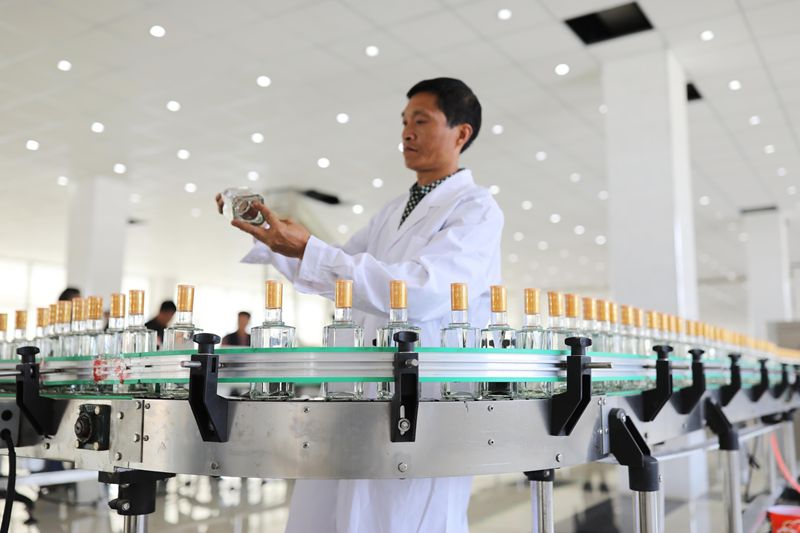
Renhuai, a baijiu-producing city in China’s Guizhou province, has set a goal of reaching 150 billion yuan in total baijiu output value by 2031, according to a municipal government work report presented on Wednesday, November 4.
The target was outlined by Chen Qingsong, Renhuai’s mayor and deputy Communist Party secretary, at the opening meeting of the first session of the city’s eighth People’s Congress. China Alcoholic Drinks News reported the details on Thursday, November 5, citing the official Today Renhuai social media account, and Sina Finance republished the report.
The same government report said Renhuai’s baijiu industry had already reached a total output value of 117.719 billion yuan over the period under review. Measured against that figure, the 2031 target would require an increase of 32.281 billion yuan, or about 27.4%. The comparison describes the gap between the current reference point and the stated goal. It does not represent growth already achieved, and it does not refer to liters sold or consumption.
Renhuai is one of China’s best-known centers for baijiu, the country’s traditional grain spirit, and it is home to the Moutai distilling region. The city government said the liquor industry had formed a stronger industrial cluster over the previous five years, with 23,500 kiloliters of new capacity added for high-quality sauce-aroma baijiu. The report said the city now has 81 baijiu producers above China’s official size threshold for industrial firms.
By 2031, the city wants to keep the number of those larger baijiu producers at more than 100. It also wants to raise the number of baijiu companies with annual output value of at least 100 million yuan to more than 40, up from 28 at the time of the report. Those targets suggest the municipal government is trying to expand the industry in two ways at once: by increasing overall production value and by pushing more producers into a larger commercial scale.
The report also laid out separate targets for the upper end of the local industry. Renhuai said it would fully support Kweichow Moutai Group in its push to become a Fortune Global 500 company. In addition, the city said it would work to cultivate one baijiu company with output value above 10 billion yuan, two above 5 billion yuan and five above 1 billion yuan.
Trade goals were included as well. The government said Renhuai would continue to expand overseas markets for sauce-aroma baijiu and aimed to have more than 260 companies with foreign trade qualifications by 2031. It also said it wanted at least 60 companies to record actual export activity and sought annual exports of locally produced baijiu above 50 million yuan by 2031.
The report said Renhuai’s total import and export value had exceeded 130 million yuan over the previous five years. That broader trade figure is not directly comparable with the 50 million yuan baijiu export target because the categories and time frames differ, but the export goal gives investors and industry observers a specific benchmark to track in the city’s effort to sell more local liquor abroad.
The municipal plan did not stop with distilling. Officials tied the baijiu industry to tourism development, saying Renhuai would improve integration between liquor, culture and travel. The city said it would push Moutai Town to seek recognition as a national 5A tourist attraction, the highest rating in China’s domestic system, and would support other sites, including the Hongse Changgan Mountain area, in seeking 4A status. By 2031, Renhuai aims for tourist arrivals and tourism revenue to each grow 6%.
The document also linked industrial development to administrative reform and technology policy. It said the city would expand localized one-stop government services, deepen reforms of state-owned assets and state-owned enterprises, and continue supply-side structural reform in the baijiu sector. On technology, the report said Renhuai would support Moutai Group’s bio-manufacturing laboratory in its effort to obtain national key laboratory status and would work to establish at least three innovation platforms, including technology innovation centers and manufacturing innovation centers.
The city also said it wanted to add at least five high-tech or specialized companies, underscoring an effort to present baijiu not only as a traditional consumer product but also as part of a broader industrial and research base. For Renhuai, the November 4 targets set out a clear policy line through 2031: protect the city’s dominant liquor industry, lift more producers into higher output brackets, and build a larger export and tourism business around one of China’s most recognizable spirits.