Supreme Court Takes Up Challenge to 1868 Ban on Home Distilling
The case follows a split in appeals courts over whether Congress may bar unlicensed home liquor production to protect tax revenue
Thursday, October 22, 2026
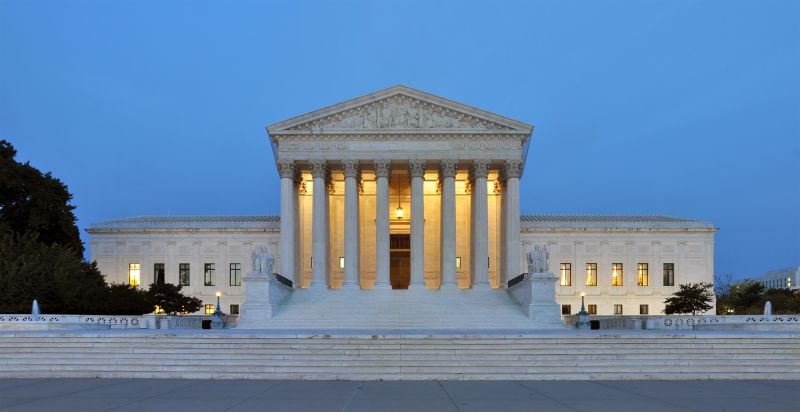
The U.S. Supreme Court has agreed to hear a case that could decide whether the federal government can keep enforcing a ban on home distilling that has been in place since 1868, setting up a major test of Congress’s power to protect alcohol tax revenue.
The justices agreed on October 19 to review a challenge to the law, which makes it a federal crime to distill spirits at home without authorization. The case comes after two federal appeals courts reached opposite conclusions this year on whether the prohibition is constitutional.
At issue is a law adopted after the Civil War, when Congress moved to stop tax evasion in the liquor trade. The federal government says the ban on unlicensed home distilling remains a lawful and necessary way to protect excise tax collections on distilled spirits, which bring in billions of dollars each year. The challengers say the law goes too far and criminalizes small-scale personal production that should fall outside the reach of federal power.
The dispute has drawn attention because federal law treats distilled spirits differently from beer and wine. Americans may brew beer and make wine at home for personal use under federal law, but they may not legally distill liquor at home without government approval. Violations can bring penalties of up to $10,000 and five years in prison.
The case reached the Supreme Court after a split between the Fifth U.S. Circuit Court of Appeals and the Sixth U.S. Circuit Court of Appeals. In April, the Fifth Circuit ruled that the federal ban was unconstitutional, finding that it exceeded Congress’s authority to adopt measures that are necessary and proper for carrying out its taxing power. A few days later, the Sixth Circuit reached the opposite result and upheld the ban, concluding that Congress acted within its constitutional authority when it barred unlicensed home distilling in order to protect federal tax revenue.
That split made Supreme Court review more likely. When federal appeals courts disagree on the meaning of federal law or the Constitution, the justices often step in to provide a single national rule.
According to Reuters, the appeal now before the court was brought by the Trump administration, which is defending the law. That position has created an unusual alignment in the case. While the administration wants to preserve the ban, 15 Republican-led states have backed the challenge to it. Those states include Florida, Ohio and Idaho.
The challengers are led by the Hobby Distillers Association, a nonprofit group that says it represents about 1,300 members, along with four individual hobby distillers. They argue that adults who want to produce small amounts of spirits for personal consumption should not face federal criminal penalties. Their case does not ask the court to create a new licensing system. Instead, it asks whether Congress has the constitutional authority to impose the ban in the first place.
In papers filed with the court, lawyers for the challengers argued that the government cannot justify such a broad prohibition simply by pointing to its interest in collecting taxes. They contend that Congress may tax distilled spirits without banning private citizens from making them at home for personal use. Supporters of the challenge say the current law sweeps too broadly because it applies even when there is no sale and no attempt to evade taxes in a commercial market.
The Justice Department has taken the opposite view. It says Congress had strong reasons to adopt the measure in 1868, when federal officials were trying to stop widespread evasion of spirits taxes. The government argues that home distilling is difficult to monitor and that allowing unlicensed production would undermine tax enforcement by creating a large area of untaxed liquor outside the federal system. In its view, the ban remains a valid part of the legal structure that supports excise tax collection.
The constitutional question centers on the scope of Congress’s powers under the taxing clause and the Necessary and Proper Clause. The government says banning unauthorized distilling is an acceptable tool for making the tax system work. The challengers say that reasoning would give Congress too much room to regulate private conduct that is not itself a taxable commercial transaction.
The case also carries cultural and historical overtones. Lawyers challenging the ban have pointed to the long history of small-scale distilling in the United States, including the role of early Americans in whiskey production. Robert Alt, president and chief executive of the Buckeye Institute and a lawyer for the challengers, said the Supreme Court’s decision to hear the case was an important step in reviewing a law that, in his view, cannot be squared with constitutional limits on federal power.
The states backing the challenge made a lighter remark in one of their filings, writing that, “Unlike a good whiskey, this split will not age well,” a reference to the conflict between the two appeals courts. But the legal stakes are serious. A ruling against the government could narrow federal authority in an area where Congress has long relied on broad power to guard tax revenues. A ruling for the government would leave in place one of the oldest surviving federal alcohol restrictions still being actively defended in court.
The Supreme Court is expected to hear arguments during its current term, with a decision likely by the end of June 2027. Until then, the federal prohibition remains in effect.
Even if the justices strike down the federal ban, that would not automatically make home distilling legal across the country. States have their own alcohol laws, and many maintain separate restrictions on producing distilled spirits at home. That means the court’s ruling may settle the constitutional question about federal power while leaving a patchwork of state rules in place.