West Coast wine industry accelerates research to combat smoke taint as wildfires threaten grape quality
Scientists develop rapid testing, protective sprays, and genetic tools to help growers manage increasing wildfire-related risks to vineyards
Friday, August 22, 2025
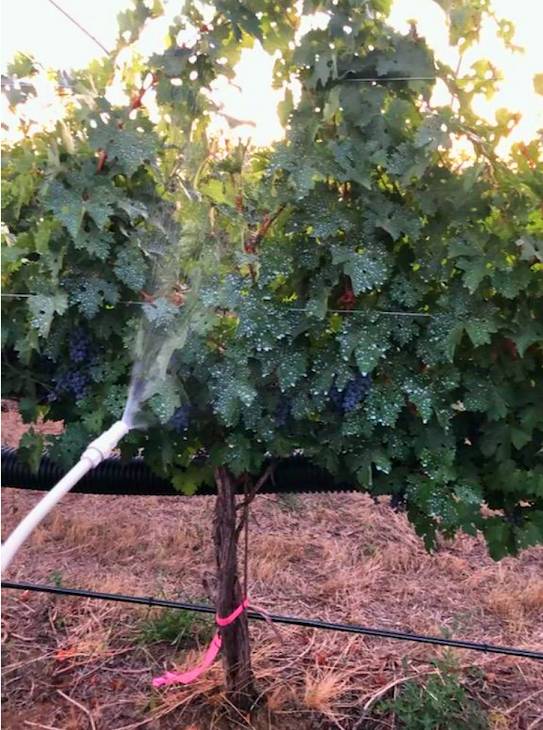
Researchers across the West Coast are intensifying efforts to address the growing problem of smoke taint in wine grapes, a challenge that has become more urgent as wildfires increase in frequency and severity. On July 15, experts gathered virtually for the West Coast Smoke Exposure Task Force Summit to share updates on new tools and strategies aimed at helping grape growers and winemakers predict, assess, and mitigate the effects of smoke exposure.
The West Coast Smoke Exposure Task Force was formed in 2019 by industry leaders, growers, and winemakers from California, Oregon, and Washington. The group’s goal is to centralize resources and research on smoke taint, which can cause significant economic losses for the wine industry when grapes absorb smoke compounds that later affect wine flavor.
A major focus of the summit was the ongoing work at UC Davis, where researchers in the late Dr. Anita Oberholster’s lab are developing a rapid assessment tool for predicting smoke taint risk. Dr. Oberholster, who passed away in January, was a leading figure in smoke taint research. Her team continues her legacy by working on a method that uses A-TEEM fluorescence spectroscopy combined with machine learning to quickly detect smoke compounds in grapes and wine. Graduate student Brandt Bastow is leading this project, which aims to provide North American wine producers with affordable and timely tools to guide harvest decisions during wildfire events. The current standard for assessing smoke impact is slow and expensive, requiring specialized equipment and expertise. The new approach seeks to streamline this process while maintaining accuracy.
In addition to rapid assessment tools, researchers are exploring ways to prevent smoke compounds from entering grapes in the first place. Teams at the Healthy Processed Foods Research Unit in Albany, California, and the Crops Pathology and Genetics Research Unit in Davis are developing food-safe coating sprays made from natural polymers such as carbohydrates and proteins. These barrier sprays are designed to form a protective film over grape skins, reducing the absorption of harmful volatile phenols from smoke. The effectiveness of these coatings is being tested using advanced chemical analysis methods like GC-MS/MS.
Dr. Arran Rumbaugh of the USDA Agricultural Research Service has been collaborating with UC Davis researchers to improve these barrier sprays. He explained that their work involves characterizing film properties such as water vapor permeability and flexibility to optimize protection without harming grape quality. The team uses controlled smoking chambers to test how well these coatings prevent smoke-derived compounds from entering grapes.
At Washington State University, assistant professor Tom Collins has also been experimenting with barrier sprays using materials like kaolin and bentonite clay. These substances can either adsorb smoke compounds or act as physical barriers around grape berries. Collins’ research has shown mixed results: while initial studies did not find significant differences in smoke compound levels between treated and untreated grapes, later trials indicated that washing off the materials after exposure could reduce certain phenols associated with smoke taint. However, Collins cautioned that if these materials are not thoroughly rinsed off after a smoke event, they could actually worsen the problem by trapping more compounds on the fruit surface.
Meanwhile, researchers at Oregon State University led by Walter Mahaffee are developing atmospheric modeling tools to create detailed risk maps for smoke exposure during wildfire events. By downscaling weather forecasts and satellite data to the vineyard level, Mahaffee’s team hopes to help growers better target sampling efforts and minimize unnecessary crop losses due to inaccurate assessments of exposure.
Biotechnology is also playing a role in understanding how grapevines respond to smoke. At the Thilmony Lab Western Regional Research Center in Albany, scientists are working on improving gene editing techniques for grapevines. Although genome editing is still relatively inefficient in this crop compared to others, recent advances have made it easier to deliver editing components into grapevine cells. This research could eventually lead to varieties that are more resistant to absorbing or metabolizing harmful smoke compounds.
The collaborative nature of these projects reflects the urgency felt across the West Coast wine industry as wildfires continue to threaten vineyards each year. By combining rapid assessment tools, protective sprays, genetic research, and advanced modeling techniques, scientists hope to give growers practical solutions for managing smoke taint risk now and in the future.