$2 Billion in U.S. Alcohol Sales at Risk as Trump Threatens 200% Tariff on French Wine
2026-01-21
Escalating trade dispute prompts EU emergency summit and warnings of 25,000 American jobs threatened by rising duties
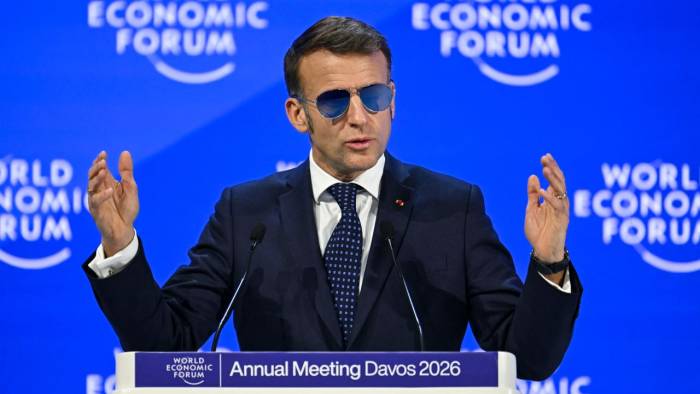
French President Emmanuel Macron responded strongly to U.S. President Donald Trump’s threat to impose a 200% tariff on French wine, calling for respect and adherence to international law. Speaking at the World Economic Forum in Davos, Switzerland, Macron said France and Europe would not “passively accept the law of the strongest.” He warned that giving in to such pressure would lead to “vassalization” of Europe and undermine its sovereignty.
The dispute escalated after Trump threatened new tariffs on French wine and Champagne following Macron’s refusal to join Trump’s proposed ‘Board of Peace’ initiative. The board was initially intended to oversee reconstruction efforts in Gaza but has since broadened its scope to address global conflicts. Trump’s threats also extend beyond France, with Washington announcing that eight European countries could face a 10% tariff on exports to the U.S. starting February 1 unless they support a U.S. proposal to acquire Greenland, a Danish territory. The tariff could rise to 25% in June if no agreement is reached. The countries named include Denmark, France, Germany, the UK, Sweden, Norway, Finland, and the Netherlands.
Macron criticized the use of tariffs as leverage against territorial sovereignty and called for more cooperation among European nations. He said that without collective governance, competition would become relentless and damaging. Macron also advocated for dismantling tariffs altogether, arguing that division and threats only harm global stability.
The U.S. is the largest export market for French wine and spirits, with shipments valued at €3.8 billion in 2024. Currently, wine and spirits from the European Union face a 15% tariff when entering the U.S., a rate French producers have been lobbying to reduce since last summer’s U.S.-EU trade deal.
The drinks industry has expressed concern about the impact of rising tariffs. In August 2025, a coalition of 57 alcohol producers and hospitality groups warned that a proposed 15% U.S. tariff on EU goods could cost American alcohol sales nearly $2 billion and threaten about 25,000 jobs. Major producers like Diageo and Pernod Ricard supported this warning, noting that higher duties would increase prices for consumers and hurt bars and restaurants across the country.
Trump’s recent actions are not limited to Europe. On January 13, he announced via Truth Social that any country trading with Iran would face a 25% tariff on all business with the United States. This measure comes amid reports of violent crackdowns on protests in Iran but lacks details on enforcement or which partners might be affected.
European leaders are preparing their response. Over the weekend, EU officials decided to hold an emergency summit in Brussels to discuss Greenland and potential countermeasures. The EU has set aside tariffs on $93 billion worth of U.S. goods as part of last summer’s trade deal but could activate them if tensions escalate further. Macron has also urged consideration of the EU’s Anti-Coercion Instrument—informally called the “trade bazooka”—which could restrict U.S. access to public tenders or limit trade in services such as technology platforms.
The relationship between Trump and European leaders has become increasingly strained over issues like Greenland and participation in new international organizations led by the U.S. Paris has raised concerns about Trump’s Board of Peace initiative potentially undermining the United Nations’ role.
After Trump published private messages from Macron on social media—a rare breach of diplomatic protocol—Macron confirmed he had no plans to meet with Trump during their overlapping time in Davos. French officials say Macron is being targeted because he stands up for democratic principles and European sovereignty.
Macron’s presidency runs until mid-2027, and his approach toward Trump has shifted between engagement and confrontation over time. People close to Macron argue that his willingness to resist pressure from Washington makes France a target but also positions it as a defender of democratic values within Europe.
As both sides prepare for possible escalation, the outcome will have significant implications for transatlantic trade, European unity, and global economic stability. The drinks industry and other sectors are watching closely as leaders weigh their next moves in this ongoing dispute over tariffs and sovereignty.

Founded in 2007, Vinetur® is a registered trademark of VGSC S.L. with a long history in the wine industry.
VGSC, S.L. with VAT number B70255591 is a spanish company legally registered in the Commercial Register of the city of Santiago de Compostela, with registration number: Bulletin 181, Reference 356049 in Volume 13, Page 107, Section 6, Sheet 45028, Entry 2.
Email: contact@vinetur.com
Headquarters and offices located in Vilagarcia de Arousa, Spain.