Italy Opens Door to $3.3 Billion Dealcoholized Wine Market With New Production Rules
2026-01-07
Regulatory overhaul allows Italian winemakers to keep all production stages at home as global demand for “Nolo” wines surges
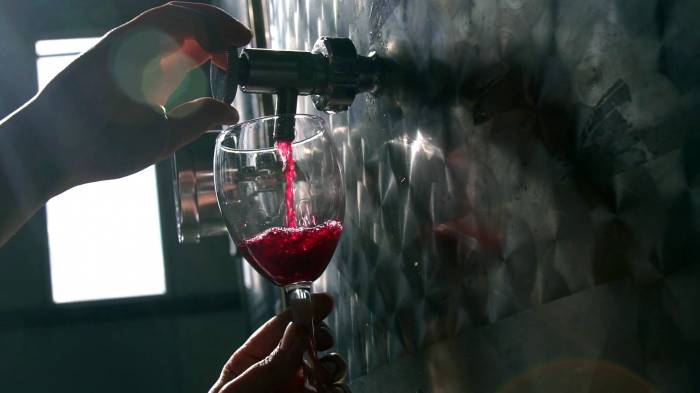
Italy has officially opened the way for the production of dealcoholized wines within its borders. The move comes after the signing of a joint ministerial decree by the Ministry of Economy and the Ministry of Agriculture. This new regulation provides a clear legal framework for the production, taxation, and excise duties related to dealcoholized wines, a sector that has been expanding rapidly in recent years.
The decree allows companies that hold fiscal warehouses for wine and intermediate alcoholic products to carry out dealcoholization processes, but only within specific quantitative limits. It also introduces a distinction between producers who make more or less than 1,000 hectoliters per year. The rules set out precise requirements for obtaining authorization, as well as for storing and transporting these products. The regulation restricts additional activities to only those directly related to the production of dealcoholized wine.
Francesco Lollobrigida, Italy’s Minister of Agriculture, described the measure as a decisive step for providing businesses with a stable and competitive environment. He emphasized that clarifying the excise tax regime will allow Italian producers to aim for excellence in this new market segment. Until now, many Italian wine producers had to send their products abroad—mainly to Germany and Spain—for dealcoholization due to the lack of clear regulations at home. With this decree, all stages of production can now take place entirely in Italy.
The global market for no- and low-alcohol wines, often referred to as the “Nolo” segment, is one of the few areas showing growth despite an overall decline in wine consumption worldwide. The sector is currently valued at $2.4 billion and is projected to reach $3.3 billion by 2028. Italian dealcoholized wines have already found success in key export markets such as Germany, the United Kingdom, and the United States, where demand continues to rise.
Industry experts see this regulatory change as long overdue. Producers have been waiting for clear guidelines that would allow them to invest confidently in this growing market without having to rely on foreign facilities for essential parts of their production process. The new rules are expected to encourage further innovation and investment in Italy’s wine industry.
The introduction of a formal legal structure is also likely to boost consumer confidence in dealcoholized Italian wines, both domestically and abroad. As health-conscious consumers increasingly seek alternatives with lower or no alcohol content, Italian winemakers are positioning themselves to meet this demand while maintaining high standards of quality.
With these changes now in effect, Italy joins other major wine-producing countries that have already established regulations for dealcoholized wines. The move signals a shift in how traditional wine regions are adapting to changing consumer preferences and global market trends. For Italian producers, it marks an opportunity to expand their offerings and compete more effectively on the international stage.

Founded in 2007, Vinetur® is a registered trademark of VGSC S.L. with a long history in the wine industry.
VGSC, S.L. with VAT number B70255591 is a spanish company legally registered in the Commercial Register of the city of Santiago de Compostela, with registration number: Bulletin 181, Reference 356049 in Volume 13, Page 107, Section 6, Sheet 45028, Entry 2.
Email: contact@vinetur.com
Headquarters and offices located in Vilagarcia de Arousa, Spain.